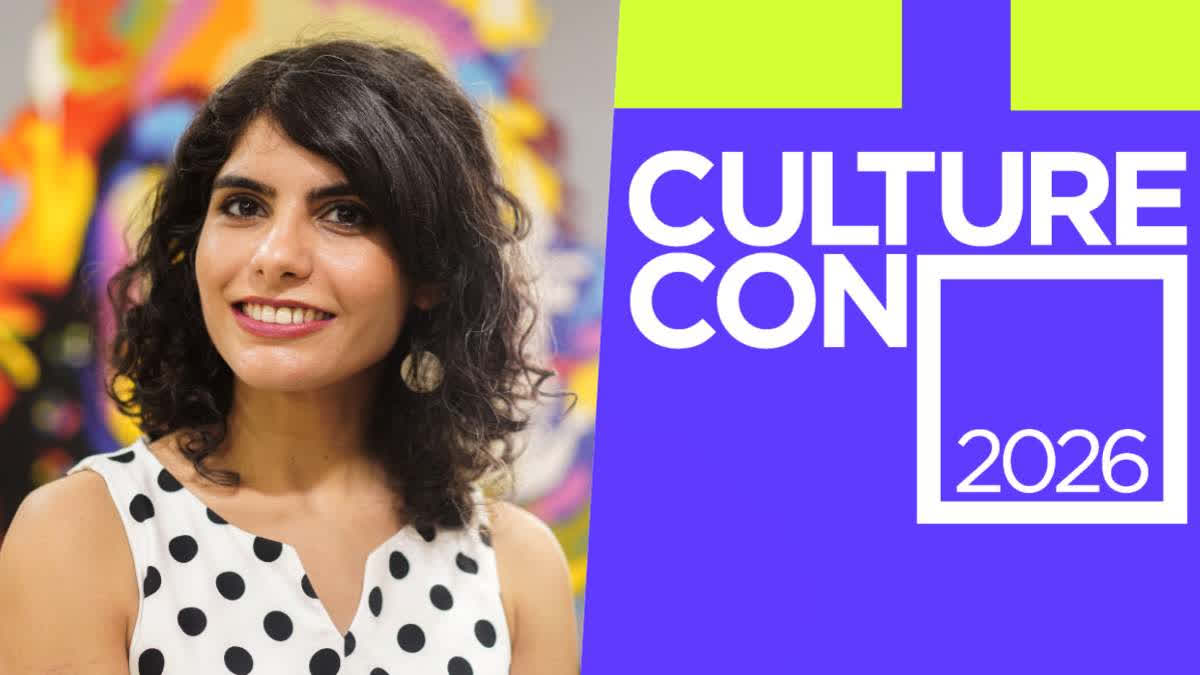
INTERVIEW | CultureCon 2026: Rashmi Dhanwani Takes Us Inside The Making Of India's Creative Powerhouse
Ahead of CultureCon 2026, Rashmi Dhanwani speaks with ETV Bharat on how the platform went from a niche gathering to India's flagship creative conference.
By Minal Rudra
Published : August 3, 2026 at 5:23 PM IST

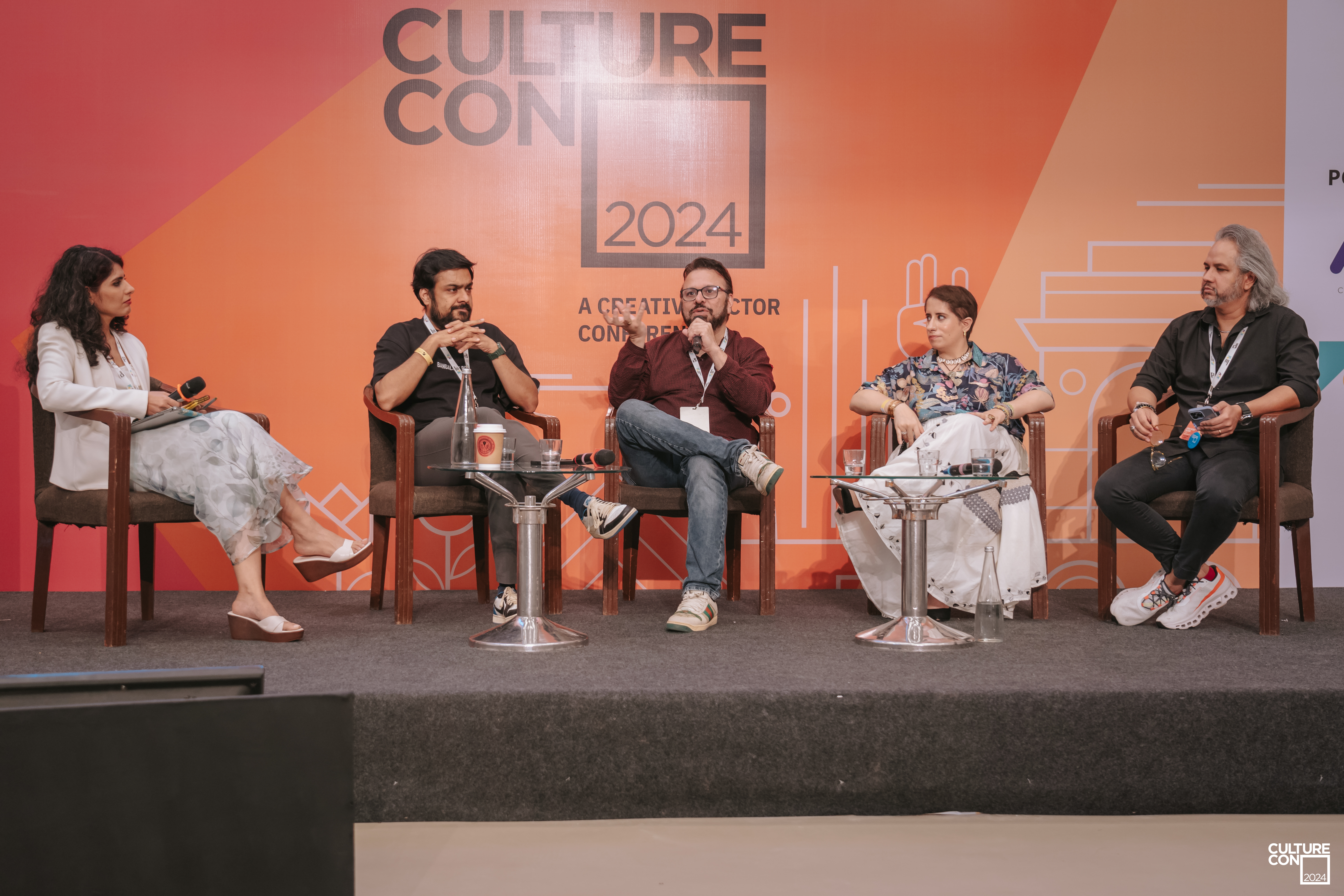
Braving the Mumbai rains, over 500 creative professionals from design, film, music, arts, education, writing, fashion, and cultural management will be under one roof at the CultureCon 2026. The multi-disciplinary gathering returns for its 4th edition which will take place on August 6th and 7th at the National Centre For The Performing Arts (NCPA) in Mumbai.
Through conversations, masterclasses, and debates, the 2026 edition will dive into how careers are built, how work gets commissioned, and how capital moves through the art sector. In some of the key sessions this year speakers will touch upon array of topics including Orange Economy, skill gap in the art sector, debate on AI, infrastructure issue of building and sustaining gig circuits and more.
At the helm of it is Rashmi Dhanwani, Conference Director - CultureCon India & Founder-Director, Art X Company and Festivals From India. In conversation with ETV Bharat, Rashmi shares insights that impacts how, why and what CultureCon contributes to the creative sector of the country.
Excerpts from the interview
What was the gap that led to creating CultureCon?
The idea for CultureCon actually emerged before the pandemic. Both Art X and Godrej India Culture Lab (then headed by Parmesh Shahani), had independently recognised the same gap: lack of a space where the entire community could come together to discuss issues that affect culture, creativity, careers and commerce in art sector.
Post-pandemic we realised that the conversation within the sector itself had changed. Earlier, we were talking about fundings and revenue. But now the sector had gone through enormous change due to digital access that had expanded dramatically. Creative professionals had experienced immense uncertainty and the questions facing the sector were very different than before. We felt there was a real need for a space where the creative community could engage not only with each other, but also with government officials, policymakers, cultural institutions and venue operators. More importantly, we wanted conversations around issues that affect the sector's growth.
What goes behind programming and curating CultureCon?
One thing we've tried to do throughout the programme is create tension of ideas because creativity often emerges from disagreement. We've brought together people who genuinely hold different views and are willing to debate them openly.
Today, inspiration is everywhere. Social media, podcasts and AI have made knowledge incredibly accessible. So we wanted to offer that people can't simply watch online later. Our brief to every speaker was focus on participation than a traditional panel discussion.
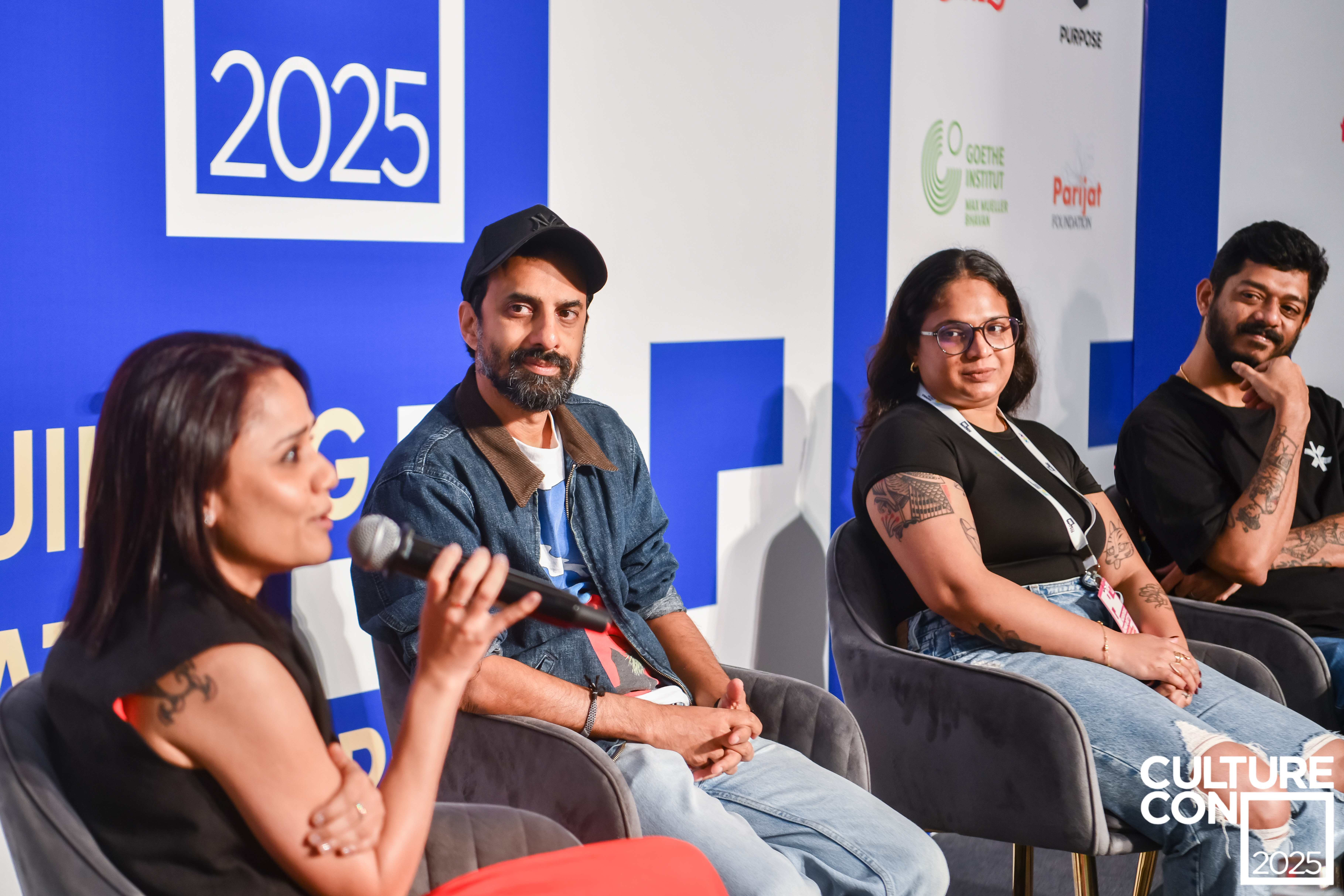
Two sessions I'm particularly excited about are Culture in the City and Uncentred: Creative Economies Beyond the Metro. With Culture in the City where we're asking what actually makes a city creative. Can culture slow us down enough to notice beauty? Can artists afford to remain part of the urban fabric that inspires their work? How do cities improve everyday life through culture? Those are far more interesting questions than simply debating policy in the abstract.
The Uncentred: Creative Economies Beyond the Metro brings together creative practitioners from Ladakh, Himachal Pradesh, Meghalaya, Arunachal Pradesh and Australia's First Nations community.
The hope is that by the end of the conference, you'll have found a collaborator, a mentor, a client, a partner or even your next opportunity.
After years of studying the sector, what data points have surprised you the most?
That's a great question. For us, data is never just about numbers. There are multiple signals that demands attention. From tracing what parts of the creative economy are growing to how do we amplify those conversations... and then education has been another major trend. The government's recent investments in creative skilling, including initiatives like IICT (Indian Institute of Creative Technologies), signal an important shift. At the same time, we're seeing international universities entering India and continued growth in liberal arts education.
CSR (Corporate Social Responsibility) aside, another significant shift has been the rise of philanthropic funding for culture. Over the last few years we've seen institutions like the Museum of Art & Photography in Bengaluru, the Nita Mukesh Ambani Cultural Centre, the Science Gallery in Mumbai and several smaller private cultural spaces emerge.
These are some of the data points that directly impact our programming. So when I think about trends, I don't think in terms of what's fashionable today because that trend may die tomorrow... but look at shifts that have the potential to grow in time to come.
Whose voices need more representation in India’s creative ecosystem?
Without question, people working outside the metros.
The challenge to bring creative practitioners from places like Ladakh, Himachal Pradesh and the Northeast into the conference isn't only financial. Someone travelling from Meghalaya or Mizoram may not only have fewer resources, but may also feel uncertain about navigating a conference in Mumbai. Sometimes inclusion begins with making that first invitation possible.
I genuinely believe we're not learning enough from the margins. Some of the most exciting work in India isn't happening in our biggest cities. Smaller towns and regions often have extraordinary creative energy but far fewer pathways that take talents to markets, funding and visibility. We don't claim to have solved that problem. What we can do is make sure those voices are in the room. India is far too diverse for inclusion ever to be considered "finished." Language, caste, class, disability, gender, sexuality, geography... there's always more work to do.
Do you think today India's creative sector is having more visibility than ever?
Technology has changed distribution and consumption in art sector... creative work now travels much faster than it did before. Audiences have become global... platforms have multiplied... quality has improved. But behind all of it is decades of work by people who kept building despite the absence of formal structures.
Take India's festival industry. When companies like Only Much Louder (OML) began producing festivals such as NH7 Weekender, Stage42... they introduced production standards the country hadn't really experienced before. But that didn't happen overnight. It happened because people were willing to experiment and raise expectations for what audiences could experience. Today's festival ecosystem stands on those strong foundations.
Post-pandemic, something else changed too. Experiences became more valuable and young people increasingly wanted careers that allowed them to create rather than simply consume. Earlier, someone from a smaller town might have believed they had to move to Mumbai to work in television or film. Today they can build an audience from wherever they are. The ambition itself has changed and now the sector needs to evolve fast enough to support those ambitions.
What emerging fields young creators should keep a tab on?
Technology is obviously one of them. But it can become isolating too. So, focus on building communities. Creative work still needs collaborators... people who challenge your assumptions, expand your thinking and tell you when you're wrong... don't lose that human connection.
Another important concept is what economists call creative destruction. Every major technological shift eliminates certain kinds of work while creating entirely new ones. Creative industries will experience the same transition. Instead of resisting that change, understand which skills are becoming automated and which human capabilities are becoming more valuable.
How are brands, investors and creative professionals collaborating differently today?
Brands have moved far beyond traditional sponsorship. They understand that audiences don't necessarily build emotional connections with advertisements. They build emotional connections with culture. That's why we're seeing more long-form collaborations, branded storytelling and original intellectual property rather than simple logo placement. We're also seeing brands invest in their own cultural platforms and original properties rather than simply supporting someone else's.
How can India become globally competitive in the creative economy?
A lot of remarkable work is already happening. The challenge is that much of it is happening despite the system rather than because of it. The first thing we need is a stronger policy framework.
The second priority is to connect education far more directly with industry. Creative graduates should leave with skills that employers are actually looking for and parents should also be able to see clear career pathways.
The third area is international collaboration. Countries like South Korea have demonstrated what sustained cultural policy can achieve. K-pop didn't become a global phenomenon by accident. It was supported by long-term investment, institutional backing and coordinated export strategies.
India has extraordinary creative talent. What we need now is stronger system that help that talent go international.