Rajasthan To Implement Transit Oriented Development Policy To Address Traffic Congestion and Vehicular Pollution
The policy aims to make cities more accessible, environmentally friendly and livable while promoting walking and non-motorised transportation in densely populated and crowded areas.

Published : December 18, 2025 at 4:46 PM IST

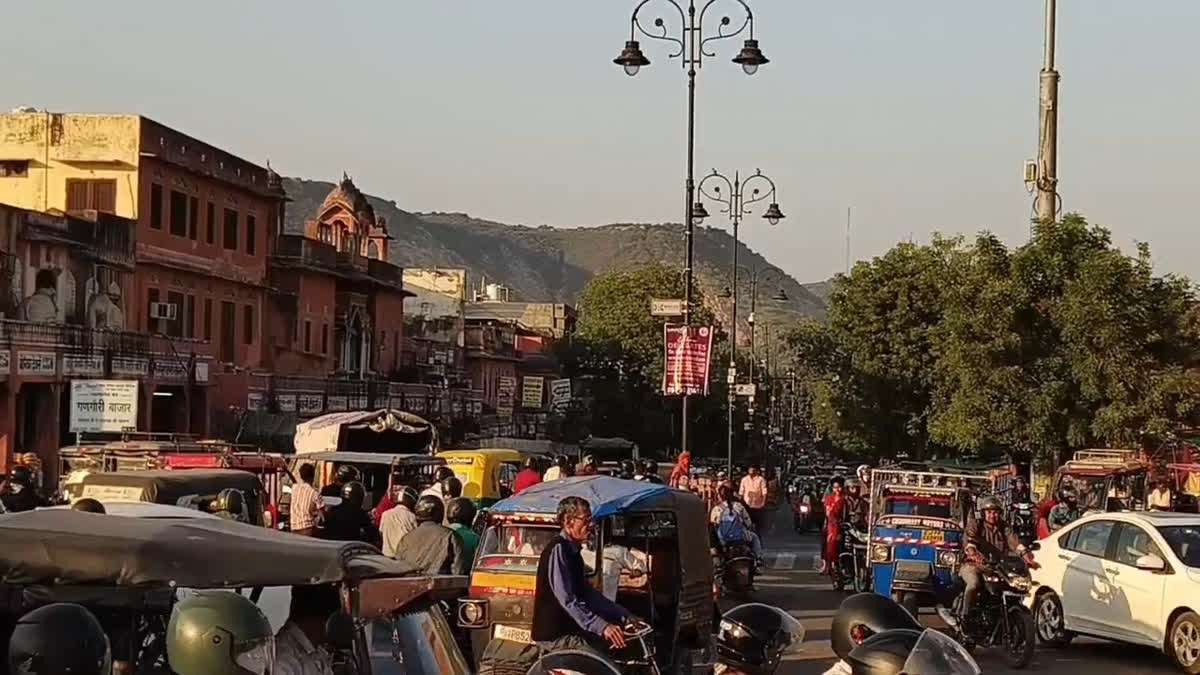
Jaipur: Grappling with ever-increasing vehicular pollution, congestion and deteriorating air quality index (AQI), the Rajasthan government has initiated steps to implement a Transit-Oriented Development (TOD) policy by 2026. The move is being claimed as a strategic decision on urban planning, health and environment.
In Rajasthan, pollution levels typically range from 'poor' to 'severe' or 'very poor' in cities like Bhiwadi, Churu, Sriganganagar, Kota and Jaipur, particularly during the winter months.
In order to address challenges like increasing traffic congestion, pollution and unregulated land use in the urban areas, the state government is introducing the TOD policy as a modern urban development model that aims to make cities more accessible, environmentally friendly and livable while promoting walking and non-motorised transportation (NMT) in densely populated and crowded areas. It also aims to increase the use of public transport as a part of urban planning.
The TOD model is expected to directly address the problem of vehicular pollution. It envisages the location of people's homes, offices, shops and essential services near metro stations or bus stops so that they won't need to use their personal vehicles daily. This will reduce the number of vehicles on the roads, along with smog, and gradually clean the city's air.
Officials say that fewer vehicles on roads will lead to better AQI, and the promotion of public transport will reduce pressure on the roads. The policy also aims to promote walking and cycling, which will ensure a reduction in traffic jams, fuel wastage and pollution. This is to be capped with green belts and open areas that will absorb pollutants.
Sources said that TOD includes efficient land use, open space and greenery that will reduce the excessive heat generated by concrete, roads and buildings in the cities. They said that maintaining a balanced temperature also reduces harmful elements that contribute to AQI.
Minister for Urban Development and Housing, Jhabar Singh Kharra, claims that the TOD policy will make living and commuting in Rajasthan's cities easier.
“Cities will become cleaner, and plans will be designed in accordance with the needs of the common people. This policy will enhance the economic strength of cities and improve the quality of life for residents,” he said while pointing out that TOD will make public transportation central to urban development.
In terms of health benefits, the policy is expected to lead to a reduction in asthma, allergies and respiratory diseases along with the health expenses. Increased economic activity around metro and transit nodes will lead to the revitalisation of the old areas.
The minister added that the central government is moving towards expanding the metro rail network. Additionally, within a 500-meter radius of each metro station, multi-storeyed residential buildings will be constructed, and this will eliminate the need for private vehicles. This will make it possible for people to walk to the metro station.
Under the plan, accessible transportation facilities will also be provided within a 5 km radius, which will reduce dependence on private vehicles.
Former Chief Town Planner Himmat Singh Sancheti disclosed, “The fundamental objective of the TOD policy is to provide development where there is traffic.”
Talking about the major cities, he said, “Horizontal development in these cities has led to significant expenditure on infrastructure. Increasing reliance on personal transport leads to increased fuel consumption and traffic congestion. The policy could focus development around metro stations and bus terminals, where residential, commercial, institutional, and open spaces are developed in a single area using mixed land uses. This would meet people's daily needs and reduce traffic congestion.”
He suggested that development authorities should first identify such areas and prepare integrated plans, enabling planned and coordinated urban development among all sectors.