Weaving Santali Dreams In Threads: How 800 Tribal Women Turned Micro-Entrepreneurs In Odisha's Mayurbhanj
When PM Modi spoke on women's weaving movement of Mayurbhanj in Mann Ki Baat, it was a recognition that made hundreds of tribal women smile.

By Kasturi Ray
Published : July 30, 2025 at 5:13 PM IST

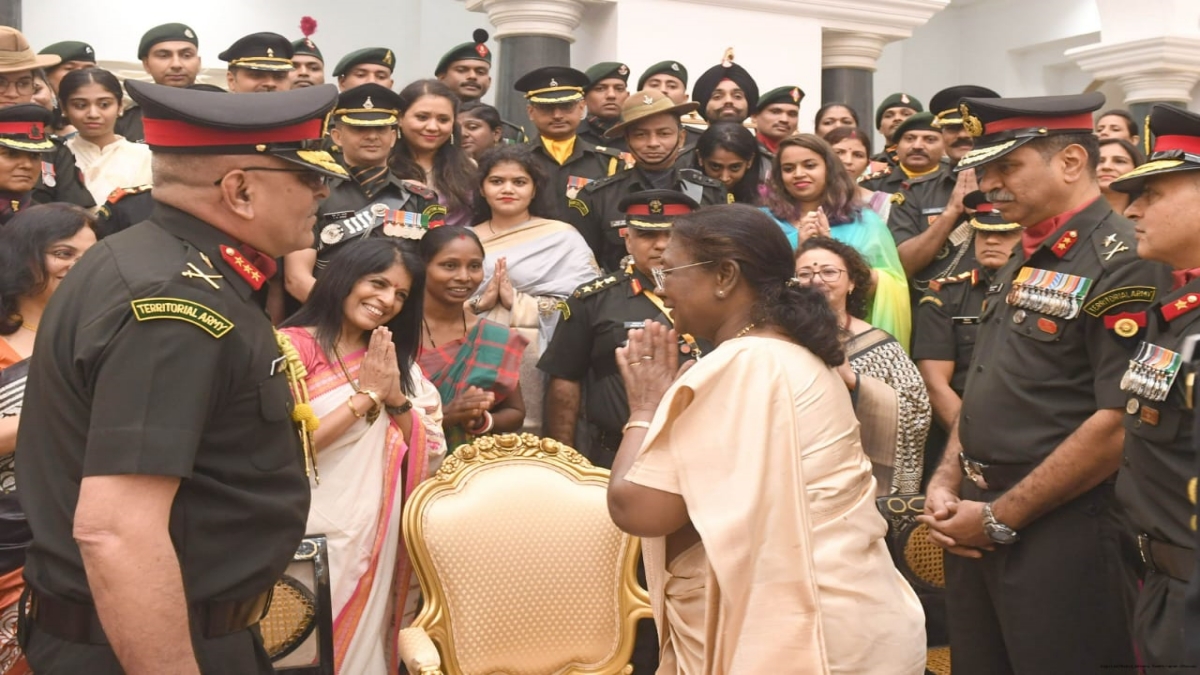
Bhubaneswar/Chuliaposi (Mayurbhanj): For someone like Maina Baskey, stepping beyond the borders of Atanati, a remote tribal village in Odisha’s Mayurbhanj district, was unthinkable, let alone walking into the Rashtrapati Bhawan in New Delhi. But on October 7, 2024, when the 31-year-old carefully 'crafted' her way to the President’s bungalow wearing a handwoven Santali saree and clutching a neatly packed gift to her chest, her heart literally pounded. President Droupadi Murmu, a Santali herself, noticed Maina’s attire and asked her if she had come from Mayurbhanj. As Maina nodded, a conversation began that gave her the courage to present a Santali saree she had woven as a gift to Murmu. For Maina, it was nothing short of phenomenal.
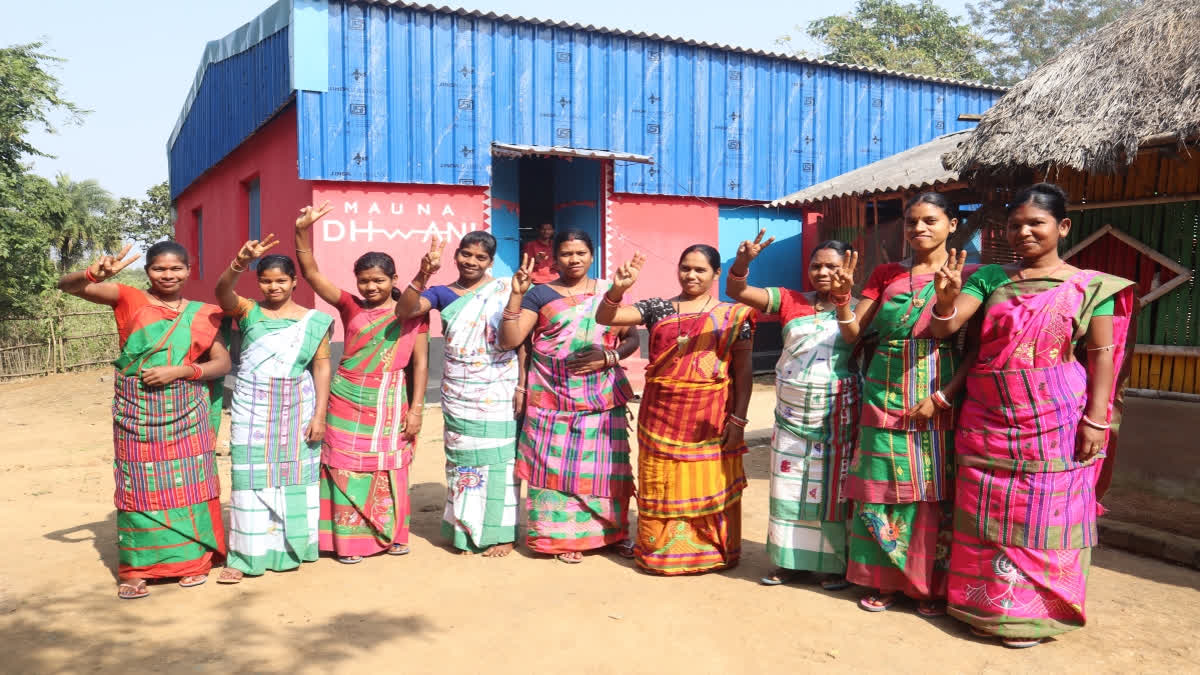
But this was not just Maina’s achievement or accomplishment. It was a watershed moment for over 800 women spread across 62 villages in Mayurbhanj district who have been weaving handmade traditional Santali sarees, textiles, scarves, and stoles for a reason - self-reliance and revival of a dying tradition.
Something that started as a grassroots movement few years back in 2018, has evolved into a model for others to emulate. The women here engage in cotton farming, make threads, dye, and weave, all by themselves, bringing alive the age-old textile tradition of the tribals which was on the verge of extinction. It has not only made them financially independent but given them the strength to become micro-entrepreneurs in their own right.
Recognising this extraordinary journey of empowerment, Prime Minister Narendra Modi lauded the Santali women weavers in his Mann Ki Baat address last Sunday, highlighting how they are becoming self-reliant by embracing their age-old weaving tradition.
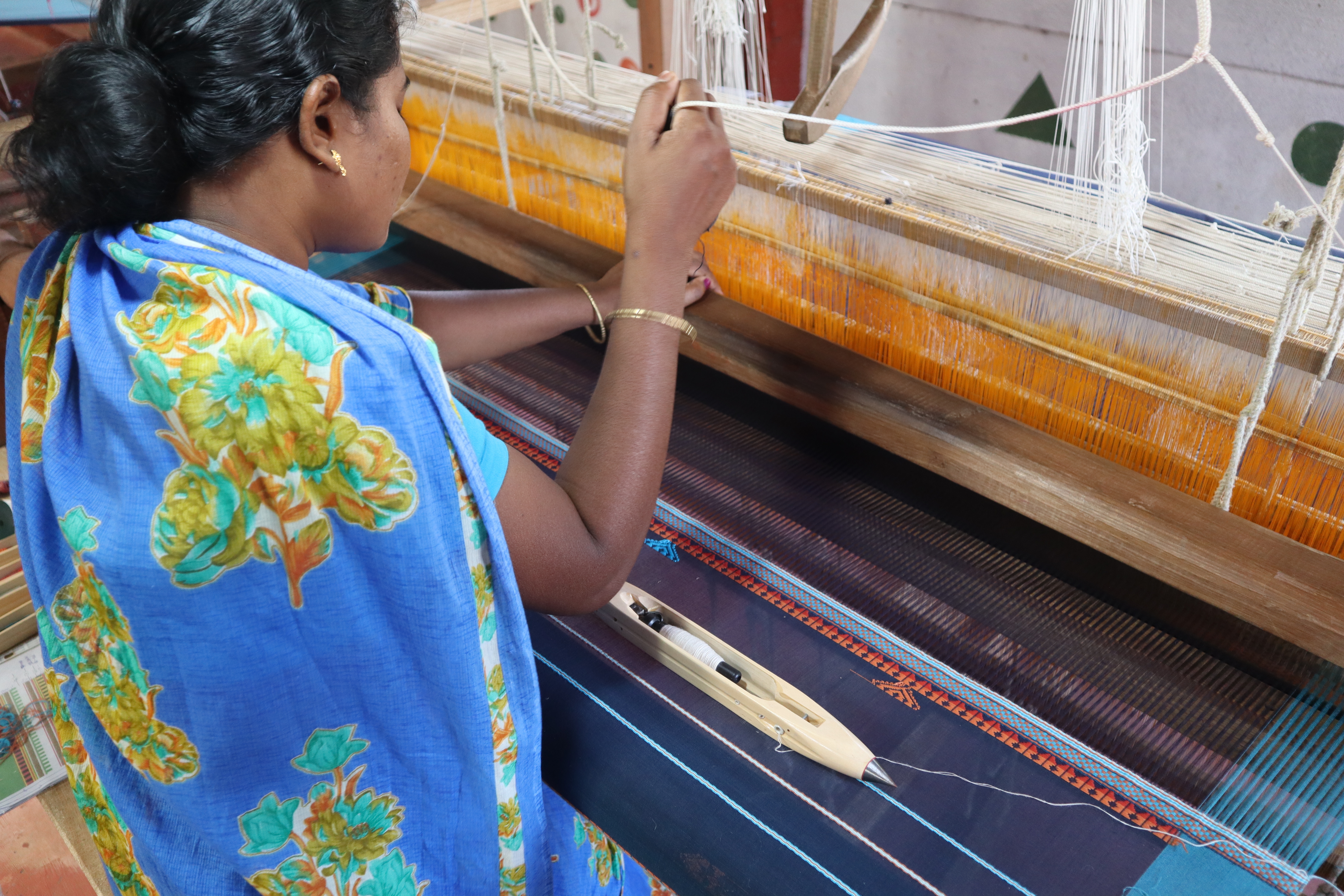
But how did the weaving tradition of Santalis get rejuvenated? Mauna Dhwani Foundation - as the name suggests, “the sound of silence” - was the one to seed the rebirth. A brainchild of Bindu Vinodhan, the foundation, as the website says, “was born from the belief that true transformation begins when those who have been silenced reclaim their voice, their identity and their livelihoods.” The foundation provides training, equips weaving centres with machinery, and links lab-to-land initiatives by helping women grow their own cotton and experiment with organic dyes, including natural indigo.
Mayurbhanj is home to 54 tribal communities, but its rich traditional weaving technique was facing extinction due to economic vulnerability attributed to lack of training, financial resources, and raw materials. Gender discrimination kept the looms restricted to men, most of whom migrated to other places as weaving did not give them a consistent livelihood.
“When I reached Chuliaposi, located in Udala tehsil of Mayurbhanj, disparities were glaring. Women’s access to employment and financial independence were zero. I kept on researching and finally, in one of the border villages, got to know two men who were full-time into the Santali weaving. I knew that had to be the starting point of my experiment,” says Bindu Vinodhan, who left her lucrative job to try her hands in a completely different territory, infusing life into the almost-lost tribal weaving tradition of Odisha’s Santals. Bindu had returned from an Oxford MS and was deeply engrossed in tech life when she realised that it was not something she was meant to be doing.
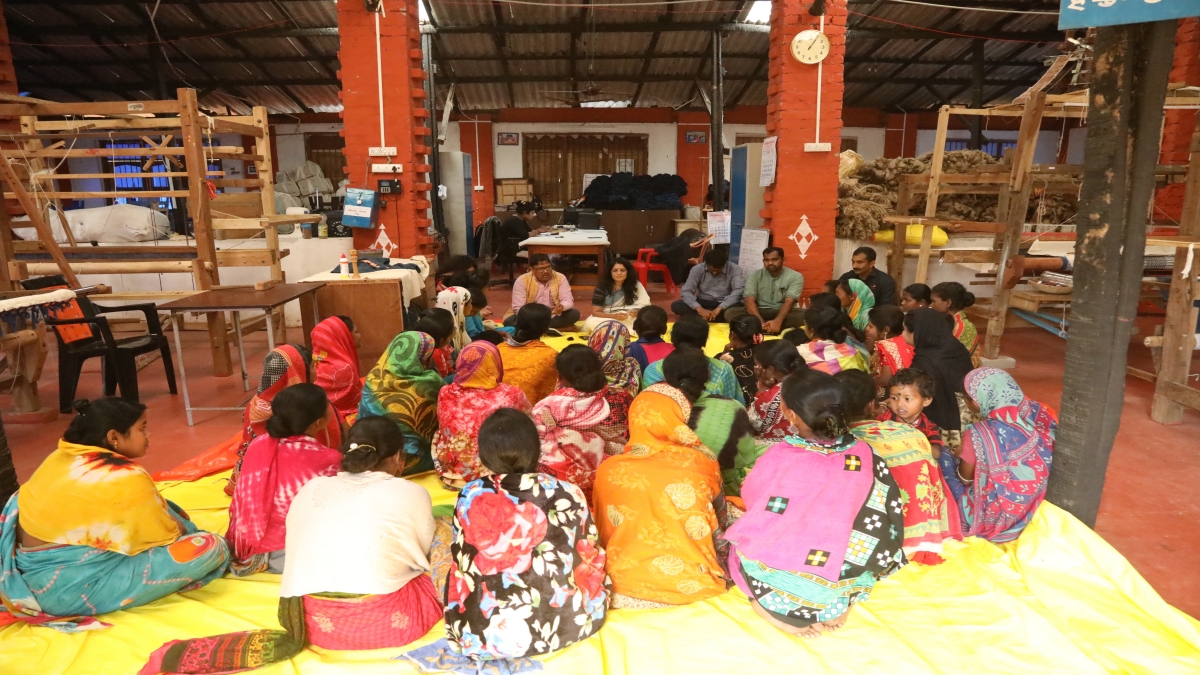
After research, when Bindu landed in Chuliaposi, she had no knowledge about the place. “I approached Gobinda Dalai, who was already working with tribals and ran his not-for-profit in Balasore, to help me gain ground. And he did. We moved around, met people, found out about tribal lifestyle, their occupation, trade, and their art and artistry,” explains Bindu. She independently runs her consulting firm so that whatever she earns can help shape her dream project, Mauna Dhwani.
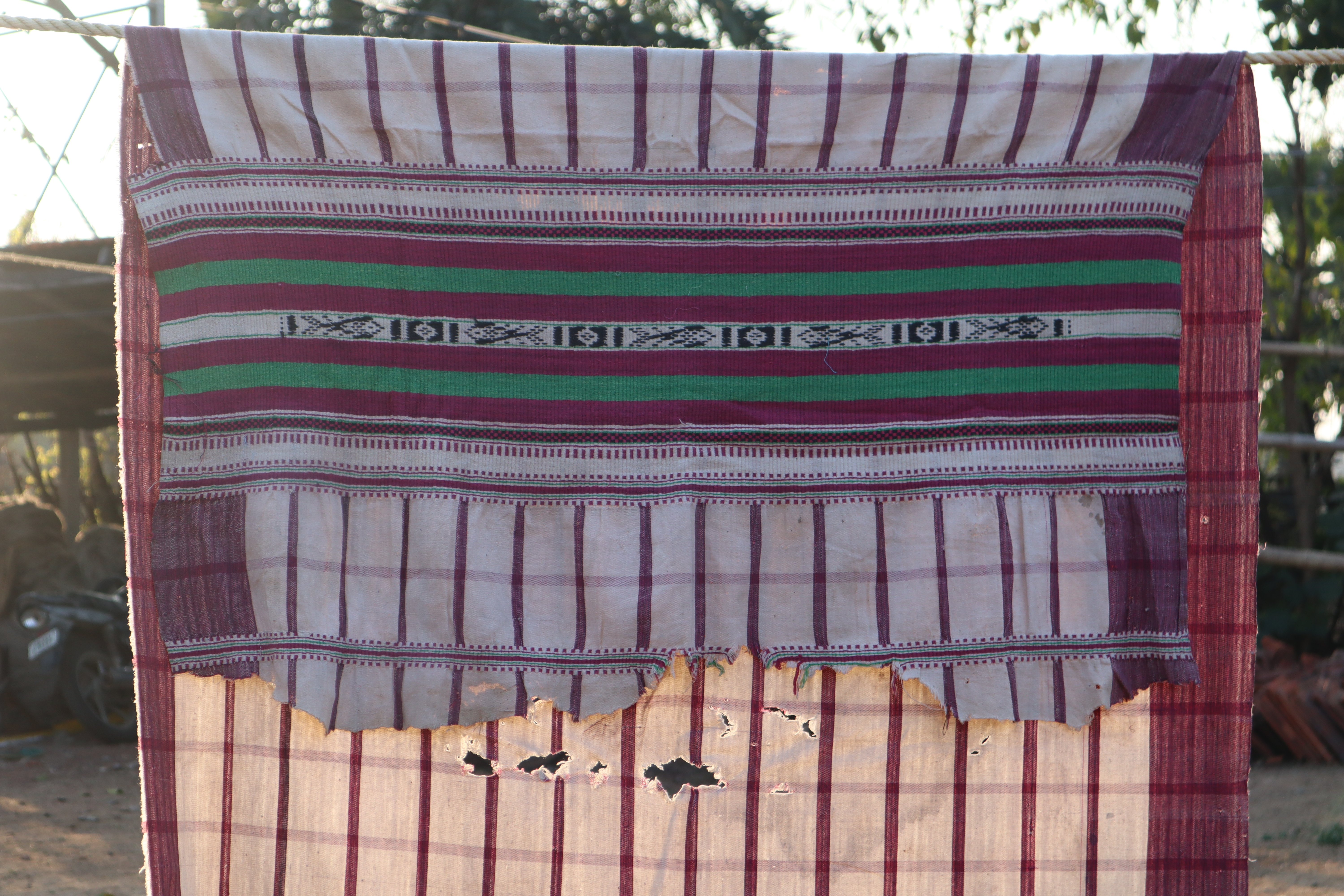
A chance visit to one of the houses in Atanati village in Khunta tehsil brought alive the Santali weaving pattern when Bindu and Gobinda got a torn last piece of handwoven saree, from a woman named Santi, a signature remnant of the tradition that was active 80–85 years ago. That was the first template for the foundation to begin the experiment of reviving the tradition. “But it was not only weaving that we wanted to revive. We thought to make an ecosystem where ‘soil-to-shelf’ would be the mantra. Which means, from growing cotton to making threads, from dyeing to weaving, all should be available within a particular area so that women would not have to travel much. I was worried how not one spinning mill was operational when the area was cotton-friendly and farmers used to grow good cotton,” says Bindu, who works with the motto that the foundation ensures a zero-carbon-footprint textile ecosystem.
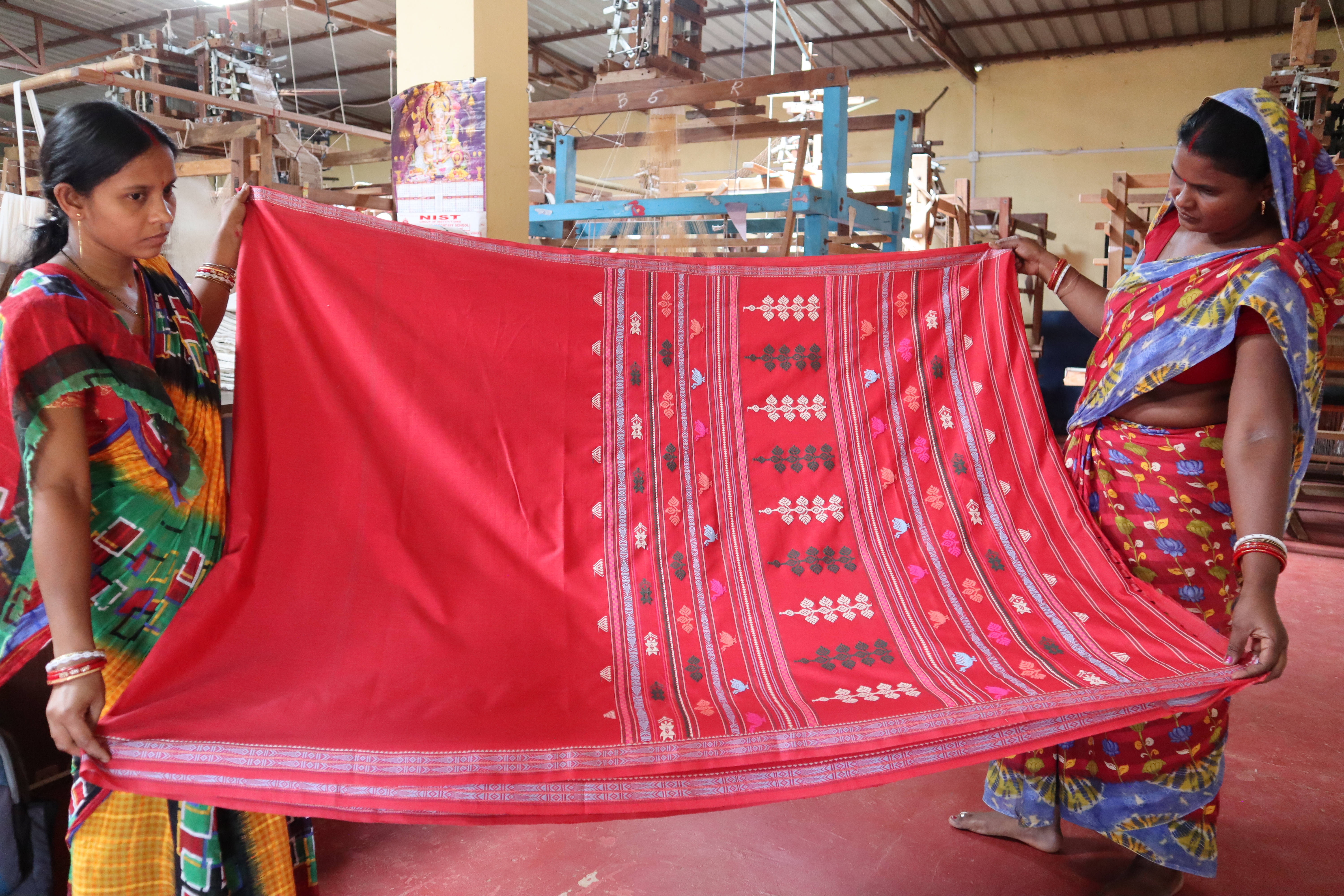
Gobinda says the initiative was not only about reviving a tradition. It was more about reimagining it. “We wanted to give traditional Santali weaving a contemporary touch so that it can be marketed. Further, we ensured to have the nature-inspired motifs like the peacock and arrow, symbols of Santali identity, which were evident in the piece of saree we collected at Atanati, and make them relevant for the modern market,” he adds.
The foundation consulted the Adivasi Santali Educational Cultural Association (ASECA) so that preserving the authenticity would be easy. Further, the aim was to make the craft cost-effective and accessible. “We were amazed that Adivasis were not only good at hunting or farming, but also in weaving. They outsmarted even traditional weaving communities,” Gobinda says.
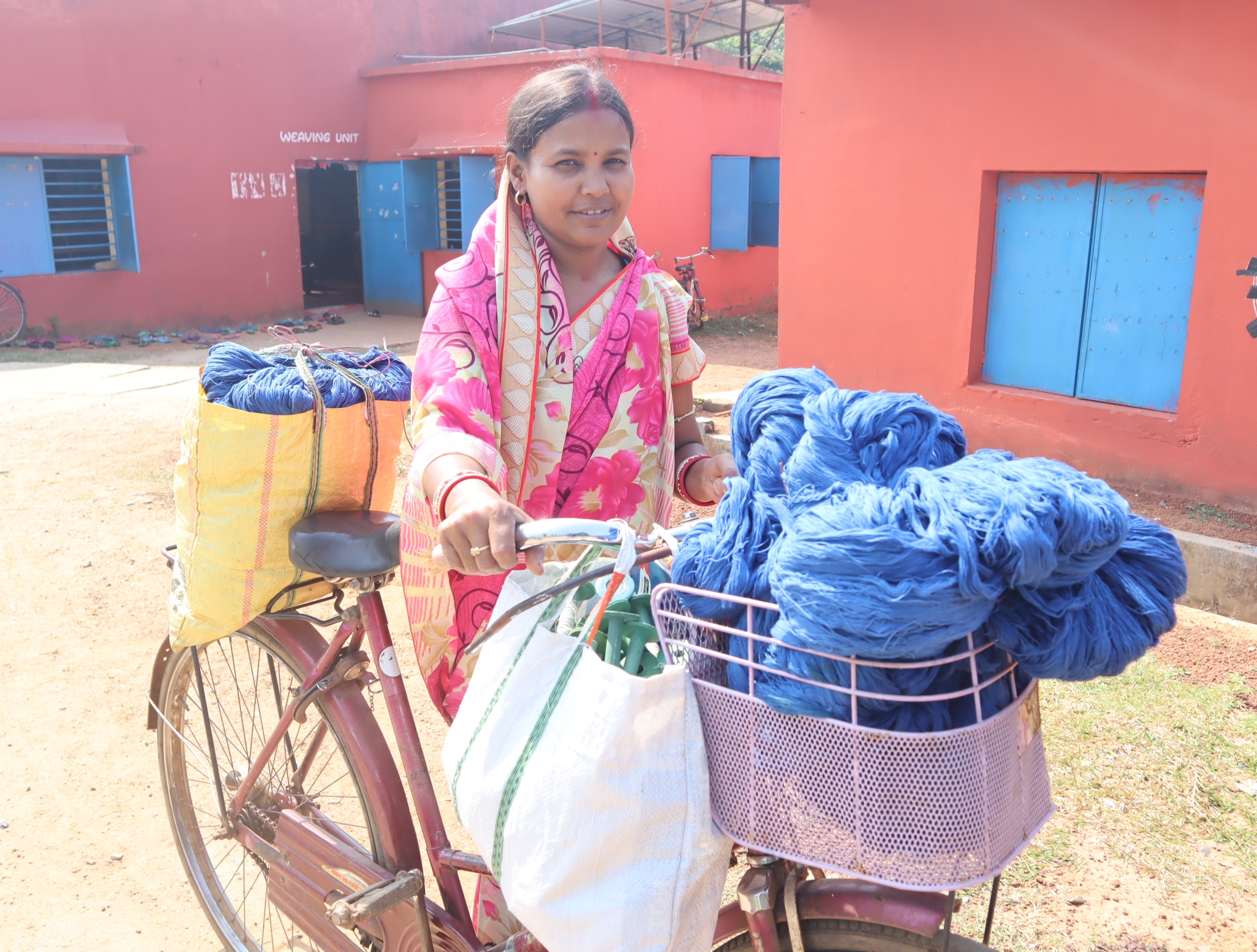
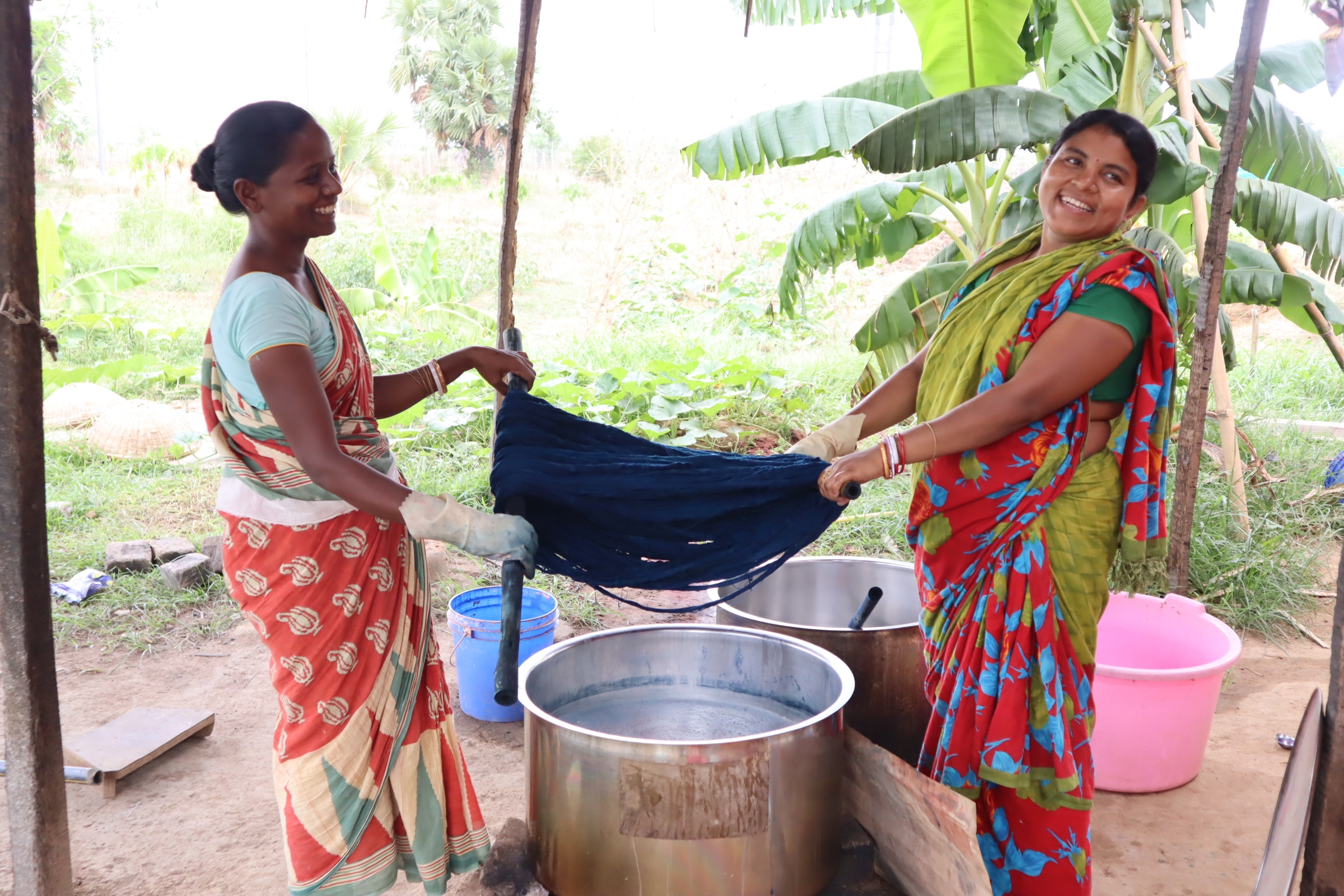
The Mauna Dhwani team believes in sustainability, so for them, using natural, non-carcinogenic dyes, such as those made from indigo plant, cow dung, and locally sourced plants, was paramount. The process of women, by women, and for women began with cotton farming and ended with textiles that were eco-friendly and culturally resonant. Their work received support from the Ministry of MSME under the SFURTI scheme, which provided small funding and helped scale the project.
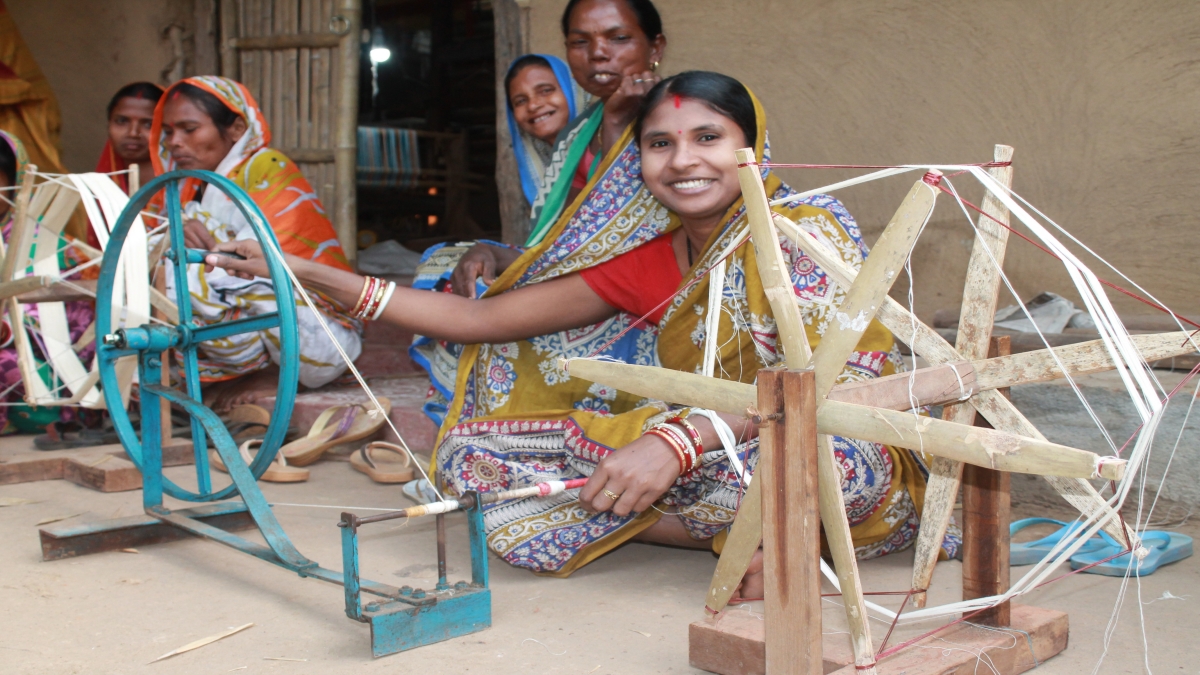
“To build an entire ecosystem, we got desi cotton seeds, cultivated them on a commercial basis. After harvest, around 100 women were engaged in hand-spinning threads. Indigo is expensive, but we sourced the seeds from Rajasthan and found that Mayurbhanj’s climate is conducive to cultivate it. That was a big breakthrough. So we now have dye made out of its leaf pigments. Then we had our weaving centres,” explains Gobinda.
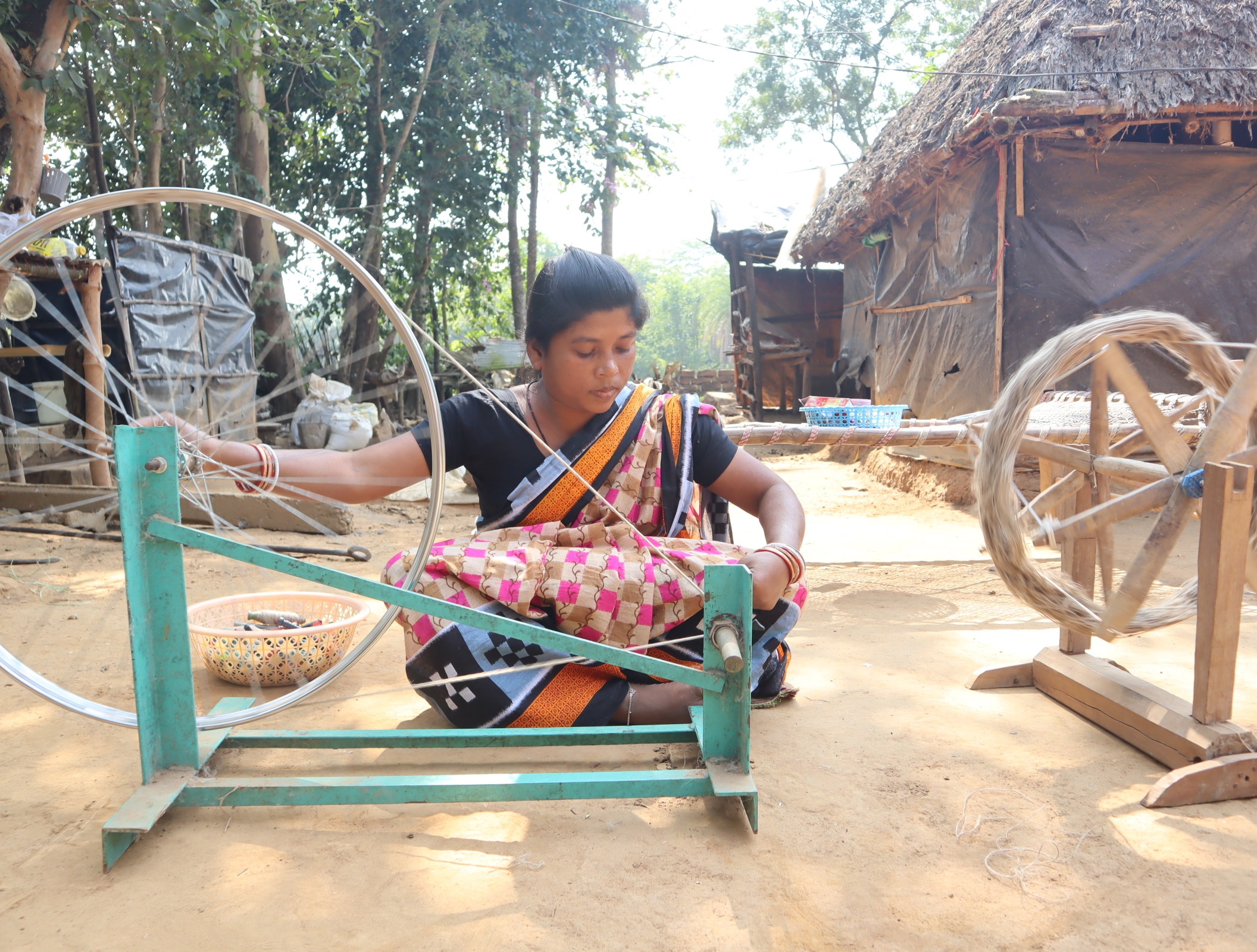
Traditionally, weaving was done at home, but women did not want to do it by juggling household chores and then work for commercial ventures. “We felt they wanted to break free and worked better at weaving centres, and they knew they had to compete with niche markets,” he says.
So micro weaving centres were set up, each shared by a cluster of villages, where women worked for seven to eight hours collectively in better-ventilated, collaborative environments. Though Bindu began her work in Mayurbhanj in early 2018, the pandemic, ironically, was a testing time and it accelerated the work of the foundation, and also proved a blessing.
“When, during the lockdown, people returned to the villages, we were forced to scale up our operations and more women joined the workforce,” Gobinda recalls. The team focused on sarees more than gamchhas, which fetched less price, also experimented with Karuna silk and expanded infrastructure to ensure quality. “The first phase that saw training of six women is now a full-fledged movement. Now we are trying to make master weavers from among the trained women who have achieved expertise,” adds Gobinda.
Inclusivity being an important part, older weavers, many aged 50 to 55, also joined the movement and were given roles in pre-weaving activities. “We did not want anyone to be left behind. Earlier, we used to depend on artisans from Bengal to become master trainers. But then we trained our own women as master trainers,” he quickly adds.
The foundation has issued artisan ID cards and is helping weavers access social security benefits. Besides, Mauna Dhwani ensures fair pay even during training. “We pay Rs 6,000 a month during the training period. But after training, they earn anything between Rs 12,000 and Rs 18,000,” says Gobinda.
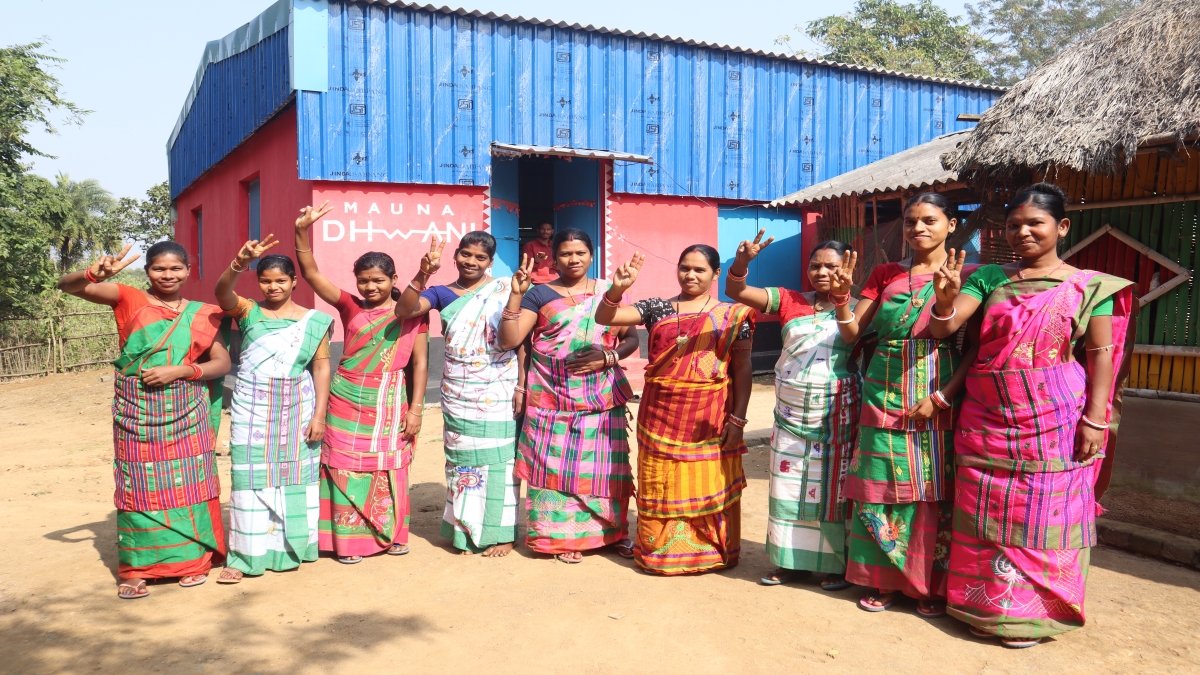
Maina Baskey is one of the 800 women trained by the foundation, who has achieved self-sufficiency. She devotes all her time at the weaving centre and earns well. “I am a graduate and was working in a school in my parents’ house before marriage. But after Covid, I lost my job. After marriage, at Atanati, I joined the weaving centre,” says she, who was given a rousing reception with drums and music in her village when she returned from New Delhi after meeting President Murmu.
Today, many like Maina are happy, but ask Bindu: was the journey easy? “Not at all. The initial two years were very difficult. Hurdles galore, we faced threats from locals to mafias. Even the men, mostly indulging in Handia and alcoholism, did not support our venture. Every payday, they would stand near the gates of the weaving centres so that they could grab the pay of their women and run away to booze,” narrates Bindu, adding, now things have changed. "More is expected to change after the PM praised our efforts," she smiles.
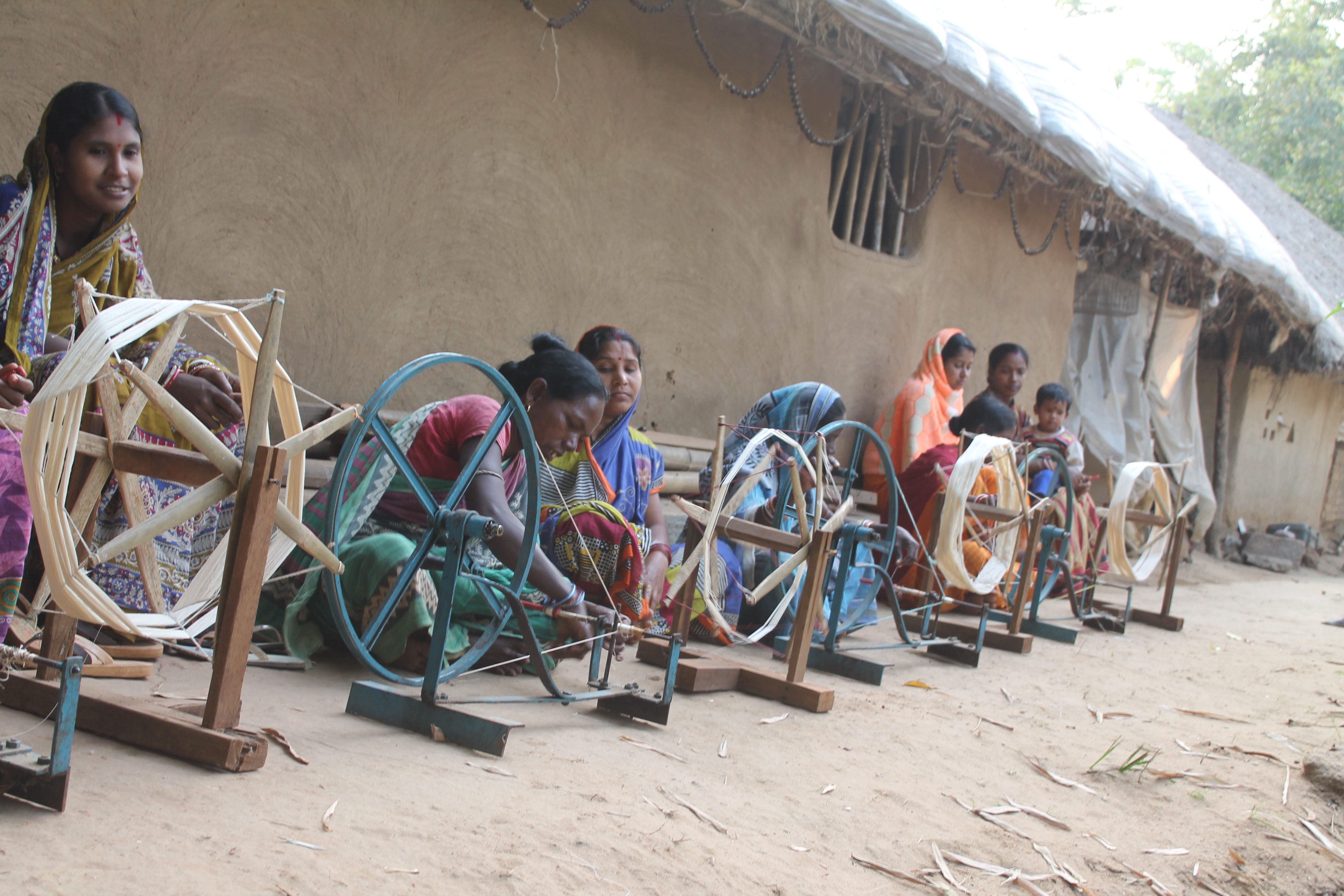
On her vision for the weaves of Mayurbhanj, Bindu says, miles to go before I sleep. A software has been developed to help women run the weaving societies, 21 structures built to enable the women to work in all fields of making sarees - from spinning threads, weaving, embroidery, to tailoring. “I also look at having a residential school for women, creating more micro-entrepreneurs, developing the model which can be emulated by all or be an open-source knowledge, having more spinning mills so that dependence on other states for threads at expensive prices is completely stopped,” says Bindu during a telephonic conversation from Bangalore where she runs her consulting firm.
Read More