Exclusive | India’s AI Will Be Ethical, Inclusive And Homegrown: IndiaAI CEO
A government official said India is building ethical, inclusive AI rooted in Indian needs, with light-touch regulation to balance innovation and safety, reports Surabhi Gupta.

Published : June 3, 2025 at 10:22 PM IST
|Updated : June 3, 2025 at 10:41 PM IST

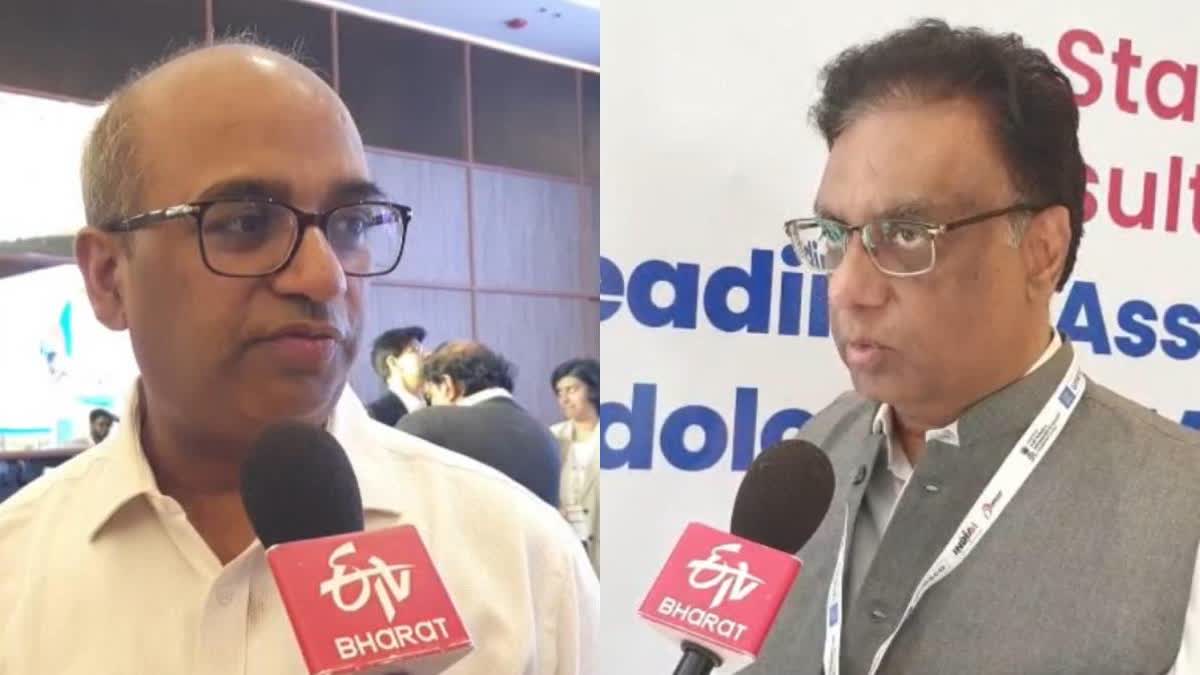
New Delhi: The Government of India has mobilised to undertake a multi-faceted strategy to develop responsible, safe, inclusive, and trustworthy AI. At the fifth and final Stakeholder Consultation regarding the AI Readiness Assessment Methodology (RAM), Abhishek Singh, CEO of IndiaAI and Additional Secretary at the Ministry of Electronics and Information Technology (MeitY), stated the Government's efforts towards AI governance, innovation and deployment of applications.
“India’s approach to AI has been pro-innovation to build applications that are responsible, safe, and that make a difference to the lives of common people,” Singh said. Singh stated that the country is focusing on building foundational AI models based on Indian datasets and deploying AI in a manner that is trustworthy, fair, and inclusive.
From Frameworks to Implementation
India has governance guidelines for AI that very much emphasise developing responsible and ethical applications. Singh emphasised the importance of going beyond frameworks and developing tools to identify whether AI applications are implementing the frameworks.
"With this readiness methodology, we'll be developing tools that will ensure applications are actually conforming to the frameworks", he said, "that they don't carry any bias, are trained on fair and inclusive datasets, and are intended for application across India."
The readiness methodology, developed in collaboration with UNESCO, will enable India to assess AI across five dimensions: responsibility, safety, trustworthiness, ethics, and inclusivity. According to Singh, these principles will guide both public and private sector AI deployments, especially in sectors like healthcare and agriculture, where AI has the potential to transform last-mile service delivery.
Building Indian AI, for India
Singh strongly advocated for indigenous AI development. “India's main strength is our talent. We are trying to build Indian foundation models, trained on Indian datasets. We are trying to build Indian applications,” he said. Highlighting recent consultations in cities like Guwahati, Hyderabad, and Bangalore, Singh underscored the government’s commitment to tailoring AI frameworks to local needs.
But Singh also issued a word of caution. “We must move beyond discussions and conferences to concrete actions,” he said, urging stakeholders to focus on implementation. Indian AI startups, he added, are actively working on foundational models and compute investments, but the ecosystem must align itself with the principles of responsible AI deployment.
“We are working to develop tools to detect bias, tools to detect deepfakes, and watermarking of AI-generated content,” Singh said, highlighting ongoing initiatives to tackle emerging AI risks.
Bridging Regulation and Innovation
Ajay Sharma, an AI governance expert and cyber law professional, echoed similar concerns. Speaking to ETV Bharat, Sharma emphasised that responsible governance is critical, especially as AI penetrates every aspect of life. “Let’s take an example of healthcare. If you get any diagnostic done with an AI application, you, as a consumer, should be able to rely on that. The dataset should be accurate, the LLM ethical, and the output responsible,” he said.
Sharma supports the development of an Indian AI law, akin to the European Union’s AI Act. In January, the Indian government released recommendations for public consultation. We expect a robust AI governance law soon. It should support innovation while ensuring ethical use,” he said. Sharma’s work focuses on building safety, security, and transparency into AI systems. “I am trying to help technical companies implement AI in a responsible way,” he added.
Tackling Deepfakes and Emerging Threats
One of the pressing concerns voiced at the consultation was the proliferation of deepfakes and misinformation. Sharma, who also specialises in cyber law, warned about the evolving nature of threats. Earlier, it was fake OTPs and voice matching. Now, with tools like Google’s Flow, you can create hyper-realistic AI-generated movies. It’s going to be much harder to tell what’s real,” he cautioned.
To counter this, the government and stakeholders are proposing watermarking technologies and policy interventions. “If I create a generative AI-based video, it should be visibly marked as such. That’s how a common user will know it’s synthetic content,” Sharma explained. He stressed the need for a governance system that encourages ethical AI use and deters misuse.
Balancing Global Frameworks with Local Needs
India’s AI strategy does not operate in a vacuum. While aligning with global standards like UNESCO’s RAM framework, the country is also adapting them to its unique socio-economic context. “We need a law that is both global and local,” Sharma said. India has its challenges, diversity, inclusivity and digital literacy. Our AI law must reflect that.”
He also pointed out a critical issue: regulation must not stifle innovation. “In the EU, there’s criticism that the AI Act may curtail innovation. Even the U.S. Vice President recently said Europe is cutting innovation. India must strike a fine balance,” Sharma said. “We want regulation that protects people, but also allows startups and developers to flourish.”
Towards a Safe and Inclusive AI Future
Both Singh and Sharma emphasised that the consultations are not mere academic exercises. They are paving the way for actionable policy. “Today’s consultation will help create applications that can detect deepfakes, watermark AI-generated content, and guide future laws,” Sharma said.
Singh summed up India’s vision succinctly, “Build AI in India, make AI work for India.” From high-end compute infrastructure to language APIs, the goal is to ensure that AI solutions are not just technologically advanced but also fair, inclusive, and tailored to real-world needs.
As the final consultation draws to a close, the path ahead is clear. India is not only preparing to lead in AI innovation but is also setting benchmarks in ethical AI governance that could serve as a model for the world.
Key Takeaways
- India’s AI strategy is centred on responsibility, safety, trust, ethics, and inclusivity.
- Foundation models are being trained on Indian data, with a focus on citizen-centric applications.
- The AI Readiness Assessment Methodology (RAM), developed with UNESCO, is being tailored for Indian needs.
- Tools are in development to detect bias, watermark AI content, and manage deepfakes.
- India is working on an AI law that encourages innovation while ensuring ethical deployment.
- Consultations across cities like Guwahati, Hyderabad, and Bangalore have helped shape the national approach.
- The government aims to balance global standards with local realities, especially in healthcare and agriculture.