Pygmy Hogs Make a Comeback: Conservation Efforts Spark Hope in Assam
Once thought extinct, pygmy hogs are thriving in Assam's protected areas, with around 420 in the wild and 95 in breeding centres.

Published : December 13, 2024 at 9:18 PM IST

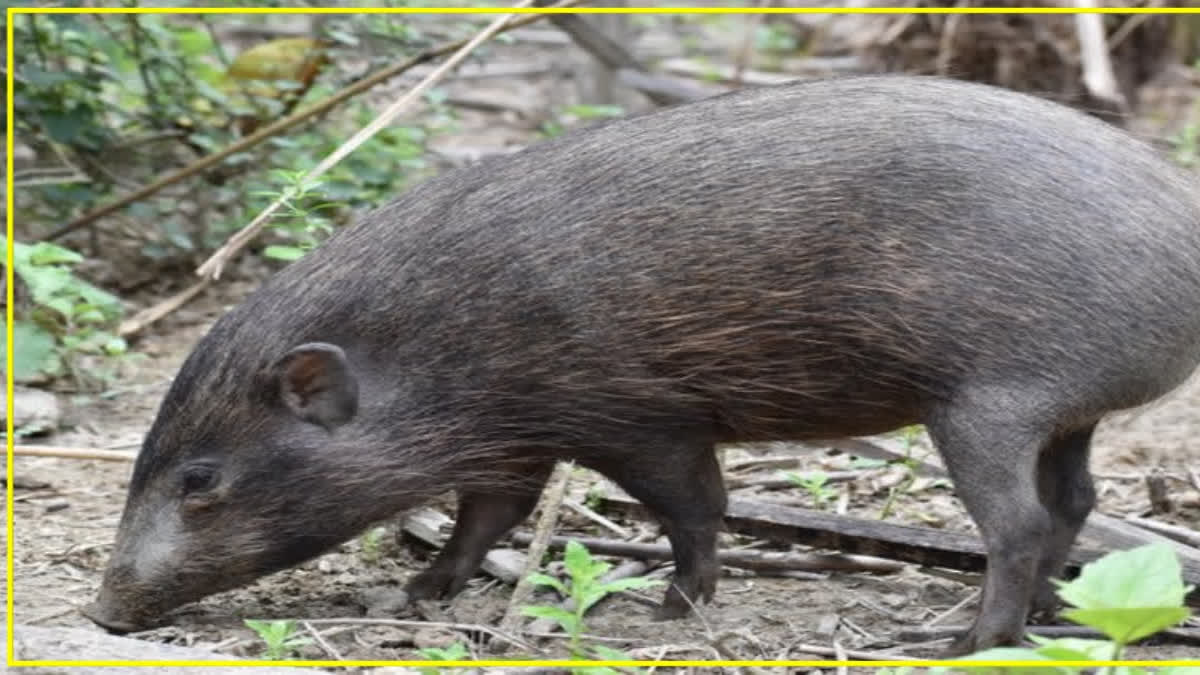
Tezpur: Once considered extinct, the pygmy hog, the smallest pig in the world, is thriving in the jungles of Assam. According to experts involved in the Pygmy Hog Conservation Project, there are about 420 pygmy hogs in four protected areas of Assam: Manas National Park, Orang National Park, Sonai Rupai Wildlife Sanctuary and Bornodi Wildlife Sanctuary. In addition to this wild population, 95 pygmy hogs are kept at two Pygmy Hog Breeding and Research Centres, one in Basistha, Guwahati, and the other near Assam's Nameri National Park.
Listed as a critically endangered species by the International Union for Conservation of Nature (IUCN), pygmy hogs are the smallest and rarest members of the pig family. Belonging to a unique monospecific genus with no close surviving relatives, these pygmy hogs are among the few mammals in the world that construct a ‘house’ or nest to live in. Unfortunately, the species is on the brink of extinction, having been eliminated from most of its original range in India and Nepal. In the past, it was found in a narrow strip of tall, wet grassland plains in the Sub-Himalayan region.
With a height of 20 to 25 cm and a length of 65 cm, pygmy hogs are also listed in Schedule I of the Indian Wildlife (Protection) Act, 1972. Parag Jyoti Deka, Project Director of the Pygmy Hog Conservation Programme in Assam, said that the species was thought to be extinct until 1971 when a few individuals were rediscovered in Bornodi Wildlife Sanctuary in Assam.
"The conservation activities to conserve the pygmy hogs were taken up only after 1996 under the Pygmy Hog Conservation Programme (PHCP), initiated jointly by Assam forest department in partnership with the UK-based Durrell Wildlife Conservation Trust, IUCN Wild Pigs Specialist Group and the Aaranyak, a biodiversity support organisation in Assam," he said adding that over 420 captive breed pygmy hogs have already been released in the wild under the programme.
"They normally live in the grasslands and it is difficult to monitor them as they seldom come out to the open area. However, we have also used camera traps to monitor their developments," he said. Deka said that grassland degradation is one of the major reasons for the near extinction of the species.
He said that conservation efforts since 1996 have, however, put the species on the path of recovery now. "Since 2008, over 400 hogs have been reintroduced in four protected areas of Assam. This year alone we have released 179 pygmy hogs into the wild," he said.
It may be recalled that under the reintroduction of the wild programme, various activities have been undertaken to ensure the survival of the hogs in the wild. These include field surveys, conservation breeding after capturing founder individuals from the wild, preparing the captive hogs in a semi-wild facility, proper grassland management and restoration at the release sites, reintroduction and monitoring of released populations, biological and behavioural studies in captivity, and conservation education and action in the fringe areas of the proposed release sites.