Parenting Teens In The Digital Age: Experts Call For Balance, Empathy, And Open Dialogue
In a conversation with ETV Bharat, Professor Deepti Navaratna and Chitra Iyer discussed practical strategies for a resilient parent-child relationship in the digital age.


By Anubha Jain
Published : November 10, 2025 at 12:55 PM IST

Bengaluru: Parenting teenagers in the digital age comes with a new set of challenges. As Generation Alpha (those born between 2010 and 2024) grows up immersed in a world dominated by screens, social media, and constant connectivity, parents are often left wondering how to foster meaningful dialogue and genuine connection with their tech-savvy teens.
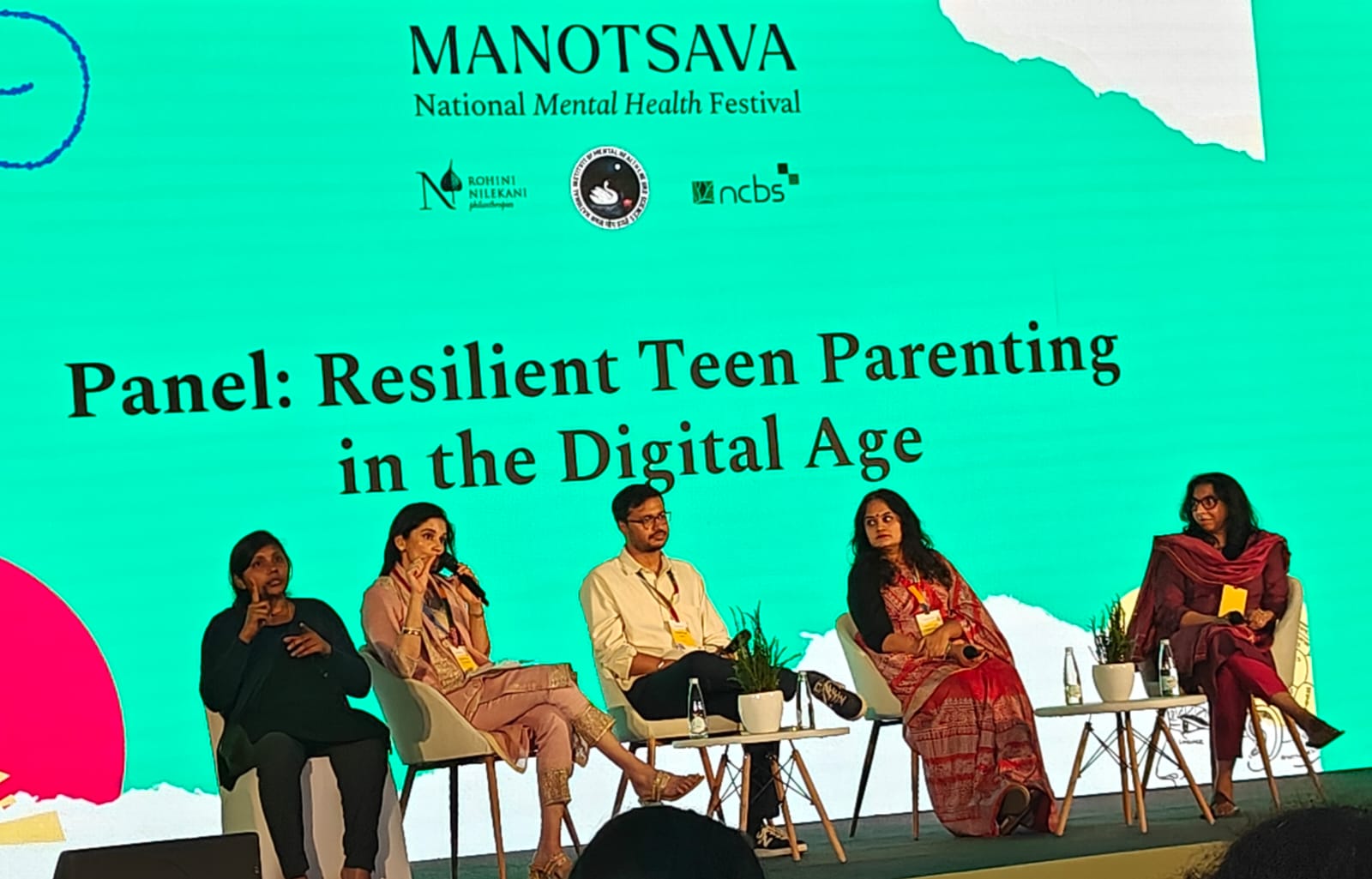
At Manotsava 2025, a session on “Resilient teen parenting in the digital age” brought together experts to explore the shifting mindsets of today’s youth, the double-edged nature of digital engagement (especially through video games), and practical strategies for building stronger, more resilient parent-child relationships in an age defined by rapid technological change.
The panel featured Sujata Kelkar Shetty, author, scientist, and resilience coach; Professor Deepti Navaratna from the National Institute of Advanced Studies; Angad Singh Malik of the Eight Goals One Foundation (8one); and moderator Chitra Iyer, co-founder and CEO of Space2Grow.
Parenting teens in a screen-filled world
Chitra Iyer noted that studies show urban children with shared devices spend an average of 2–5 hours per day on their phones, whereas in rural areas, usage is typically 1–2 hours per day. She added that there is no significant gender or location bias in how teenagers use mobile phones.
Angad Singh Malik emphasised that the world of video games spans a vast spectrum. Taking the example of Celeste, a simple rock-climbing game with ambient music, he explained how it can help players cope with anxiety and stress. While the game doesn’t “fix” these problems, it illustrates how video games can provide safe spaces for emotional exploration. Malik stressed that the only way to truly understand this spectrum is to engage with it personally, set aside stereotypes, and approach it with an open mind. He said that when parents watch or play games of shared interest with their children, it can lead to long hours of productive interaction and help strengthen parent-child bonds.

Parenting is the hardest job in the world that nobody trained us for, said Sujata Kelkar Shetty. Responding to a question, she said that the quality of sleep matters. If a teenager hasn’t had sufficient rest during the night, they cannot make up for lost learning and memory by sleeping in on the weekends. While sleep may be less critical for adults, it is extremely important for teenagers. Maintaining good sleep hygiene should be taken seriously to support their cognitive development and overall well-being.
Professor Deepti Navratna noted that the key imperative of the session was resilience on the part of parents; that they should not lose themselves in the process of parenting. Parents must maintain their own sense of balance and live fulfilling lives, so that their children, in turn, can grow up to live happily and meaningfully.
Resilience begins at home: Sleep, balance, and emotional health
On the sidelines of the event, Professor Deepti Navaratna and Chitra Iyer discussed the topic in detail with ETV Bharat.
When asked what resilience looks like for today’s teenagers who are growing up online, Navaratna explained that, from a cognitive perspective, resilience means being aware and mindful of one’s actions. Using gaming as an example, she noted that resilience involves recognising the potential pitfalls of excessive gaming and maintaining balance in one’s activities. It’s about building a lifestyle that promotes balance and coherence. For instance, if someone spends long periods looking at a flat screen while gaming, they can offset this by occasionally looking at a landscape or surroundings that provide visual depth.

Similarly, if gaming is an active, visually intensive activity, one can switch to a more passive activity such as listening to music—shifting from the visual to the auditory domain. This kind of sensory balancing and impulse control is an essential aspect of resilience. These factors ensure that young people remain engaged but not overwhelmed or lost in the digital world.
In response to the question about how parents can set effective boundaries that still respect a teenager’s gaming independence, and how they can encourage digital citizenship and empathy online, Navaratna emphasised that parents must be the change they wish to see.
She explained that children cannot become responsible digital citizens if their parents themselves do not model that behaviour. She highlighted the importance of a coevolution of lifestyle that brings the family unit together. In today’s world, simply setting limits or enforcing strict boundaries is often ineffective—“we can’t police anybody,” she noted.
Instead, she suggested reinforcing positive frameworks or “scaffolds” that naturally prevent the misuse of digital technology. Shared activities such as spending quality family time together or engaging in practices like collective chanting can help strengthen family bonds and reduce overreliance on digital devices.

On the other hand, Chitra Iyer explained that resilience is about how we cope with the challenges of the digital age. She noted that a lot is happening in this space, especially from the perspective of teenagers, who are accessing screen time, social media platforms, and various digital tools often without adequate support systems to ensure their safety.
According to her, building resilience means equipping young people with the knowledge and ability to use these platforms responsibly while staying safe. Parents, she emphasised, play a crucial role in fostering this balance and guiding their children through the digital world.
Speaking about how the digital world has changed the challenges that teens and parents face compared to a decade ago, she explained that ten years ago, children were not digital natives. Today, however, the digital world is their reality—there is no longer a clear divide between “online” and “offline”; everything is interconnected and online.
In this context, parents play a crucial role in helping children cope with these rapid changes. Technology is evolving at an extraordinary pace, and while children often stay ahead of these changes, parents are still trying to understand and find their place in the digital landscape. It is therefore important for parents to recognise and empathise with what their children are experiencing online.
Co-creating healthy digital habits as a family
She referred to the study conducted by Space2Grow that found that while 90 per cent of children reported facing some form of risk or harm online, only 19 per cent had actually shared these experiences with their parents—indicating that many do not feel they have a safe space to talk about such issues. Building these safe spaces for open and non-judgmental conversations between parents and children, she emphasised, is essential.

When asked about digital habits that build rather than erode resilience, she said that one of the most effective ways is to co-create digital mediation strategies as a family. This means coming together to define what healthy digital habits look like, rather than imposing rules unilaterally. If parents set certain guidelines, they must also follow them.
As a family, these habits should be discussed and agreed upon collectively, giving children a sense of ownership and responsibility. For instance, families can practice digital detoxes on weekends, where everyone—parents included—takes a break from screens. Parents may need to set aside their own “me time” online to support and model this process.
Discussing what a balanced relationship with technology looks like for families today, Chitra Iyer explained that balance means being able to maximise the benefits of technology without falling into the trap of addiction—a very fine line to maintain.
She emphasised that this balance can be achieved through honest, authentic communication within the family—by coming together, sharing experiences, and keeping the conversation open. Children’s online spaces are much broader and more complex than their school environments, so parents need to understand their perspectives as well.
Acknowledging that digital technology and AI are here to stay and becoming an integral part of children’s lives, she stressed the importance of parents being more involved in their children’s digital interactions—not to control them, but to provide guidance, support, and understanding.

It is pertinent to mention that the National Mental Health Festival, hosted by Rohini Nilekani Philanthropies (RNP) in collaboration with NIMHANS and NCBS, concluded on November 9. Bringing together leading voices from mental health, science, policy, art, and lived experience, the two-day festival drew over 6,000 participants who engaged in conversations, performances, workshops, sharing circles, and exhibitions focused on mental well-being.
