India To Launch 500 Ethanol Fuel Stations By Year-End, Expand To Over 5,000 By 2027
India plans to establish 500 ethanol fuel stations by 2026, starting with 50-100 in major cities as part of efforts to expand flex-fuel mobility.

Published : June 5, 2026 at 12:18 PM IST
|Updated : June 5, 2026 at 12:24 PM IST

New Delhi: The Government of India plans to roll out 500 ethanol fuel stations across the country by the end of 2026, beginning with 50-100 stations in major cities such as Delhi-NCR, Pune, Mumbai, and Nagpur, according to Hardeep Singh Puri, Minister of Petroleum and Natural Gas.
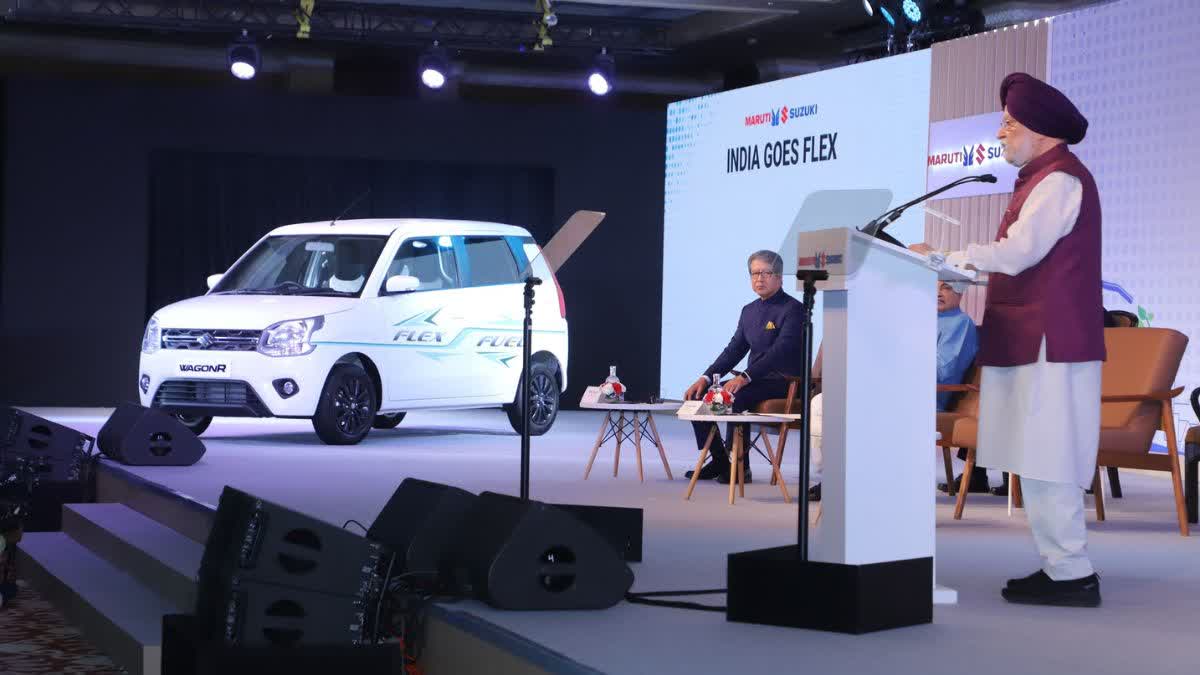
The announcement was made at an event where Maruti Suzuki unveiled India’s first flex-fuel car in the presence of Puri and Nitin Gadkari, Minister of Road Transport & Highways. Speaking at the launch, Puri projected that by 2027 India will have over 5,000 ethanol fuel stations, a move aimed at reducing the nation’s dependence on fossil fuel imports.
"I think we are starting with about 50 to 100 (ethanol) dispensing stations in the Delhi-NCR region, Pune, Mumbai, and Nagpur, etc. These 50-100 (ethanol) dispensing stations will hopefully go up to 500 towards the end of 2026," he said.
Puri said making Euro VI vehicles compliant with E100 could cut India’s $120 billion fossil fuel imports. He added that the government is working to boost adoption with measures like pricing support, road tax concessions, E85 testing fuel, identifiers for flex-fuel vehicles and outlets, consumer awareness campaigns, and infrastructure for storage and dispensing.

"This is not merely a transition in fuel, but it is the creation of a complete ecosystem for cleaner mobility, stronger energy security, and greater self-reliance," he said.
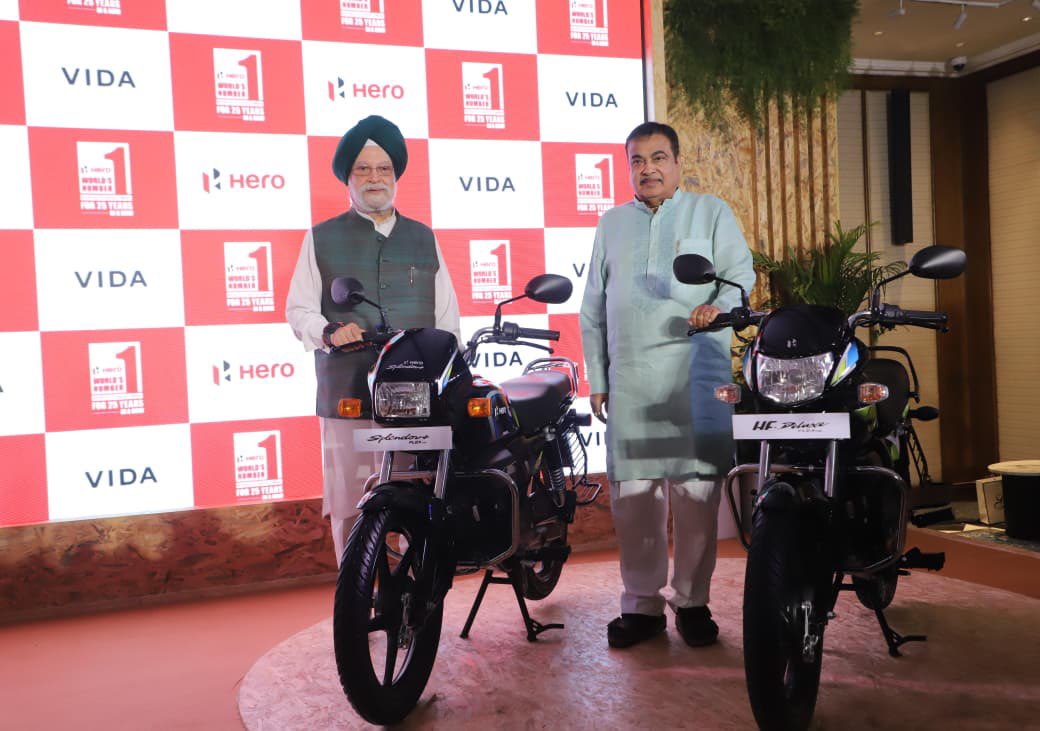
Referring to the launch of Hero MotoCorp's Splendor+ and HF Deluxe Flex Fuel motorcycles, the minister said that if half of all new two- and four-wheelers are flex-fuel compliant, India could unlock 311.8 crore litres of ethanol demand and generate Rs 12,403 crore in additional farmer income. He noted ethanol blending in petrol has already risen from 1.5 per cent in 2014 to 20 per cent today, saving Rs 1.84 lakh crore in foreign exchange by substituting 302 lakh metric tonnes of crude oil.
Adding further, he said that the entry of flex-fuel technology into the passenger vehicle segment is not merely a product launch but also the beginning of a new chapter in India's energy transition. India has nearly 37 lakh passenger vehicles, and large-scale adoption of flex-fuel technology in this segment could significantly increase the impact of ethanol-based mobility, he added.
He said India's ethanol blending programme has become one of the most successful energy transition initiatives, and now the country has the capability to produce ethanol from multiple feedstock sources, such as broken grains, agricultural waste, bamboo, and seaweed. He credited the government approach and a robust ecosystem for the success of the programme, which involves farmers, producers, oil companies, automakers, scientists, and financial institutions.
The Road Transport Ministry has proposed amending emission rules to allow higher ethanol blends and alternative fuels, enabling flex-fuel and pure biofuel vehicles across categories. The draft changes to the Central Motor Vehicles Rules, 1989 cover fuels like E85, E100, B100 biodiesel, and hydrogen-CNG.
