Explained | How IISc's Quantum-Safe Chip Could Protect IoT Devices From Tomorrow's Hackers
IISc researchers created a compact, low-power chip using SQIsign to protect IoT devices against future quantum computer-enabled cyber threats.


By Anubha Jain
Published : March 16, 2026 at 6:25 PM IST

Bengaluru: Researchers at the Indian Institute of Science (IISc) have achieved a significant milestone in cybersecurity with the development of a compact, low-power hardware accelerator chip designed to protect Internet of Things (IoT) devices from future quantum computer threats. This innovation, developed by IISc’s Department of Electronic Systems Engineering (ESE), is the first of its kind to show how hardware can quickly and efficiently verify digital signatures using the SQIsign security method.
In an exclusive conversation with ETV Bharat, lead innovator researcher Prof Utsav Banerjee highlighted the growing risks posed by quantum computing. He noted that using the principles of quantum mechanics, quantum computing can solve certain complex mathematical problems much faster than classical supercomputers. While this offers major scientific opportunities, it also creates a “quantum threat.”
Many current encryption systems rely on mathematical problems that quantum computers could eventually break. A key concern is “harvest now, decrypt later,” where attackers store encrypted data today to decrypt it in the future with quantum computers. To counter this risk, researchers are developing quantum-safe or post-quantum cryptography (PQC) algorithms that can protect data against future quantum-assisted cyber-attacks, he added.
However, PQC algorithms require high computation, larger memory, and increased communication overheads, making them difficult to deploy on small embedded devices. To tackle these challenges, the IISc team, led by Assistant Professor Utsav Banerjee and his PhD advisee Krishna Sai Tarun Ramapragada, focused on SQIsign, an isogeny-based digital signature scheme currently being studied for PQC standardisation.
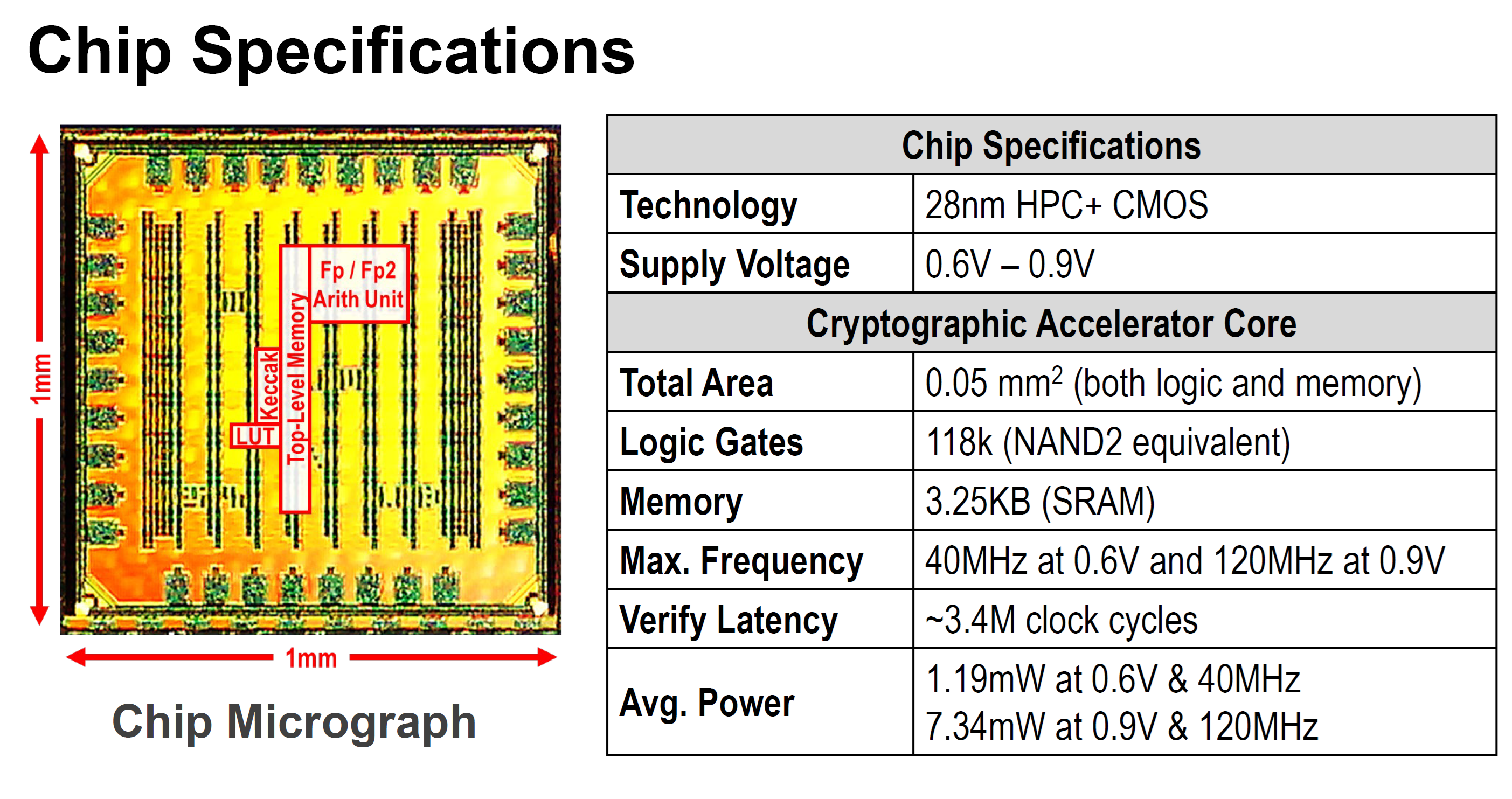
The newly developed chip was built using advanced 28-nanometre CMOS technology. To achieve high efficiency, the researchers introduced several circuit innovations and algorithm-architecture co-optimisations. These improvements targeted modular arithmetic computation, memory organisation, and elliptic curve isogeny evaluation. As a result, the chip delivers nearly ten times better performance and energy efficiency compared to the most advanced software-based implementations available today.
Securing the IoT Ecosystem
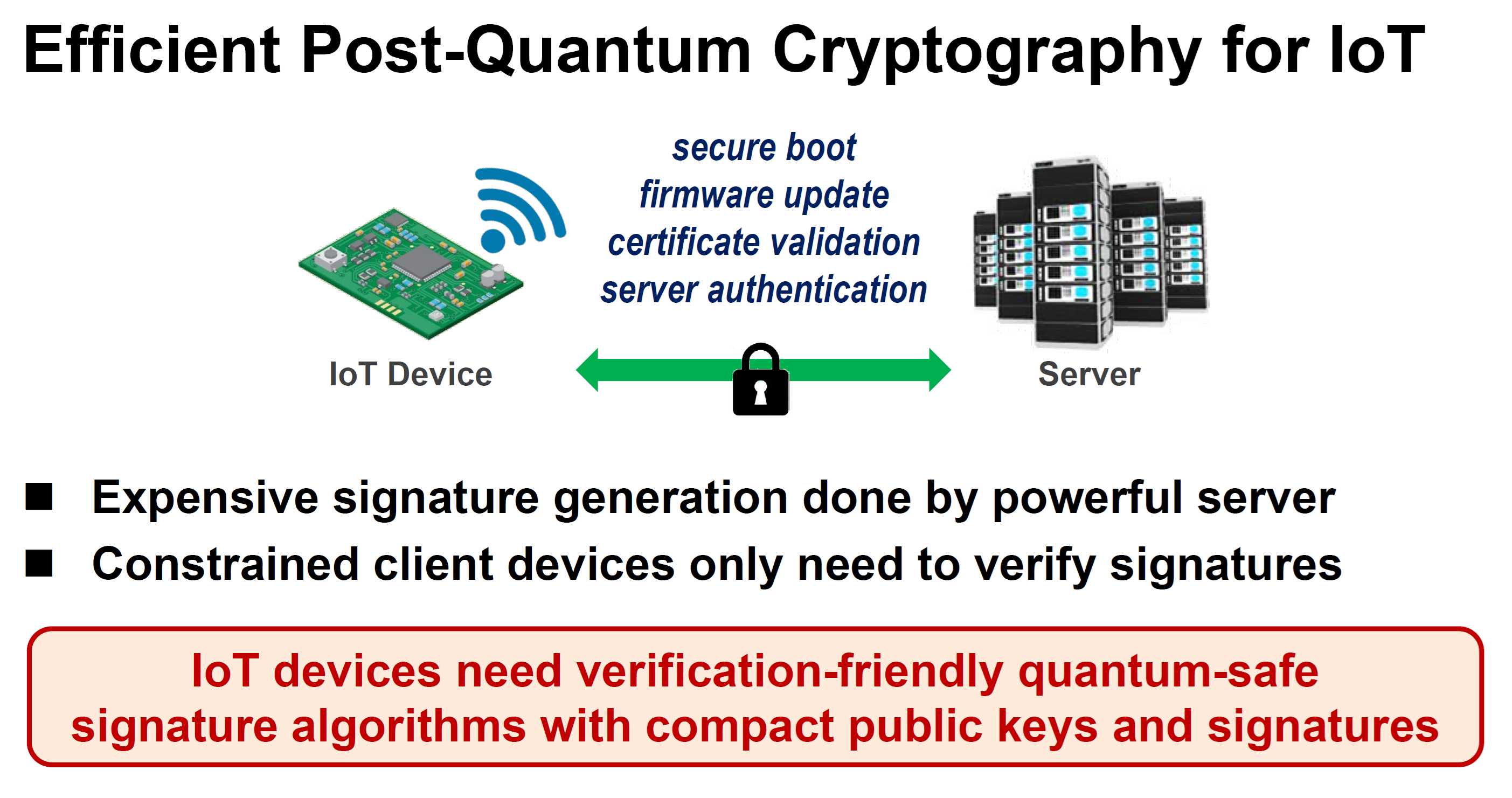
Highlighting the chip’s small size and energy efficiency, Banerjee said the technology could be integrated into mass-produced consumer devices. Banerjee noted that quantum-safe cryptographic algorithms offer strong protection against quantum adversaries but usually require high computational cost, large memory, and significant communication overhead, making them difficult to deploy on resource-constrained embedded systems such as smart home devices, wearables and connected vehicles.
In many IoT applications like secure boot, firmware updates, certificate validation and server authentication, powerful servers generate digital signatures while devices only verify them. This makes verification-efficient algorithms with small keys and signatures particularly suitable for IoT devices. Banerjee said the prototype chip performs hardware-accelerated SQIsign-1D-Uncompressed signature verification, designed to provide low communication overhead, compact hardware footprint and low power consumption.
| Takeaway |
| Banerjee’s chip is tiny, energy-efficient, and designed for everyday devices like smart home gadgets and wearables. It uses a special quantum-safe signature system (SQIsign) that’s secure even against quantum computers, while staying lightweight and fast. In short, it makes strong digital security practical for small devices without draining power or memory. |
He added that the accelerator achieves this through algorithm-architecture co-optimisation, efficient memory organisation, and careful circuit design. “Our hardware accelerator has area and performance similar to pre-quantum elliptic-curve cryptography accelerators. This means the accelerator IP can be easily integrated into consumer electronic devices that require quantum-safe security,” he said.
The security of SQIsign is based on the difficulty of computing the endomorphism ring of a supersingular elliptic curve, a problem believed to be hard even for quantum computers. The scheme also benefits from decades of research in elliptic-curve cryptography, which forms the foundation of many current digital security systems.
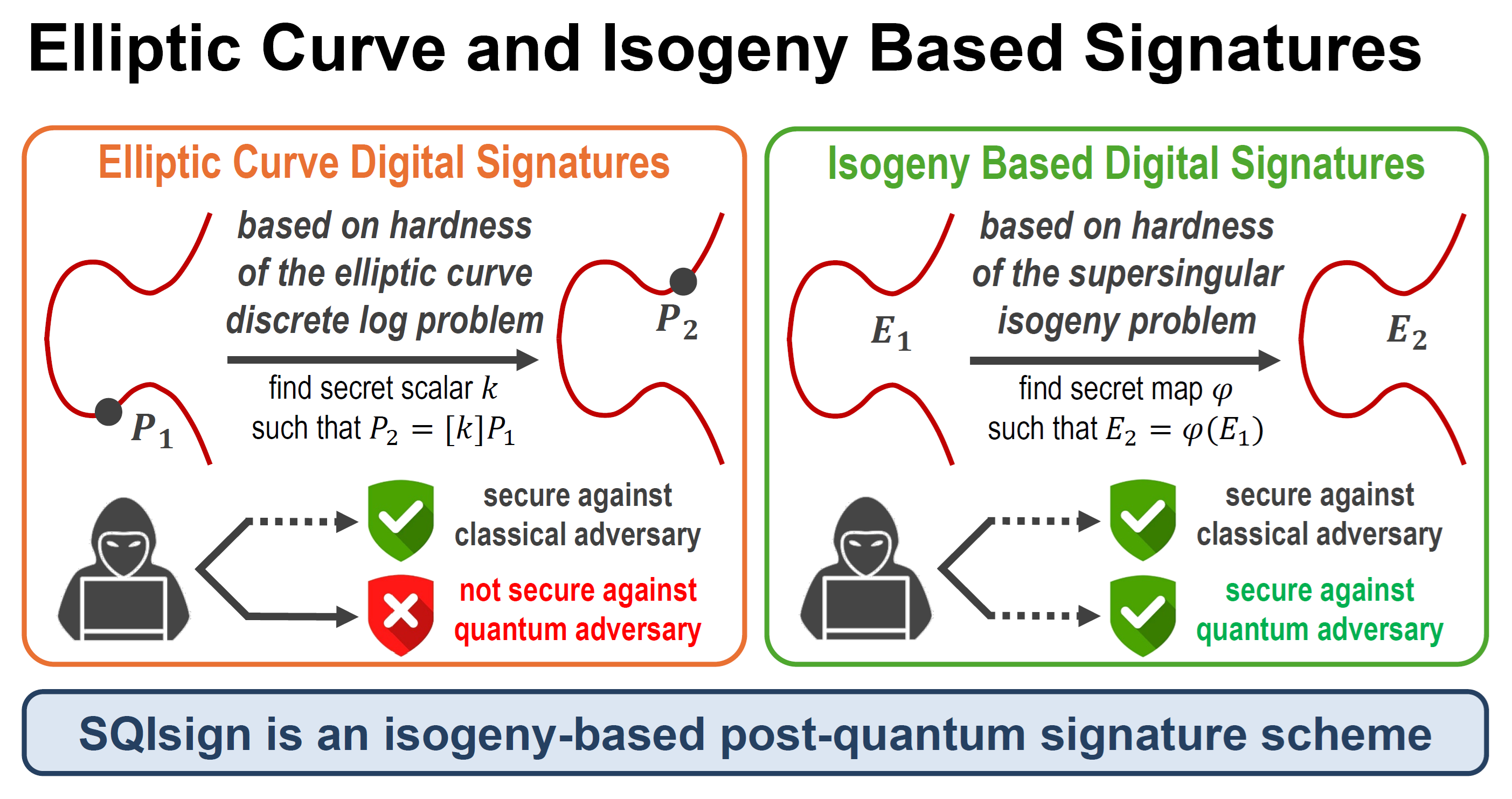
In simple terms, a digital signature works like a digital seal on a document. It confirms that a message was sent by the correct source and that it has not been altered. Such systems protect everything from banking transactions to software updates.
When Can It Reach Real-World Devices?
Responding to when the technology could move from a research prototype to real-world IoT deployment, Banerjee noted that quantum-safe cryptography is still evolving, with new algorithms undergoing years of global security analysis, optimisation, and standardisation. With global standards bodies working on quantum-resilient cybersecurity frameworks, large-scale infrastructure is expected to transition to quantum-safe systems by around 2035. Banerjee said the current chip represents the team’s first prototype, and further optimisation is planned in the coming years. “We expect it may take another three to five years before the technology becomes ready for real-world deployment,” he said.
Global Recognition
The team’s research was recently presented at the 2026 IEEE International Solid-State Circuits Conference (ISSCC), recognised as the world's premier forum for advancements in semiconductor and system-on-chip technologies.
Banerjee emphasised that developing indigenous chips is crucial for India’s digital sovereignty and security, covering both design and manufacturing. His team is working on homegrown security hardware IPs for encryption and authentication, and with initiatives under the India Semiconductor Mission (ISM), they hope such chips will soon be manufactured in advanced technology nodes within domestic foundries.
Role of National Quantum Programmes
Banerjee emphasised that national initiatives are playing a crucial role in advancing quantum research in India. He said recent government programmes aimed at accelerating quantum technologies in computing, communications, and sensing will significantly support research breakthroughs in this strategic field.
He noted that stronger collaboration among government, academia, industry, and startups is essential to overcome research challenges and train the next generation of scientists and engineers for the quantum era. He highlighted the role of the National Quantum Mission in creating nationwide awareness and encouraging large-scale quantum research efforts across the country.
It is pertinent to mention that in November 2025, Union Minister Jitendra Singh also announced four quantum fabrication and central facilities worth Rs 720 crore at IIT Bombay, IIT Delhi, IIT Kanpur, and IISc under the mission. These facilities will focus on quantum sensing, computing, materials, and device development.
Banerjee also acknowledged research support from the Prime Minister’s Research Fellowship, Ministry of Education, Government of India, and the POWERGRID Centre of Excellence in Cyber Security, IISc Bengaluru.
Looking Ahead
Future research in quantum-safe cryptography will focus on rigorous security testing, improving computational and communication efficiency and demonstrating real-world hardware and software implementations. While early prototypes are typically developed in academic laboratories, Banerjee noted that collaboration with industry will be critical for translating such technologies into practical applications. He also emphasised the importance of crypto-agility, allowing systems to switch between different cryptographic algorithms and security levels as new threats and standards emerge.
Experts say the IISc work demonstrates the practical viability of SQIsign for IoT systems and provides a roadmap for hardware-accelerated quantum-resilient cybersecurity. The breakthrough further strengthens IISc’s position in global semiconductor and cybersecurity research as the world prepares for the coming era of quantum computing.
