Capturing The Future: India's Journey In Direct Air Capture And CO2 Utilisation
India is progressing in Direct Air Capture research and pilot projects, but faces significant technical, economic, and policy challenges to large-scale deployment.

By Anubha Jain
Published : February 3, 2026 at 6:39 PM IST

Bengaluru: India is steadily entering the global conversation on Direct Air Capture (DAC)—a next-generation climate technology capable of removing carbon dioxide directly from the atmosphere and delivering negative emissions. While DAC deployment worldwide has begun to scale, India’s efforts are currently rooted in research and early-stage innovation, driven largely by leading academic and scientific institutions.
Active research is underway at several Indian Institutes of Technology (IITs), the Council of Scientific and Industrial Research–Indian Institute of Chemical Technology (CSIR–IICT), and the Jawaharlal Nehru Centre for Advanced Scientific Research (JNCASR), among others.
“Globally, a wide range of DAC approaches exist, but Indian research has so far concentrated on chemical absorption and physical adsorption methods—technologies that are better suited to local expertise, material availability, and climatic conditions. These laboratory efforts are now beginning to move beyond theory, with pilot-scale initiatives signalling a shift toward real-world application,” said Suresh NS, Senior Research Scientist at the Centre for Study of Science, Technology, and Policy (CSTEP) and Head of the Strategic Initiatives Group, which focuses on carbon capture and utilisation, green hydrogen, industrial decarbonization through renewables, and climate-smart agriculture.
One such milestone is being set by Carbon Square, which is constructing India’s first Direct Air Capture plant with a capacity to capture 8 tonnes of CO₂ per day. The facility is expected to become operational shortly, marking a crucial step in translating research into deployment.
In a conversation with ETV Bharat, Suresh shared a comprehensive view of Direct Air Capture (DAC) technologies—how they work, their potential to convert captured CO₂ into value-added products, and the economic, technical, and policy barriers that currently limit large-scale adoption.
Technical and Economic Barriers
Talking about India’s current energy mix, industrial landscape, funding constraints, and the main technical and economic barriers to scaling direct air capture technologies, Suresh explained how these challenges can be addressed. He noted that DAC is an energy-intensive technology, with every tonne of CO₂ captured requiring 5–10 gigajoules of thermal energy and 200–700 kilowatt-hours of electricity. Large-scale deployment of DAC, therefore, demands careful planning.
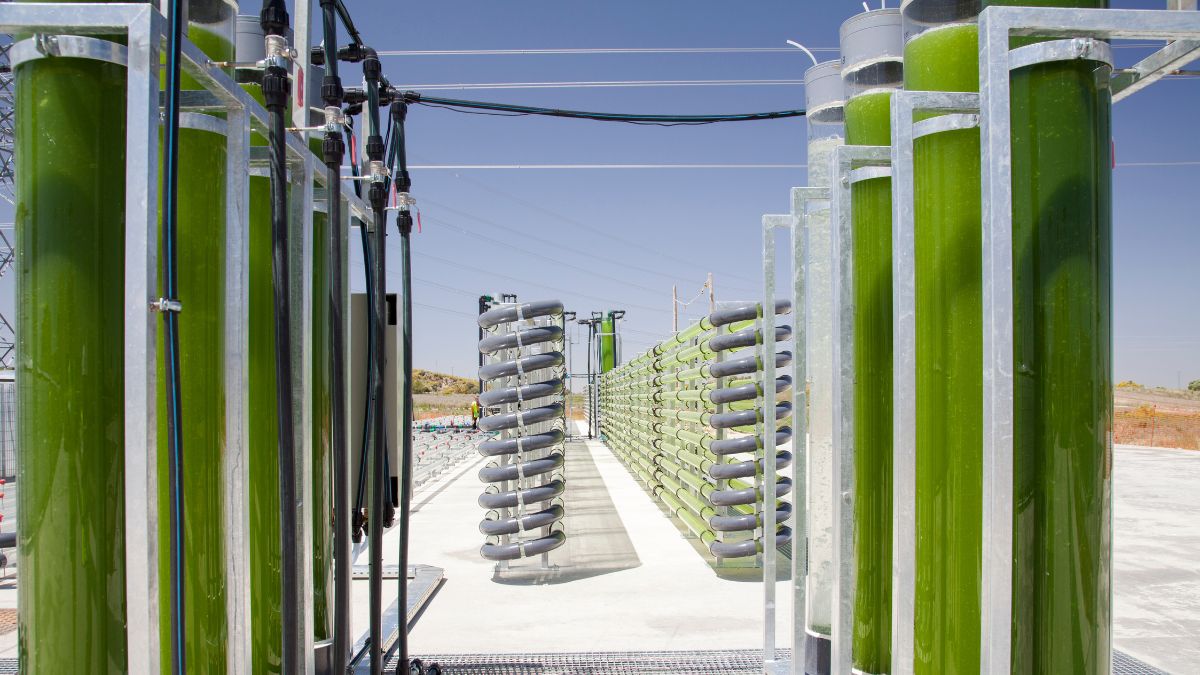
Currently, fossil fuels—coal, oil, and natural gas—account for approximately 75 per cent of India’s total electricity generation in India. To make DAC environmentally viable, fossil fuels would need to be replaced with renewable energy sources; however, this transition would significantly increase costs. He further explained that the challenge is compounded by the very low concentration of CO₂ in ambient air—only 0.04 per cent, compared to about 12 per cent in the flue gas of coal-fired power plants. As a result, to capture the same amount of CO₂, a DAC plant must process nearly 300 times more air than a coal power plant processes flue gas, substantially increasing operational costs.
Discussing other constraints, Suresh highlighted the water and land requirements of DAC. Every tonne of CO₂ captured through DAC requires about seven tonnes of water, compared to 2–4 tonnes in coal power plants. Additionally, capturing one million tonnes of CO₂ per year through DAC requires approximately 50 acres of land, whereas absorption-based capture technologies in hard-to-abate sectors such as steel and cement require only 0.01 acres. The current capital cost of DAC—around Rs 22,500–36,000 per tonne of CO₂—is also significantly higher than traditional capture technologies used in hard-to-abate sectors, which cost Rs 500–1,500 per tonne. Innovations in advanced materials and cost-effective capture technologies are therefore essential to improve CO₂ capture efficiency while substantially reducing water and land requirements for DAC deployment, he added.
Carbon Utilisation Pathways
Highlighting carbon utilisation pathways—such as construction materials, synthetic fuels, and chemicals—as offering the most feasible near-term impact in India, Suresh noted the importance of supportive government policy, PPP models, and incentives to accelerate adoption and the deployment of DAC and CCUS (carbon capture, utilisation, and storage) technologies. He emphasised that India should prioritise the domestic production of fuels and chemicals that are currently heavily imported, thereby creating short-term opportunities to utilise captured CO₂ from DAC as well as other CCU technologies relevant to hard-to-abate sectors.
In this context, he said India should focus on methanol (annual imports of approximately 2.4 million metric tonnes), urea (around 9.1 million metric tonnes annually), as well as soda ash and carbonates, as immediate or short-term targets. In the mid-term, sectors like inorganic carbonates, cement aggregates, and the beverages industry could be prioritised. While these utilisation pathways are not exclusive to DAC, they are critical to accelerating India’s broader CCUS mission.
Suresh further stressed that a key enabling strategy is the creation of CO₂ demand and aggregation centres that connect capture sources—including DAC and industrial facilities—with utilisation and storage sinks. Developing such hubs through a PPP model would allow the government to support essential infrastructure for CO₂ transport, handling, utilisation, and storage, thereby strengthening the ecosystem needed for large-scale CCUS deployment in India.
MRV Systems and Carbon Credit Integrity
Responding to how important DAC and MRV (Measurement, Reporting, and Verification) systems are for ensuring trustworthy carbon credits in India, and what needs to be done to make them work effectively for CCUS projects, Suresh stated that MRV systems are essential for ensuring the credibility of carbon credits in India’s CCUS ecosystem. DAC removes CO2 directly rather than only preventing new emissions from point sources. Hence, it is important to accurately quantify the amount of CO₂ captured, utilised, or stored via DAC while issuing carbon credits with their determined monetary value.
Mentioning an important emerging trend in India’s DAC landscape, Suresh said that there is a growing focus on advanced capture materials, particularly metal–organic frameworks (MOFs). These are increasingly seen as a game changer for DAC, as they offer higher CO₂ selectivity at very low concentrations compared with conventional solvents.
'Progress Depends on Access to Advanced Scientific Infrastructure and Sustained Support'
Speaking to ETV Bharat, Gunjan Sharma and Charvi Singhvi, PhD students at TIFR Mumbai, noted that while climate research and nanocatalyst innovation are advancing, a vital challenge in India is limited access to high-precision tools. Techniques such as operando spectroscopy, high-resolution electron microscopy, and synchrotron facilities are essential to probe catalysts at the atomic scale and reveal mechanisms that govern performance and stability. Without them, researchers often know a material works but not why, slowing rational catalyst design. Improved funding and streamlined access could enable breakthroughs beyond incremental gains.
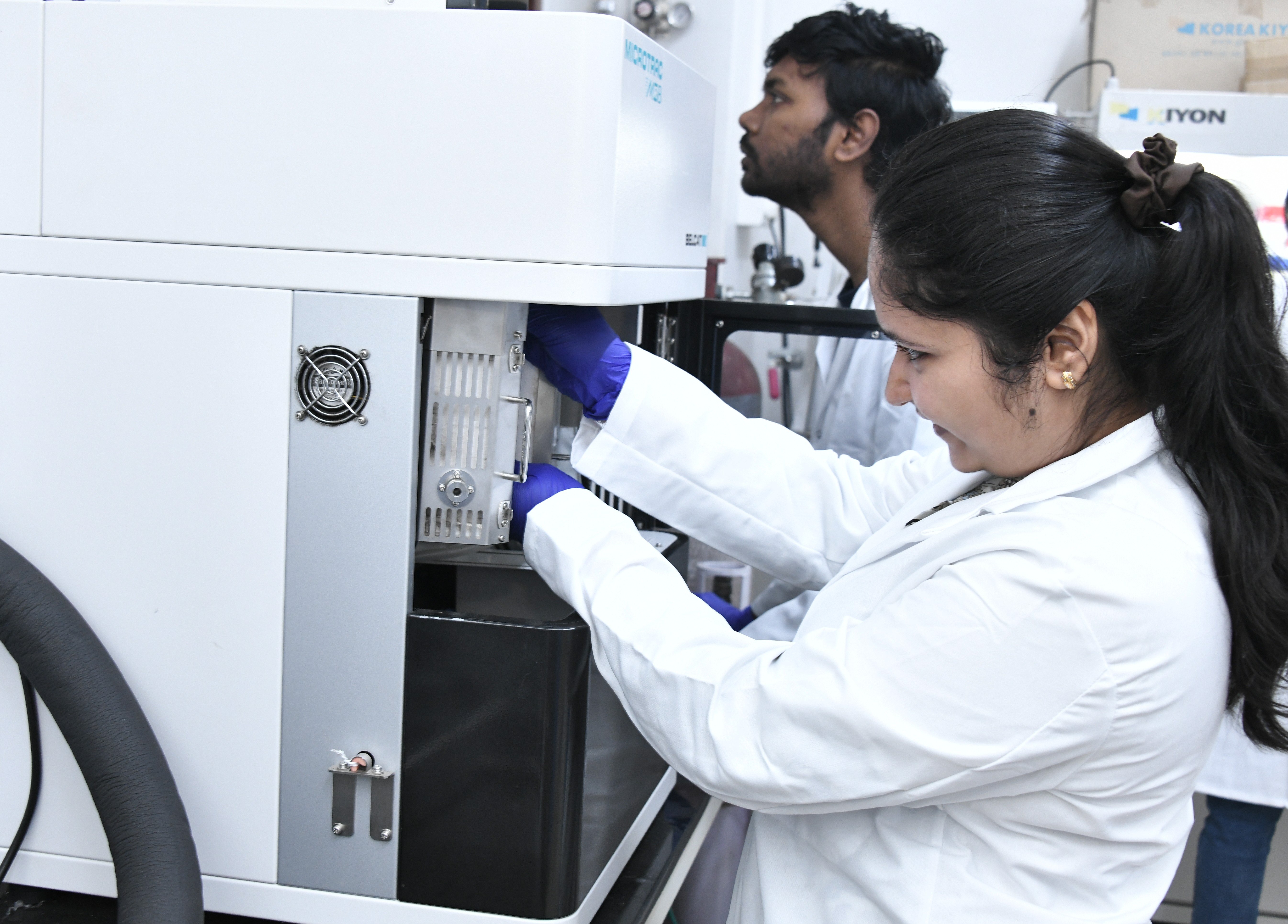
They also highlighted the gap between laboratory research and industrial deployment, with most CO₂ conversion technologies in India at low readiness levels (TRL 2–4). Upscaling photocatalytic systems requires scientific innovation, intelligent reactor design, and dedicated testing facilities, yet many ideas fail to undergo long-term validation. Sustained industry–academia collaboration, combining reliability and scalability with innovation and vision, could unlock transformative progress.
Ultimately, CO₂ conversion will be most impactful when designed in India, embedded in domestic industries, powered by clean energy, and supported by forward-looking policy—positioning the country as a climate innovation leader by 2047.
They concluded and said, "As PhD students, our work marks early but important steps toward practical CO₂ conversion technologies. Beyond new catalyst designs, progress depends on access to advanced scientific infrastructure and sustained support. Nanocatalysis and CO₂ conversion represent a commitment to addressing legacy emissions and align closely with the UN SDGs on climate action, innovation, and responsible consumption. India has the talent and urgency—what it needs now is long-term confidence in its scientists and ecosystems that carry ideas beyond the prototype stage."
