What Ails Education System In Jharkhand?
The scenario is marked by claims on improvement in enrollment and dropout figures on one side and the ground realities of infrastructure on the other.

Published : January 8, 2026 at 5:14 PM IST

Ranchi: Primary and secondary education in Jharkhand remains caught between the claims of the authorities on improvement in enrollment and dropout figures on one side and the ground realities of infrastructure on the other. While the government is trying to play up reduction in dropout rates and the increase in enrollment as major achievements, the lack of basic amenities in remote and rural areas continues to plague the education system as issues such as toilets, drinking water, teacher availability and school maintenance remain unaddressed.
Director of the Jharkhand Education Project Council, Shashi Ranjan admits that lack of basic facilities is a major cause of dropouts. Citing Education Department data, he said that the availability of drinking water and toilets is a problem in many districts. However, he also stated that continuous teamwork is on at the departmental level to monitor and resolve these problems.

He said that there are approximately 35,000 government schools in Jharkhand, and keeping a balance and regular maintenance across them is a major administrative challenge. "Despite this, the Department is constantly working towards improvement," he said.
According to 2021-22 data, there were approximately 35,840 government schools in Jharkhand, of which approximately 93 per cent were primary schools. According to an official statement by the Education Minister in the Assembly in March 2025, there are 7,930 schools with only one teacher, and most of these are primary schools.
Education experts believe that single-teacher schools severely impact the quality of education, as the sole teacher is responsible for multiple classes and subjects, depriving children of individual attention. In the long run, this situation can lead to school dropouts.

The Right to Education Act (RTE) mandates toilets, drinking water, sanitation and a safe environment in schools. But in many government schools, these facilities are either incomplete or unusable. Reports say that approximately 3,158 government schools have toilets that lie unused due to a lack of water and regular maintenance. These schools lack regular sanitation and a permanent water supply system, directly impacting children's attendance, health and, especially, girls' education.
The ground situation of primary education in remote and tribal-dominated districts like Jamtara, Khunti, Simdega and Latehar, remains worrisome. Toilets have been constructed, but due to a lack of maintenance, they remain unused.
The condition of primary schools in tribal-dominated rural areas of Jamtara is pathetic as many rural primary schools have toilets but lack water. According to the locals, children are still forced to go outside the school premises to ease themselves. This not only raises concerns about their safety but also increases hygiene and health risks.
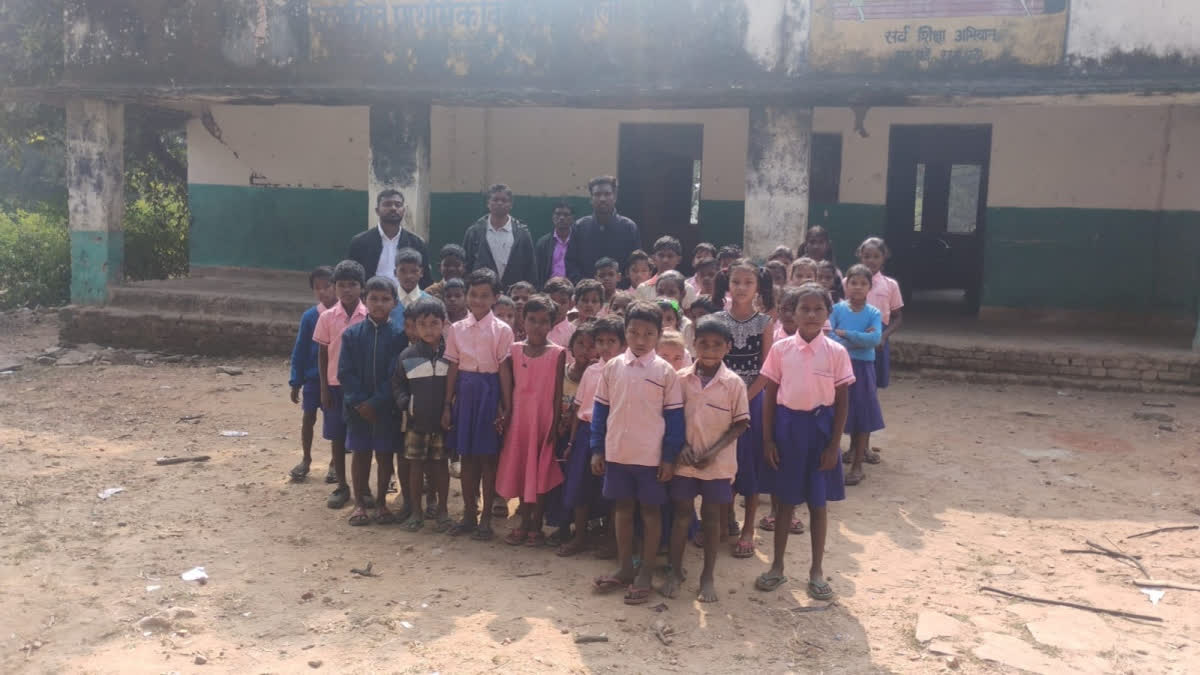
Baddih Upkramit Vidyalaya in Chalna Panchayat of Jamtara is a school in a tribal-dominated village is a classic example. Toilets, hand pumps and water tanks are all there but in disrepair, and no one seems to care. The children are forced to go outside to relieve themselves and find drinking water.
The School also faces a shortage of teachers as it is run by just two para-teachers who are absent or on leave at times.
Professor Sunil Hansda, a Santhali language educationist, expressed deep concern about the education in tribal rural areas. He said that the system is in shambles and the government has done nothing to educate tribal children. He pointed out, "Schools in rural areas are run by one or two para teachers, and the level of education is continuously declining."
Attempts made to contact the District Education Superintendent (DSE) and the District Education Officer (DEO) proved futile. However, the Education Department's Additional District Programme Officer (ADPO) stated that the matter would be investigated and the problems would be resolved within a week. He also promised to investigate all the tribal schools and address the problems.

Meanwhile, in Khuntri district, many school washrooms in the remote rural areas have also fallen into disrepair. Some have broken doors, while others are filthy, making it impossible to use them. Local social workers say this has a direct impact on the attendance of teenage girls who are reluctant to attend school due to the inconvenience.
The situation is dire in the hilly and remote areas of Simdega district. Toilets in many primary schools have been closed for years. Lack of water and poor sanitation forces students to defecate in the open. The condition of government schools in Kamalabeda, Haldibeda and Sikrom, located in the Bintuka Panchayat area of Bano block, has deteriorated to abysmal levels.
The young children are forced to attend these schools while risking their lives by studying in dilapidated buildings. There are schools where iron rods hang from the ceilings, the floors are completely broken, and the walls have deep cracks. At Kamalabeda School, a plastic tarpaulin has been placed under the roof to protect the children from water dripping from the ceiling during rainy days.
Meanwhile, at Sikrom School, the condition is such that teachers are forced to teach the children at their homes. The parents are deeply concerned about their children's safety.
School Principals Vijay Jojo, Anand Masih and Jeman Madki disclosed that they had submitted two written applications to the Block Education Officer (BEO) seeking repairs of the dilapidated buildings and construction of new ones, but no concrete action has been taken. They added that both the teachers and the students are forced to study in an unsafe environment, and the possibility of a major accident could not be ruled out at any time.
Meanwhile, the BEO, Arun Kumar Pandey, stated that many school buildings in the block have fallen into disrepair. "This information has been provided to the district and state-level officials. A list has been provided to the Building Construction Department for repairs and new constructions. Funding under the Sarva Shiksha Abhiyan has not been available for several years. As soon as funds are received from the government, the dilapidated buildings will be repaired, and new buildings will be constructed," he said.
The condition is the same in Latehar district as well, where toilets have been built but are unusable in the absence of a regular water supply. The teachers say this situation is extremely uncomfortable for the young children, leading to many becoming irregular.
Examples from these districts clearly demonstrate that even after the infrastructure has been built, the maintenance and monitoring system is weak, which is directly impacting the education system.
Experts believe that instead of focusing solely on building construction, systems for maintenance, local accountability and regular inspections need to be strengthened.
Although the Education Department officials argue that operating schools on such a large scale is not easy, monitoring mechanisms need to be more effective. A significant relief for the government is that the dropout rate has declined significantly in recent years. According to a 2024-25 report, the dropout rate at the secondary level has declined to approximately 3.5% as compared to over 14% in 2022-23.
According to reports of Unified District Information System for Education Plus and the Ministry of Education, the dropout rate has declined at the primary and upper primary levels as well.
The government data shows that more than 83% of dropouts have been reintegrated into mainstream education. The gross enrollment ratio (GER) at the secondary level has increased from 62% to 73%.
While these figures offer positive signals, the challenges remain. As of September 2023, approximately 86,000 children were out of school. This number decreased in 2024-25, but thousands still remain out of the education system.
Furthermore, approximately 107 schools in the state recorded zero enrollment, highlighting serious systemic flaws. Some districts, such as Deoghar, have relatively high dropout rates, although re-enrollment campaigns are underway there as well.
Read More