Nepal Not Cooperating On The Construction of A High-Level Dam To Control Floods: Bihar Government
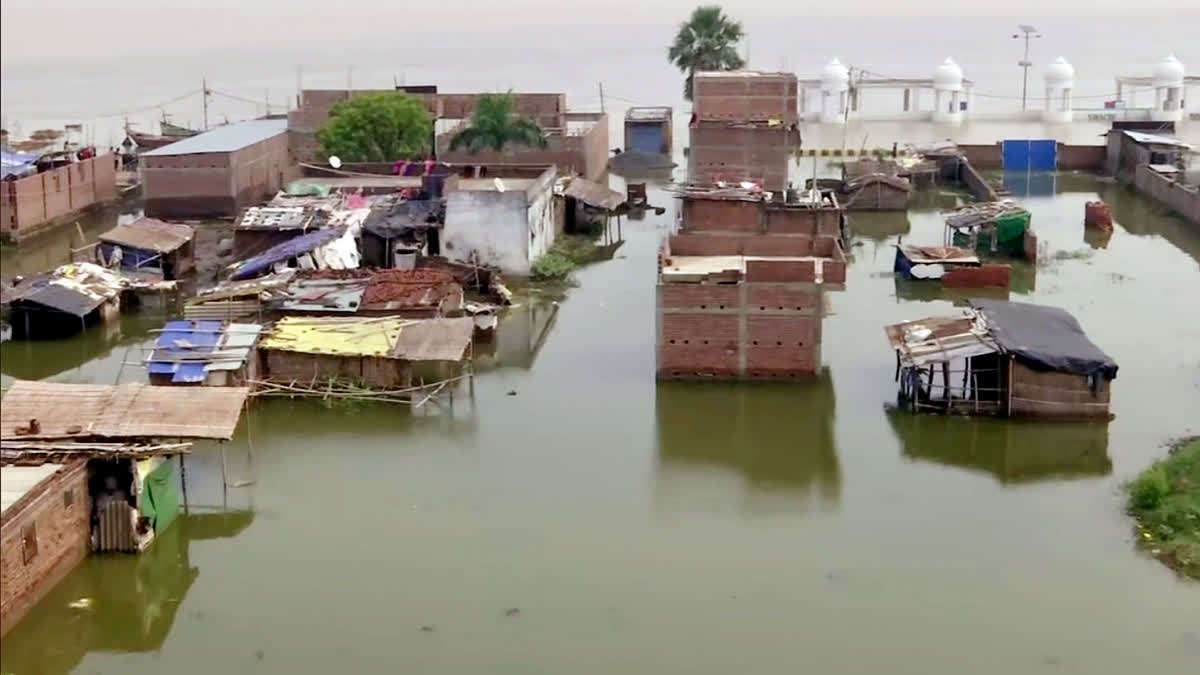
Altogether 28 out of 38 districts in Bihar are flood-prone, and around 68.8 lakh hectares of the area of the state suffer from floods.

Published : February 12, 2026 at 8:14 PM IST

Patna: The Bihar government stressed in the Legislative Assembly on Thursday that Nepal was not cooperating on the construction of a "high-level dam" to provide a permanent solution for the devastating floods that hit the state every year.
"We are not blaming Nepal for the floods, but it is at fault in one sense. It is not providing cooperation for the construction of a 'high-level dam' in its territory for the purpose of flood control. Perhaps it is helpless in doing so. There is so much political instability there," Bihar water resources minister Vijay Kumar Choudhary said.
Choudhary asserted that the state government has already identified the places for construction on the Kosi, Bagmati and Kamala rivers in Nepal for flood control, but the project could not make any headway due to non-cooperation from the neighbouring country.
Speaking to wind up the debate in the House over the departmental budget, Choudhary also pointed out that the origin of the rivers was in the upper reaches of the mountains, where Nepal's governance was not very effective. "We somehow try to manage the situation to save ourselves from the floods by adopting different measures. The Nepal government is not able to assist us," the minister added.
Altogether 28 out of 38 districts in Bihar are flood-prone and around 68.8 lakh hectares or 73 per cent area of the state suffers from flood almost every year, resulting in heavy loss of lives, infrastructure, agriculture and hampering future prospects of development.
High dams are constructed on rivers to control floods, increase storage for irrigation and generate hydroelectricity. One of the famous examples is the Aswan High Dam over the Nile in Egypt.
The multi-purpose high dam over the Kosi in Nepal was conceptualised way back in 1945 by the British, but failed to take off. High dams on the Kosi, Kamala and Baghmati rivers were proposed in the later decades, without any tangible progress. The experts have attributed the lack of progress to an apparent lack of enthusiasm from the central and state governments.
Choudhary told the Opposition legislators, especially Kumar Sarvjit, Rahul Kumar, IP Gupta and others, that they should first understand the unique geographical location of Bihar before talking about floods.
"The middle or belly of Bihar is a low area in comparison to its north, which stretches from Nepal to northern West Bengal, and south, which stretches from Jharkhand to Uttar Pradesh and Madhya Pradesh. The entire rainwater from the higher areas to its north and south flows to Bihar and exits through the Ganga river, which acts as the master drain, to the Bay of Bengal," the minister said.
Choudhary said that the 'ultimate irrigation potential' of the state was 53.53 hectares, of which around 42 to 43 lakh hectares have already been reached due to the efforts by the Chief Minister Nitish Kumar-led government.
"I will not talk about 2006, but we have created more irrigation capacity since then in comparison to what the other governments had achieved together. We are using innovative methods to control floods by lifting water from the Ganga and supplying it to parched areas like Gaya, Bodh Gaya and other places as potable water," the minister said.
Choudhary, who represents Sarairanjan constituency in Samastipur district, added that the state government was considering plans to provide excess water of the Sone river to Aurangabad, Dehri and Sasaram areas, and water from the Durgawati reservoir to Kaimur and Mohania for drinking purposes.
Revealing that work on the Kosi-Mechi river linking project has started with the assistance of the Centre, Choudhary pointed out that it will help drain the floodwaters of the Kosi, also known as the 'Sorrow of Bihar', through Mechi to the Mahananda river, from where it will travel to the Ganga.
He also said that work on embankments in the lower reaches of the Mahananda, the Indrapuri and Dhadhar reservoir projects in areas neighbouring Jharkhand was in progress. They will strengthen the flood control and irrigation capabilities of the state. The Rs 7127 crore budget of the department was passed through a voice vote after the Opposition legislators refused to withdraw their cut motions.
Also Read
Over Nine Lakh Rural PMAY-G Houses Delayed In Bihar As Govt Fails To Set Up Nodal Account