Over 500 Youths From Rajasthan Trapped In Cyber Scam Centres In Southeast Asia
Young people from India, Pakistan and Nepal are allegedly held as 'cyber slaves' at these centres and forced to carry out online fraud.

Published : August 14, 2026 at 7:56 PM IST

Jaipur: With cybercrime cases continuing to rise in Rajasthan, the issue of 'digital arrest' scams has once again come into focus after a recent case in Jaipur in which a retired judge was allegedly cheated of Rs 2.5 crore.
An investigation has revealed that many digital arrest and other cyber fraud operations targeting Indians are being run from scam centres spread across five Southeast Asian countries such as Cambodia, Laos, Myanmar, Thailand, and Vietnam.
Young people from India, Pakistan and Nepal are allegedly held as 'cyber slaves' at these centres and forced to carry out online fraud. Most of the centres are reportedly controlled by Chinese operators. Surveillance at these facilities is so strict that workers are often prohibited from speaking freely with one another. Many do not even know each other’s real names and communicate using code names assigned by their operators.
A young man from Rajasthan’s Shekhawati region who managed to escape from a cyber-slavery network said that he had been offered a job in Cambodia with promises of work in data entry and social media advertising. He was promised a monthly salary of Rs 50,000-Rs 60,000.
After reaching Cambodia, he found that he was being forced to carry out cyber fraud and scams targeting Indian citizens. The victim said that when he told the gang that he did not want to participate in this, he was taken to a separate room and demanded Rs 5 lakh as compensation to come back to India.
He continued working since he couldn’t pay the money. He also informed that he did not receive his full salary either. The operators allegedly made unfair deductions from his salary and paid him about $100-$150 a month.
He saved the money and paid off the alleged penalty to return home after six months.
According to the survivor, Chinese handlers exercise overall control over the scam centres. They generally do not communicate directly in Hindi or English and use translators instead.
The operators speak in Chinese, while translators communicate their instructions in Hindi or English to the workers. Similarly, conversations in Hindi or English are translated into Chinese for the operators. The survivor said the Chinese handlers are responsible for running the wider network.
The survivor said workers at the scam centres are made to work for 12 to 14 hours a day. The networks allegedly lure victims through attractive job advertisements posted on social media platforms. They also target people through fake investment schemes promising high returns and advertisements offering easy work-from-home income.
In some cases, instead of making direct calls, scammers send links through WhatsApp. Clicking on these links can initiate the fraud process.
RPS Gajendra Sharma, station house officer at the State Cyber Police Station, said the scam centres operate in a corporate-style structure. According to Sharma, the networks have separate HR wings responsible for recruiting new people. The gangs also arrange travel tickets for recruits travelling from India to Cambodia.
Once they arrive, the recruits are assigned to scam centres in different countries. They are initially kept in detention rooms, where they are trained to manipulate and trap potential victims before being assigned to fraud operations. The gangs allegedly keep the recruits’ passports and visas.
Sharma said inputs received from the Indian Cybercrime Coordination Centre (I4C) under the Ministry of Home Affairs show that around 500 youths from Rajasthan have travelled to and returned from cyber scam centres in these countries.
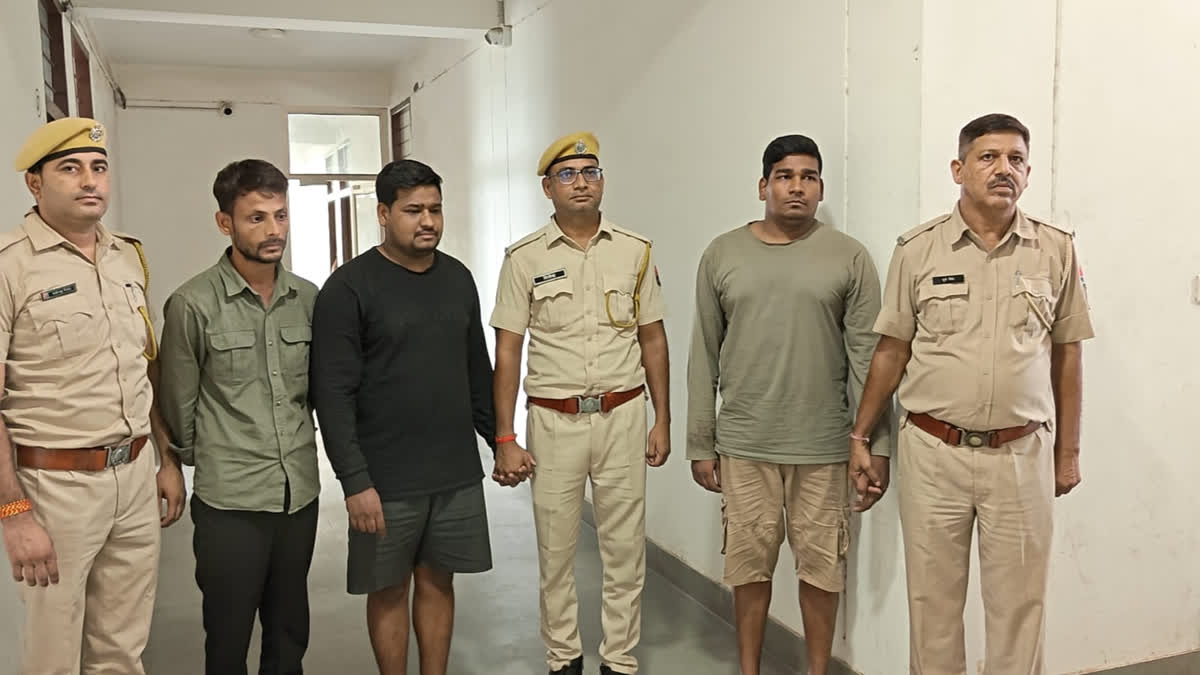
Police is at look out for such individuals in Beawar, Shekhawati, and Udaipur. Nearly eight youths who allegedly travelled to these countries multiple times have already been arrested, according to Sharma.
The investigation found that cyber scam centres broadly operate two major types of fraud, investment scams and “digital arrest” frauds.
Separate teams and communication channels are reportedly used for different stages of the operation. Initially, victims are approached through chats using fake identities, and their personal information is collected.
They are then promised high returns through fake investment schemes. A separate team handles the initial conversations with potential victims. Once a person is successfully trapped, the case is handed over to another team that carries out the fraud.
These teams allegedly work collectively and respond to every question from victims in no time. The fraud operations also rely on Indian SIM cards and Indian bank accounts. Those who provide SIM cards and bank accounts are reportedly paid substantial commissions, encouraging them to supply more.
Once the fraud proceeds are deposited into these bank accounts, the money is allegedly converted into cryptocurrency and transferred to the Chinese handlers. This helps the networks move and conceal the proceeds of cybercrime.
Read More: