Ghaziabad Couple Turns Cow Dung Into Biofuel, Sets Up Organic Processing Plant
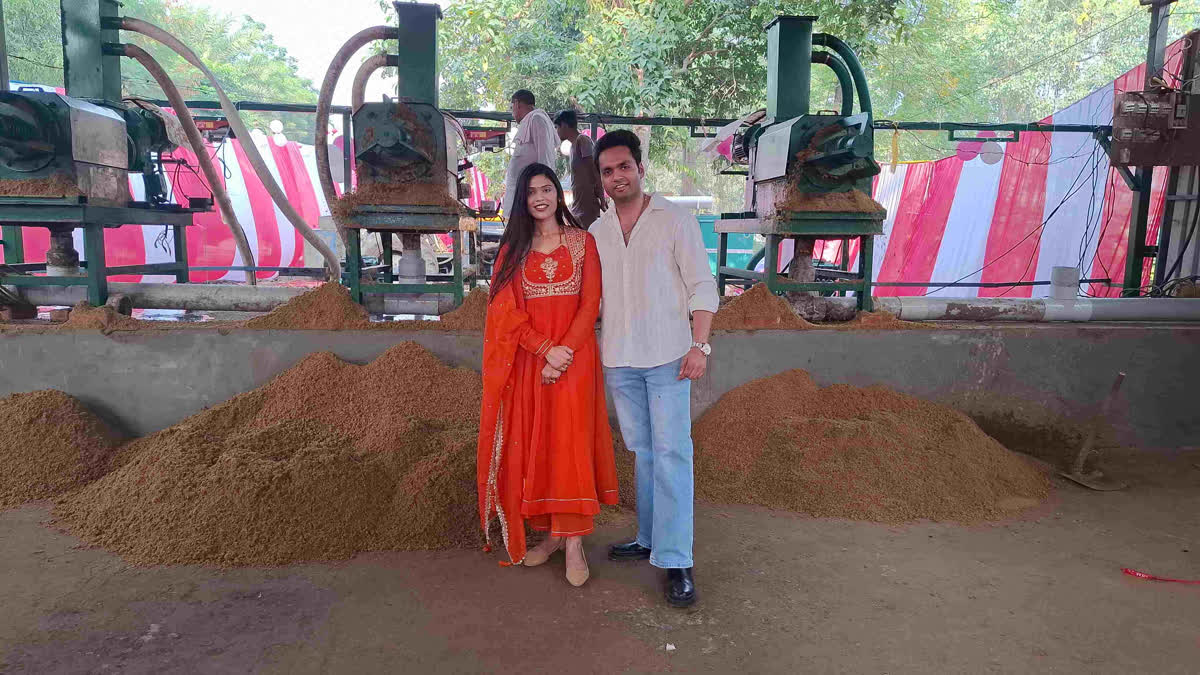
At the plant, cow dung is dried and converted into powder, which can be used as biofuel.

Published : November 4, 2026 at 6:49 PM IST

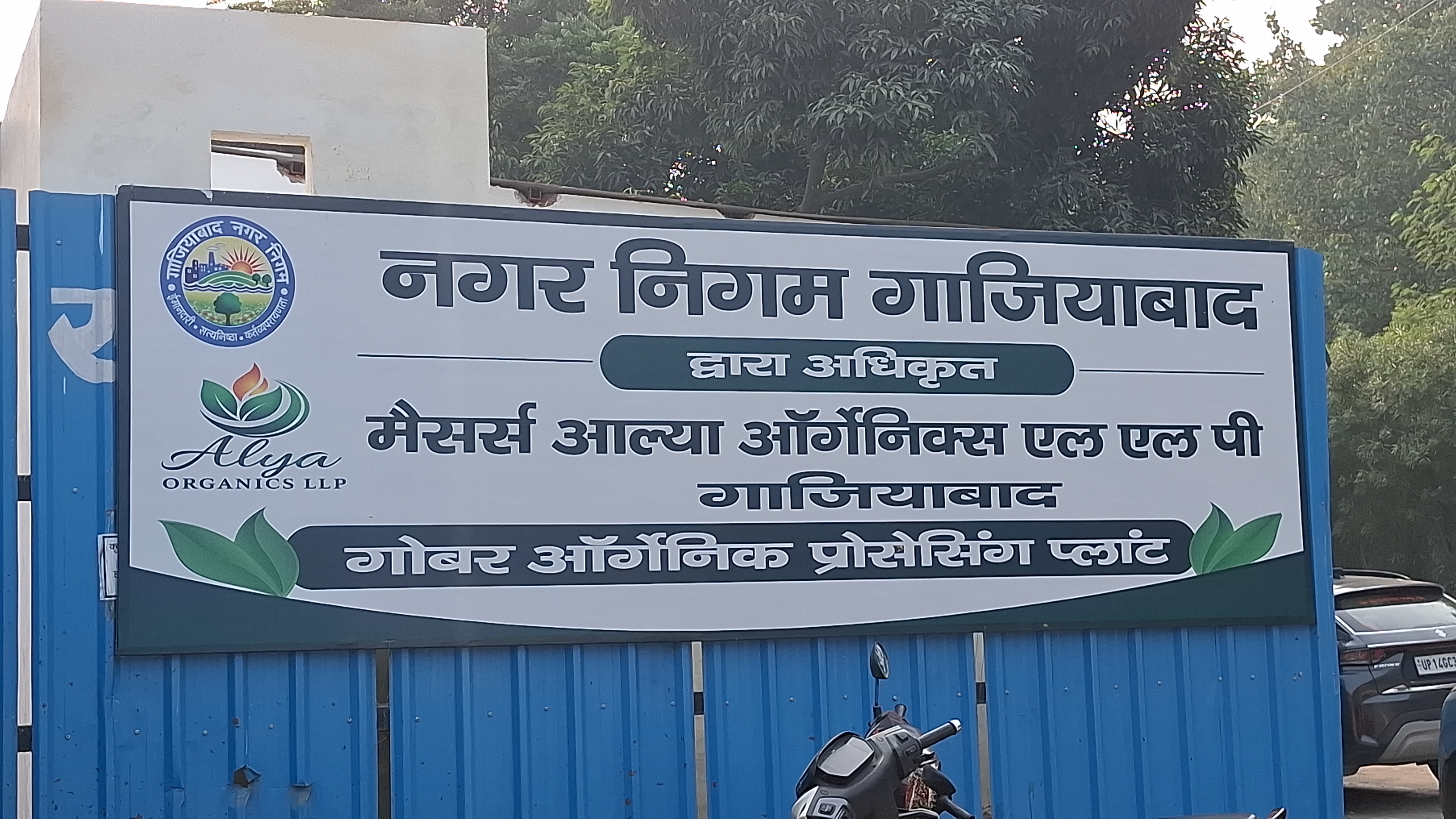
New Delhi/Ghaziabad: In an initiative aimed at environmental conservation and sustainable waste management, a couple from Ghaziabad, Satyam Srivastava and Ananya Srivastava, have set up a cow dung organic processing plant in collaboration with the Ghaziabad Municipal Corporation. The facility converts cow dung collected from gaushalas (cow shelters) and dairies into biofuel, offering a potential alternative to coal and firewood used by industries.
The initiative intends to address the problem of cow dung disposal in urban areas, where large quantities are often dumped on roads, in drains and in open spaces. The project aims to improve urban sanitation while contributing to environmental protection by processing this waste into a usable fuel.
The project has been established with the support of the Ghaziabad Municipal Corporation, which provided land for setting up the facility. Satyam and Ananya have taken responsibility for the civil construction work, machinery installation and processing infrastructure.
At the plant, cow dung is dried and converted into powder, which can be used as biofuel.
Satyam Srivastava said he had always wanted to work on a project that would directly contribute to environmental conservation and benefit people on a larger scale.
He said his attention was drawn to the problem of cow dung disposal in urban areas. Large quantities of cow dung are generated daily by dairies, gaushalas and households that rear cows and buffaloes. While cow dung is commonly used as manure and for other domestic purposes in rural areas, its disposal has become a significant challenge in cities.
Instead of viewing cow dung merely as waste, Satyam explored ways to convert it into a useful product. After researching different technologies and potential applications, he developed the plan for the processing plant and implemented it with the support of the municipal corporation.
A regular supply of cow dung is essential for the plant's operations. For this purpose, the couple has established a collection arrangement with different gaushalas and dairies, from where the waste is transported to the facility.
Satyam said they also bear the transportation costs involved in bringing cow dung from these establishments to the plant. This arrangement reduces the burden on dairy and gaushala operators, who otherwise have to make separate arrangements for its disposal.
Currently, the facility collects around 200 tonnes of cow dung daily.
Once the cow dung reaches the facility, it is first collected in a large pit. Water is then added to prepare a uniform mixture, making it suitable for processing through the machinery.
The mixture is transported through pipelines to specialised processing machines, where moisture is extracted and the wet cow dung is converted into a dry material.
The processed material takes the form of powder. It is then kept in the sun for some time to remove any remaining moisture before being dispatched to various industrial units for use as biofuel.
According to Satyam, about 100 tonnes of biofuel can be produced by processing around 200 tonnes of cow dung.
The plant has an estimated processing capacity of 300 tonnes of cow dung. The couple plans to utilise more of this capacity by strengthening the collection network and bringing additional dairies and gaushalas into the project.
Burning coal and firewood contributes to air pollution, which is a major concern in the Delhi-NCR region. The biofuel produced at the plant could serve as an alternative energy source for industrial units.
Satyam said the fuel could be used in industrial boilers and furnaces. Several industries currently depend on coal and wood to generate heat and operate machinery. Cow dung-based biofuel could help reduce dependence on these conventional fuels.
The facility also aims to utilise the liquid waste generated during the processing of cow dung, rather than allowing it to go unused.
The water extracted during the drying process is collected separately. According to Satyam, this liquid waste can be used as fertiliser in agricultural fields, providing nutrients to crops.
Ghaziabad Mayor Sunita Dayal said cow dung disposal had remained a major challenge for the municipal corporation for a long time.
Apart from commercial dairies, many households that rear cows and buffaloes also generate large quantities of cow dung. When dumped into drains, it blocks the drainage system and creates sanitation problems.
The municipal corporation has also taken action against dairy operators who discharge cow dung into drains or dump it in public spaces, including imposing fines.
The mayor said the establishment of the cow dung organic processing plant was an important step towards addressing the problem. Instead of being discarded as waste, cow dung can now be transported to the facility for processing.
The municipal corporation plans to connect all dairies in the district with the initiative. It will write to dairy operators and encourage them to supply cow dung to the plant.
Municipal Commissioner Vikramaditya Singh Malik said the Ghaziabad Municipal Corporation had facilitated the establishment of the plant under a Public-Private Partnership (PPP) model.
Under the arrangement, the municipal corporation provided land for the facility and is responsible for helping ensure the availability of cow dung and developing the collection network. The private partners have undertaken the civil construction, machinery installation and other infrastructure required for processing.
The municipal corporation is also working on developing a dedicated cow dung collection system to ensure that dairy and gaushala operators transport the waste directly to the processing plant instead of dumping it on roads or discharging it into drains.
Meetings with dairy and gaushala operators are planned to establish an effective collection mechanism.
Officials have also said that many dairy operators use high-pressure water to flush cow dung into drains, resulting in considerable water wastage. Direct collection and transportation to the processing facility could help prevent this practice and conserve water.
The cow dung organic processing plant is expected to play an important role in improving Ghaziabad's sanitation and environmental management. However, its long-term success will depend on how many dairies and gaushalas join the collection network and whether a regular supply of cow dung can be maintained.
Read More:
