Expert Teams To Hit Ground Zero On September 8 To Study 5 Highly Sensitive Glacial Lakes In Uttarakhand
The teams will assess the future risks posed by the changes in the size of glacial lakes, water levels, natural dams and surrounding topography

Published : August 31, 2026 at 6:42 PM IST

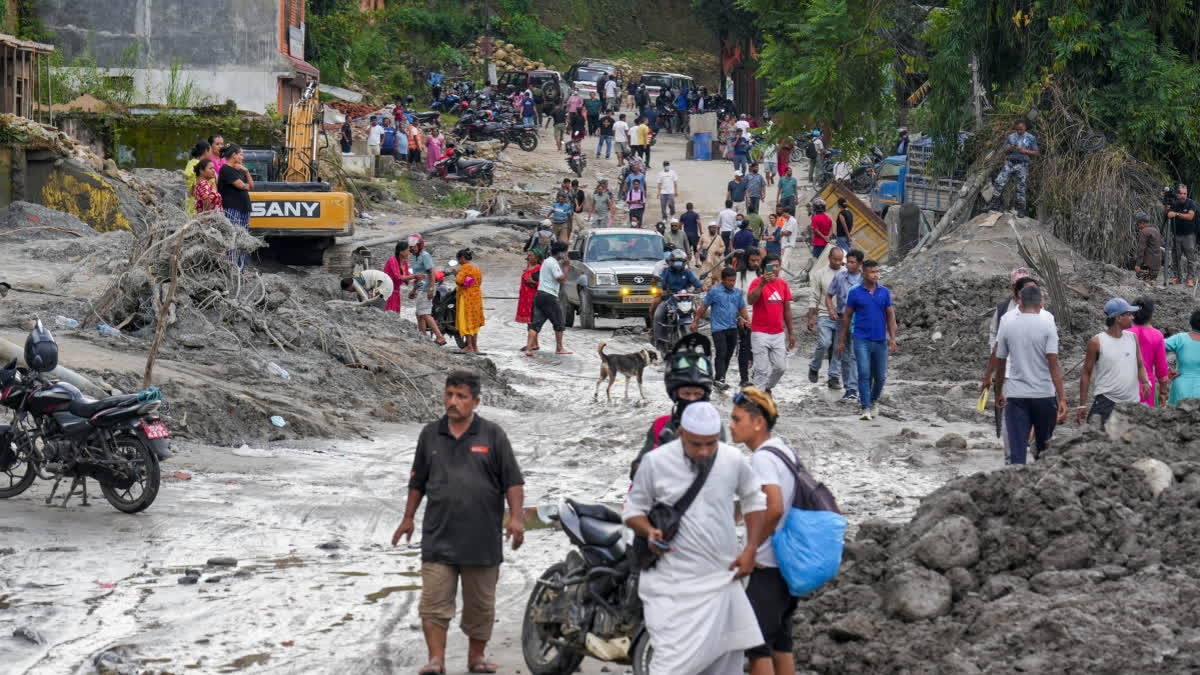
Dehradun: Following the disaster in Nepal, a team of experts from Uttarakhand will be hitting ground zero of five of the state’s 13 highly sensitive glacial lakes to carry out a study. The state has around 450 glacial lakes, of which 13 have been categorised as sensitive.
The team of experts will visit them on September 8 to assess the real state of these vulnerable lakes. For now, the team's primary focus will be on the five highly vulnerable lakes. The team will comprise experts from various prestigious institutions who will travel to districts with sensitive glacial lakes to study their current situation, potential threats and risk mitigation measures.
In the 13 lakes placed in Category A with maximum vulnerability, a sudden breach or increased water pressure could cause widespread damage to the downstream areas.
There has been considerable concern regarding the Glacial Lake Outburst Flood (GLOF) in Uttarakhand following the August 26 disaster in Nepal. The bursting of a glacial lake's natural dam or the moraine sends large amounts of water, debris and boulders rushing downhill at extremely high speeds.
Such sudden influxes of water and debris into narrow mountain valleys can cause significant devastation within a short time. This is why continuous monitoring and scientific study of the sensitive glacial lakes in Uttarakhand is considered crucial.
Chief Executive Officer (CEO) of Uttarakhand State Disaster Management Authority (USDMA) Vinod Kumar Suman disclosed, “Starting September 8th, a study will begin by sending expert teams to two districts with 13 identified vulnerable glacial lakes. Experts from various national institutions, including the Wadia Institute of Himalayan Geology, the Birbal Sahni Institute, the Central Water Commission (CWC) and C-DAC, will participate in this study. The teams will visit ground zero and study the condition of the lakes, their surrounding areas, natural dams and potential future risks."
Director of the Wadia Institute of Himalayan Geology, Vineet Gehlot, said, "Five of the 13 identified glacial lakes in Uttarakhand are extremely vulnerable. These include the lakes in Chamoli and Pithoragarh districts."
Major lakes included in Category A include Vasudhara Lake in Chamoli, Mambag Lake, Syuntiankitta Lake and Pyungru Lake in Dharchula, along with an unnamed lake in Joshimath.
Those in Category B include Saraswati Tal in Chamoli and Kedartal in Uttarkashi. Meanwhile, glacial lakes in Tehri, Pithoragarh and Bageshwar find a place among Category C lakes.
The state government claims to be working in the direction of using modern technology to monitor sensitive glacial lakes. Suman disclosed that the National Disaster Management Authority (NDMA) has provided a special package for an early warning system under which state-of-the-art instruments and technical systems for monitoring the lakes are being installed.
However, the extremely high altitude and low temperatures of glacial lakes pose a significant challenge to the installation and continuous operation of the equipment. Therefore, based on expert research, it will be determined which type of technology can be effectively used at various locations.
He said the expert teams will also assess the future risks posed by the changes in the size of glacial lakes, water levels, natural dams and surrounding topography.
Read More