'Blue Economy Could Drive India’s Growth, Help Raise GDP Share To 8% by 2030': Earth Sciences Secretary
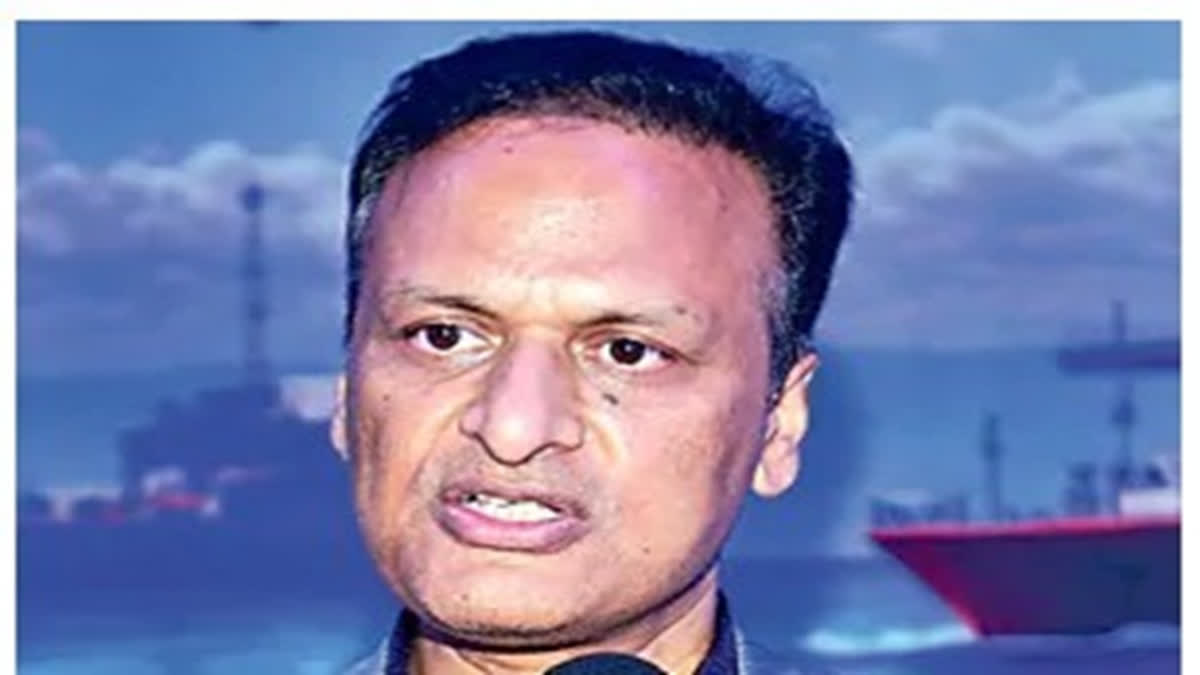
T. Srinivas Kumar, Secretary, Union Ministry of Earth Sciences, talks about the potential of India's Blue Economy and the role of the Deep Ocean Mission

Published : August 24, 2026 at 8:21 PM IST

Amaravati: Coastal regions and deep-sea waters can act as catalysts for India’s economic growth, Union Ministry of Earth Sciences Secretary T. Srinivasa Kumar has said. He spoke about the potential of the country’s Blue Economy and the role of the Deep Ocean Mission in achieving this goal.
Speaking to Eenadu-ETV and ETV Bharat during a recent visit to Guntur district in Andhra Pradesh, Kumar said India was focusing on developing sectors including shipping, tourism, fisheries, logistics and renewable energy as part of its Blue Economy strategy.
He said oceans have high potential for renewable energy, just as land-based solar and wind projects do. An atlas is being developed to identify regions suitable for different forms of ocean-based energy generation.
According to Kumar, Blue Flag-certified beaches can also contribute to tourism revenues, while the Ministry of Earth Sciences is working on guidelines for various aspects of the Blue Economy.
The government aims to increase the Blue Economy’s contribution to India’s GDP from around 4% currently to 8% by 2030, he said.
Kumar outlined six major areas under India’s Deep Ocean Mission:
1. Deep-sea submersible
The National Institute of Ocean Technology (NIOT), Chennai, in collaboration with ISRO, is developing Matsya-6000, a titanium-sphere submersible designed to carry out scientific research at depths of up to 6,000 metres below sea level.
2. Research on marine climate change
Rising ocean surface temperatures are contributing to ice melt and sea-level rise. Kumar said sea levels in the Indian Ocean are rising by around 4 mm annually.
Research is being conducted at the Indian National Centre for Ocean Information Services (INCOIS) to understand regional variations, their impact on coastal areas and future trends related to cyclones, wave intensity and coastal erosion. He said a clearer picture is expected to emerge by 2028.
3. Mapping marine biodiversity
The Centre for Marine Living Resources and Ecology (CMLRE) in Kochi has identified 40 seamounts in Indian coastal waters. Scientists are developing a DNA database of marine biodiversity found in these regions while identifying new marine species and molecules and studying their potential applications.
4. Exploration of deep-sea minerals
The mission is also focused on exploring minerals such as manganese, nickel and cobalt found in polymetallic nodules. NIOT, the National Centre for Polar and Ocean Research (NCPOR), the National Institute of Oceanography (NIO) and the Ministry of Earth Sciences have jointly surveyed around 10,000 square kilometres in the Central Indian Ocean Basin.
Mineral samples collected during the survey were analysed at the Institute of Minerals and Materials Technology (IMMT) in Bhubaneswar. Researchers are also studying the potential environmental impact of extracting these minerals from the seabed.
Kumar said specialised equipment and technology required for deep-sea mining are being developed by NIOT.
5. Ocean-based power generation
The temperature difference between the ocean surface and deep-sea waters can range between 10 and 15 degrees Celsius. NIOT is researching ways to use this temperature difference to generate electricity.
6. Desalination plants
Desalination plants are being developed to address drinking water shortages in coastal regions and islands, including Lakshadweep and Kavaratti. Six plants have been completed so far, according to Kumar.
The ministry is also developing a marine biological research station based on a “hub-and-spoke” model. Researchers from India and abroad, including those associated with the Polar Research Centre in Goa, will be able to work on the project.
Kumar said these initiatives, along with India’s extensive coastline and marine resources, could strengthen the country’s position in the global Blue Economy and create new opportunities for states such as Andhra Pradesh.
Read More:
