The Climate Paradox Of War: How The Iran Conflict Is Accelerating The Shift Away From Oil
Amid a protracted conflict, the upcoming COP31 this November can become consequential, writes Hari Krishna Nibanupudi.

Published : November 1, 2026 at 3:06 PM IST
|Updated : November 2, 2026 at 7:25 AM IST

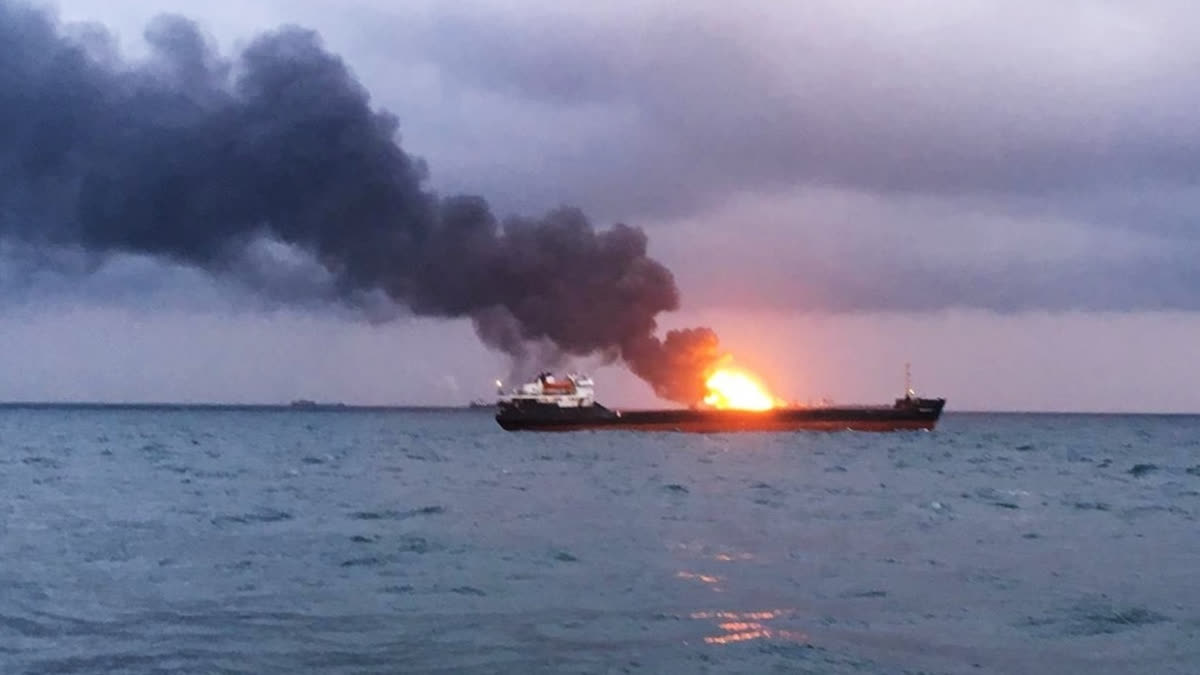
The Iran war is causing immense loss of life, destroying infrastructure and consuming more of the world’s rapidly shrinking carbon budget. It has become an environmental and climate crisis alongside its humanitarian consequences. An early assessment estimated that the first 14 days alone generated more than 5 million tonnes of CO₂-equivalent emissions—around 1.88 million tonnes from oil fires, 2.4 million tonnes from destroyed buildings, and 0.53 million tonnes from military aviation and supporting operations.
This runs counter to estimates that militaries collectively account for around 5.5% of global greenhouse gas emissions. Damage to oil installations further compounds the crisis through toxic smoke, particulate pollution, spills and contamination of soil, water and marine ecosystems.
Yet the war is producing a deeply paradoxical consequence. While worsening environmental damage, the energy insecurity it has unleashed may be accelerating a transition that three decades of climate diplomacy have struggled to deliver at comparable speed. Governments are discovering that dependence on fossil fuels is no longer simply a climate liability. It is an economic and national-security vulnerability.
The geography explains why. The 21-mile-wide Strait of Hormuz, separating Iran and Oman, normally carries around 20 million barrels of oil and petroleum products every day—roughly 20–21% of global petroleum consumption, 25–27% of seaborne oil trade and nearly one-fifth of global LNG trade, much of it destined for Asia.
After the escalation beginning on 28 February 2026, tanker movements reportedly collapsed by 90–97%, commercial crossings fell at one stage to only zero to two vessels daily, and around 200 tankers were stranded in the Persian Gulf. Brent crude, around $69–72 per barrel in February, subsequently exceeded $110–118 per barrel. The International Energy Agency described the episode as the largest single supply disruption in the history of the modern oil market.
Nor can the world simply bypass Hormuz. Saudi Arabia and the UAE together have pipeline capacity of only around 7 million barrels per day, barely one-third of normal Hormuz flows. More worrying still, an estimated 600,000 barrels per day of production could remain structurally offline through the end of 2027, turning what might appear to be a temporary disruption into a potentially lasting supply constraint.
The Red Sea has simultaneously demonstrated that vulnerability extends beyond a single waterway: energy deliveries to Europe at one stage in 2026 reportedly fell to around 49% of pre-crisis levels.
From Europe to Asia: Energy Insecurity Drives Clean-Energy Acceleration
Countries no longer just seek more barrels from other producers; they are increasingly asking how to need fewer barrels altogether. Electric vehicles illustrate that shift. EVs displaced an estimated 1.7 million barrels of oil demand per day in 2025, potentially rising to around 5 million barrels per day by 2030.
Global EV sales reached approximately 20.7 million vehicles in 2025, up around 20% in one year and representing roughly one-quarter of all new-car sales; around 23 million EVs could be sold in 2026. More fundamentally, under the IEA’s Net Zero scenario, EV deployment alone could displace more than 15 million barrels of oil per day by 2035—roughly 15% of current global oil consumption.
China sits at the centre of this transformation. Chinese manufacturers supplied around 60% of global EV sales in 2025, while EVs exceeded 60% of domestic monthly new-car sales by April 2026. Renewables accounted for 41.2% of China's electricity generation in the first half of 2026.
China is targeting 50% non-fossil electricity generation by 2030 and 3,600 GW of combined wind and solar capacity by 2035, alongside an economy-wide net greenhouse-gas reduction of 7–10% below peak levels by 2035.
Europe reached a similar conclusion through an earlier geopolitical shock. The EU targets around 600 GW of solar capacity by 2030, alongside progressive rooftop-solar requirements, accelerated heat-pump deployment and deeper efficiency improvements.
Russian gas fell from approximately 45% to 12% of EU imports between 2022 and 2025, while European EV sales grew more than 30% in 2025. Norway ended the year with battery-electric cars representing an extraordinary 95.9% of new vehicle sales.
Southeast Asia is experiencing an equally important transition. EV sales more than doubled year-on-year in early 2026, approaching a 20% share in some estimates, with Vietnam, Indonesia and Thailand leading growth. Electric two- and three-wheelers—particularly important for lower-income, fuel-price-sensitive households—more than doubled year-on-year during the first quarter of 2026.
India’s Renewable Counter-Offensive
India perhaps illustrates the energy-security case most starkly. It imports 89–90% of its crude oil, while Hormuz supplied about 41% of crude, 55% of LNG and 88% of LPG imports in the first nine months of FY2026. During the disruption, crude imports reportedly fell by 22%, the rupee weakened to ₹95.7–96.5 per US dollar, and state oil companies incurred daily losses of about ₹750 crore.
India’s strategic reserve, at 36.87 million tonnes, covers only 18 days of consumption, far below the IEA’s 90-day benchmark, underscoring the urgency of reducing structural dependence on imported fossil fuels.
At precisely this moment, India’s electricity system is undergoing historic change. Non-fossil capacity reached about 300.5 GW by July 2026, accounting for more than 54% of the approximately 552 GW of total installed capacity and already above 60% of its 500-GW target for 2030.
Solar expanded from only 2.8 GW in 2014 to around 164.6 GW, while wind exceeded 58 GW. India added a record 55.29 GW of non-fossil capacity in FY2025–26, including 44.6 GW of solar. Foreign investment in renewables since FY2014 has reached about $45.7 billion, alongside approximately $148 billion in domestic institutional financing.
Energy Security as the New Engine of Decarbonisation
Coal, oil, and gas persist, essential for electricity, transport, and industry. Renewable systems require massive investments in infrastructure. The key shift isn't that fossil fuels are now obsolete, but that strategic considerations have changed. Oil at chokepoints now bears a geopolitical-risk premium.
Solar panels, turbines, batteries, heat pumps, and EVs provide more than emissions reductions: they offer strategic autonomy.
One must hope that the war in Iran ends as soon as possible. But when peace eventually returns, governments must resist the temptation to allow cheaper oil and reopened shipping lanes to revive old dependencies. That is where COP31 this November can become consequential. It should convert today’s emergency-driven acceleration into firm commitments on renewable energy, grids, storage, efficiency, electrification and reduced fossil-fuel dependence.
Hari Krishna Nibanupudi is an international expert on climate change, humanitarian response, and sustainability.
Disclaimer: The opinions expressed in this article are those of the writer. The facts and opinions expressed here do not reflect the views of ETV Bharat.
Read More:
