Teaching And Learning In The Age Of Artificial Intelligence
The role of the teacher is no longer to disseminate knowledge but to protect the struggle of thinking itself, writes Kiran Pedada

Published : October 26, 2026 at 7:52 PM IST

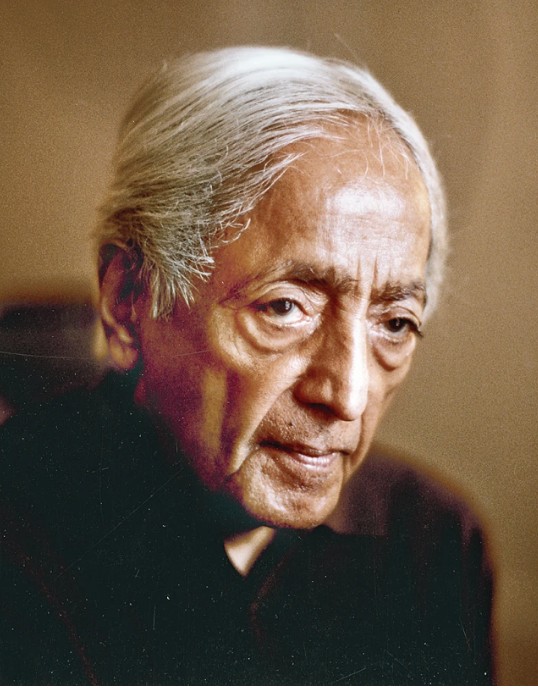
Growing up, I was an average student. I struggled with examinations that rewarded memorisation of information. After completing college, I was fortunate to be introduced to the teachings of J. Krishnamurti. His ideas hugely influenced me, both as a learner and a teacher. For years, we equated intelligence with the accumulation of information. However, Krishnamurti argued that intelligence is actually the capacity to observe, question, and find out things for ourselves.
I believe Krishnamurti’s ideas are especially relevant in the age of artificial intelligence (AI). Because AI now instantly provides information, Krishnamurti’s focus on nurturing the capacity to think and discover things for ourselves is an urgent educational reality. Let me elaborate.
AI has become very efficient at providing information instantly. As a result, the teacher’s role of knowledge dissemination is getting disrupted. Traditionally, teachers focused on knowledge dissemination. When AI can do it efficiently, the teacher’s role must shift from being a knowledge disseminator to a facilitator of structured dialogue. As concerns about AI replacing thinking are increasing, teachers have a greater opportunity and responsibility to preserve the struggle of thinking through facilitating inquiry rather than just knowledge transmission.
I offer the following suggestions for effective teaching in the age of AI:
Focusing on Learnability
In the Age of AI, the goal of effective teaching should be to increase students’ “learnability.” Learnability is the self-driven pursuit of knowledge throughout an individual’s life. Many hiring managers today look for evidence of a job candidate’s willingness to learn and grow over the long term. Eric Schmidt, Former CEO of Google, said: "Learnability is the key skill. We hunt for learning animals." Therefore, teachers in the age of AI should not only focus on providing required conceptual or technical skills but also nurture the skill of self-driven learning, or learnability.
To do this, teachers should carefully design cognitive friction. Students learn a lot when they face a problem that is challenging and requires thought, yet still approachable. To nurture learnability, teachers should develop deep understanding of their students, which requires empathy and self-awareness. When we are responsible for helping others understand something, we constantly engage in the process of questioning and understanding ourselves. That constant learning becomes a discipline in itself.
Structured Dialogue
Structured dialogue offers a practical way to preserve thinking in the age of AI. I have been trying structured dialogue in class sizes from 4 to 40 students. A dialogue may begin with an interesting question rather than a lecture. For example, in my B2B marketing class, I start with this question: "Who is the largest customer of P&G?" Given that P&G is a B2C company, most students think that the answer is an individual. But counterintuitively, the largest customer of P&G is Walmart. Walmart contributes about 15% of P&G’s revenues.
Students then understand that B2B constitutes a large portion of the total marketing activity and touches more lives than is apparent at first glance. Then we discuss the importance of relationships in B2B markets and how companies such as P&G nurture them. At the end of the class, students will write a reflection on their learning. The key to conducting a structured dialogue is to meet the students at the same level without hierarchy. Krishnamurti argued that learning occurs when teachers and students genuinely explore together. Learning is therefore not just transfer of information from the learned to the learner but a shared process of exploring, questioning, and discovering.
Curiosity and Developing the Whole Person
J. Krishnamurti argued that education fails if it merely produces clever people who fit existing grooves. The goal of education is to develop the whole human being. Essentially, teachers in the age of AI should focus on improving the quality of attention, the capacity for thinking, and nurturing curiosity. My professor during my PhD at Texas Tech, the late Professor Shelby Hunt, used to ask us: "What is intriguing you?" Whenever we used to go to his office with one question, we used to come out with ten more questions. Teachers should focus more on helping students ask better questions than providing answers. That would be a great differentiator in an AI-driven world.
From Making Students Industry Ready to Challenge Ready
Historically, education focused on helping students learn concepts, pass exams, get good grades, and secure jobs in good companies. Essentially, institutions have been focusing on making students industry-ready with the right skills and knowledge. But in a constantly evolving world, what is even more important is preparing students to face any challenge beyond what’s in their job description. Teachers in the age of AI have tremendous responsibility to make their students challenge-ready and nurture the ability to adapt and stay resilient irrespective of the situation.
Augment AI for Creativity
AI is not actually a threat to education. In fact, we can leverage AI as a pedagogical partner. We recently published an article in Harvard Business Impact, titled Bring Course Concepts to Life with Cartoons. AI-generated cartoons can serve as an in-class discussion tool that pushes students to think critically and connect course concepts to broader practice. Research suggests that students learn and retain information better when it is paired with positive emotions. The shared laughter generated by a well-timed cartoon creates psychological safety that encourages participation and risk-taking discussions. In our experience, cartoons improved engagement, retention, and collegiality.
Taken together, these ideas point to a single shift. The role of the teacher is no longer to disseminate knowledge but to protect the struggle of thinking itself. Focusing on improving learnability, designing structured dialogues, augmenting AI for teaching and learning, and making students challenge-ready are going to be real differentiators. Going forward, these routes can help students become better at questioning, reflecting, and finding out things for themselves.
The writer, Kiran Pedada, is The Associates Fellow in Marketing and Inclusive Business and Associate Professor of Marketing at the Asper School of Business at the University of Manitoba.
(Disclaimer: The opinions expressed in this article are those of the writers. The facts and opinions expressed here do not reflect the views of ETV Bharat)
Also Read
