Sambalpur Professor Grows Mushrooms On Discarded Banana Stems, Trains Farmers In Odisha
Banana stems, often left in fields or discarded after harvesting, are useful for mushroom cultivation if farmers are trained how, reports Badsah Jusman Kumar Rana.

Published : August 25, 2026 at 1:07 PM IST

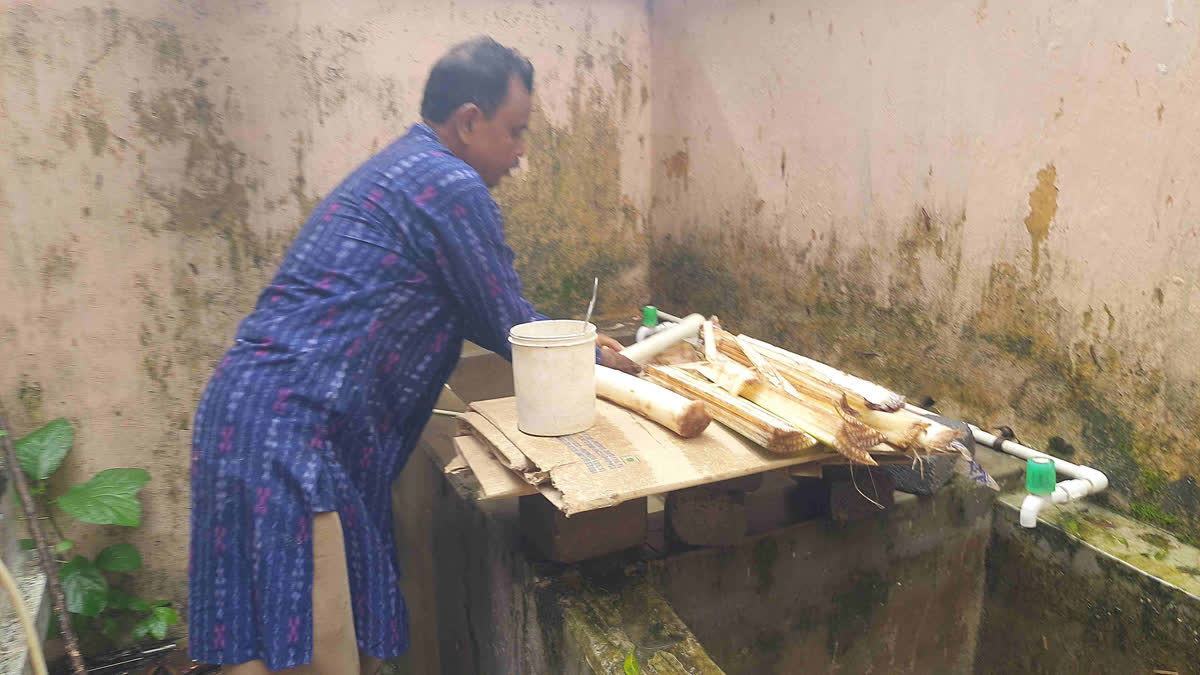
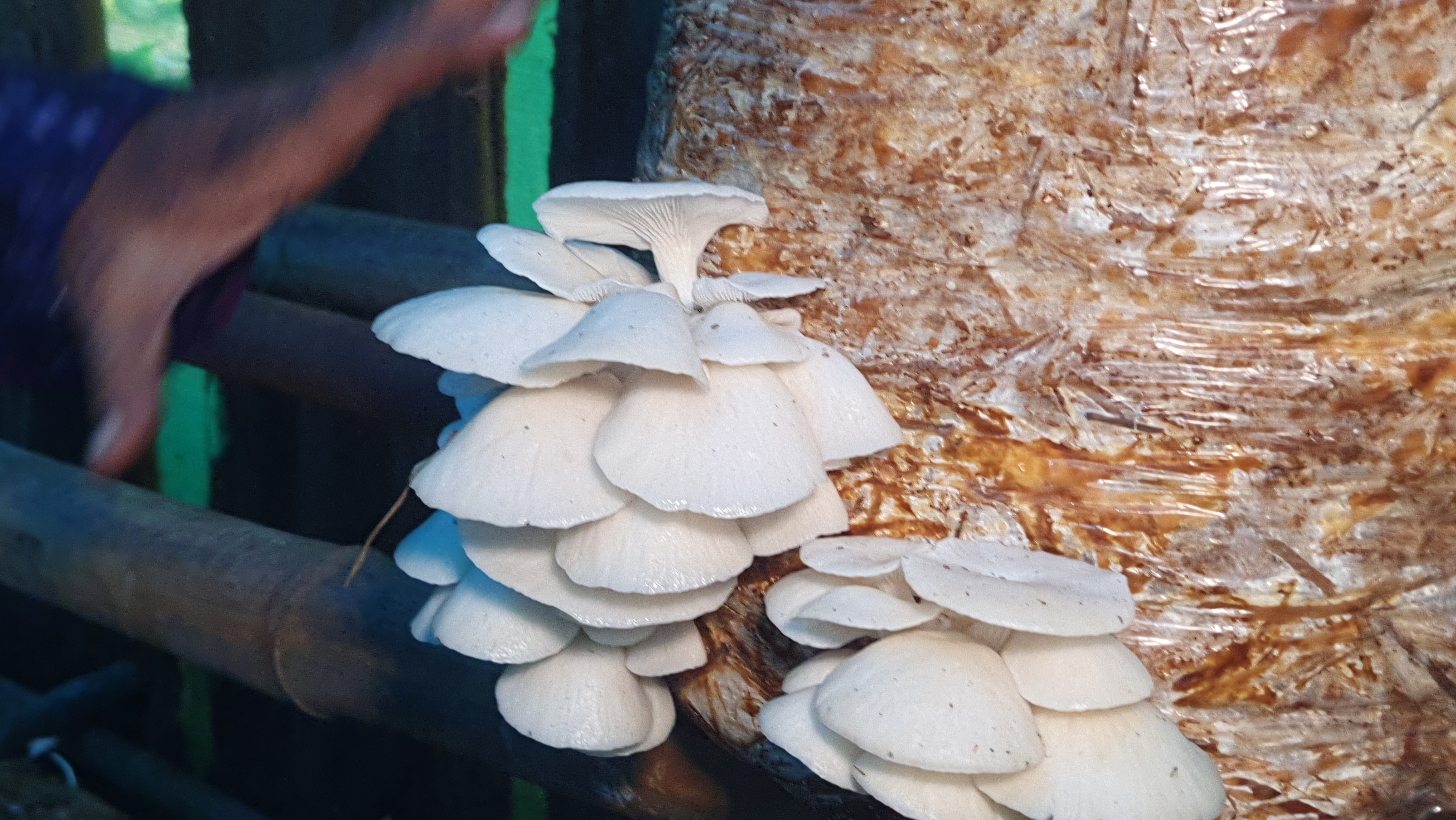
Sambalpur: Behind Professor Sushanta Kumar Das’s house in Sambalpur is a small shed where discarded banana stems, cardboard and mushroom spawn are stocked, not as waste but to be used to grow mushrooms. For people who do not have access to paddy straw, the banana stem, chopped as per requirement proves a good alternative. And it does not compromise on the yield. As per Das, the result is far better.
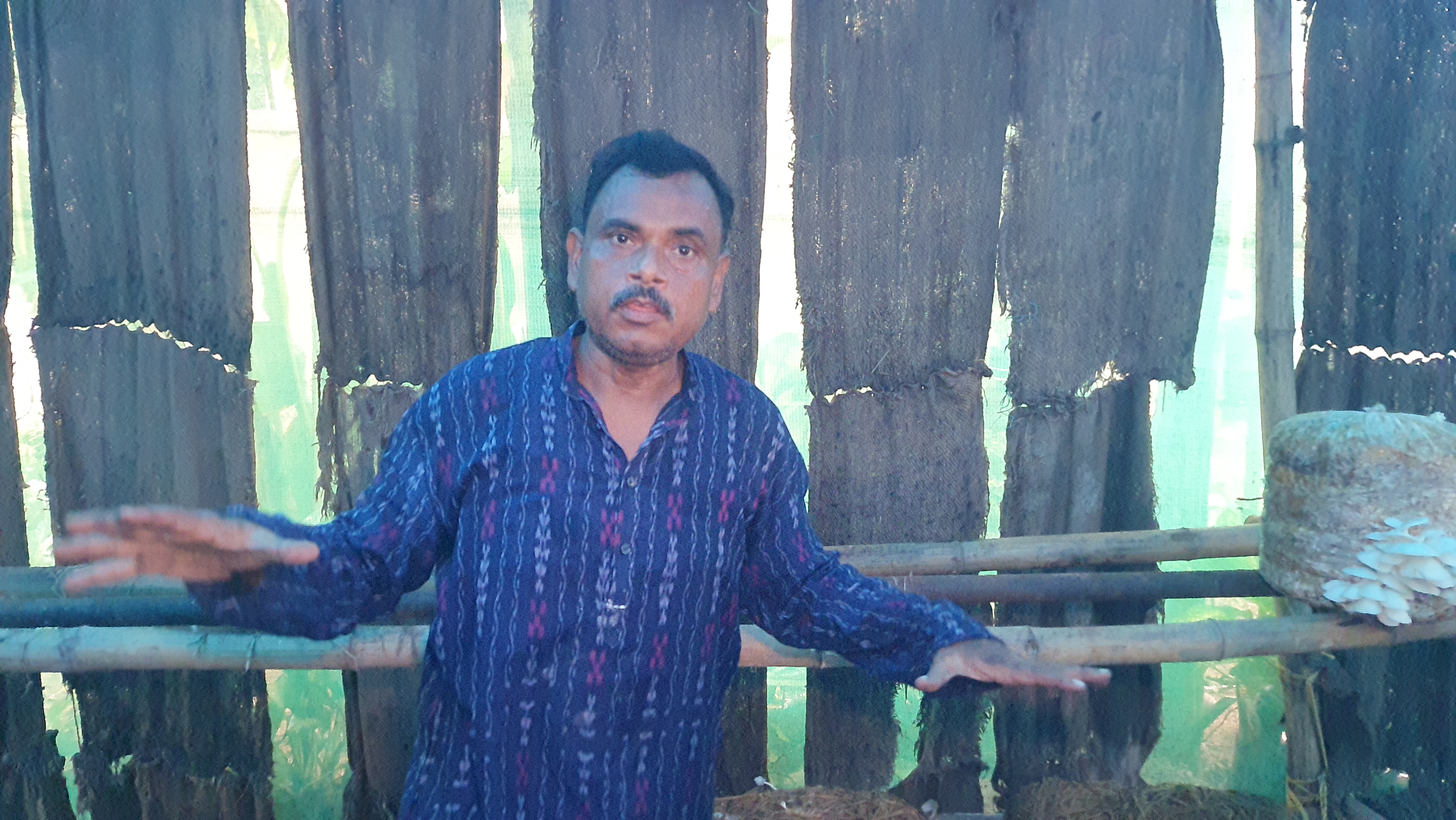
Though Das teaches physics at Gangadhar Meher University and has also served as its vice-chancellor in-charge, he makes time for testing different methods of mushroom cultivation and teaching them to students, farmers and unemployed young people. He has so far trained more than 500 people without charging them. The work has been carried out without government assistance, he said.
Banana stems are usually discarded after the fruit is harvested. Das found that the soft inner material could be used as a growing medium for mushrooms. He also adds cardboard to the mixture. "The method costs less than cultivation using paddy straw and produces a higher yield. I believe this is the first such effort in Odisha to grow paddy straw mushrooms using banana stems," he claimed.
Das has an MTech from IIT Delhi and a PhD from IIT Kharagpur. He worked as a scientist in Germany for six years and specialises in electronics and instrumentation. His interest in mushroom cultivation began after he examined how basic scientific controls could be used in agriculture.
“Sambalpur is largely an agricultural region. I found that instrumentation and physical processes could be used in farming to improve production. That led me to mushroom cultivation,” Das said.
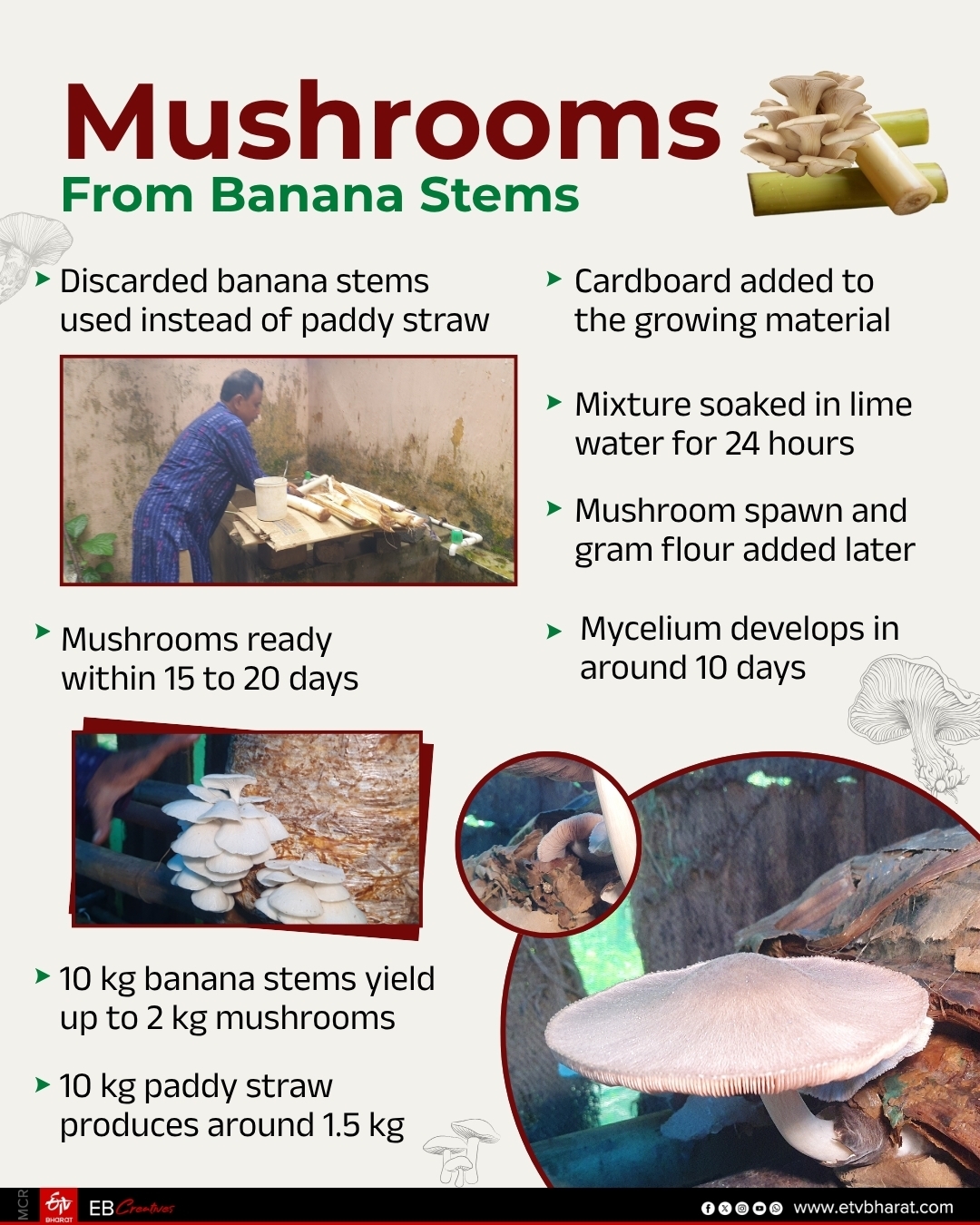
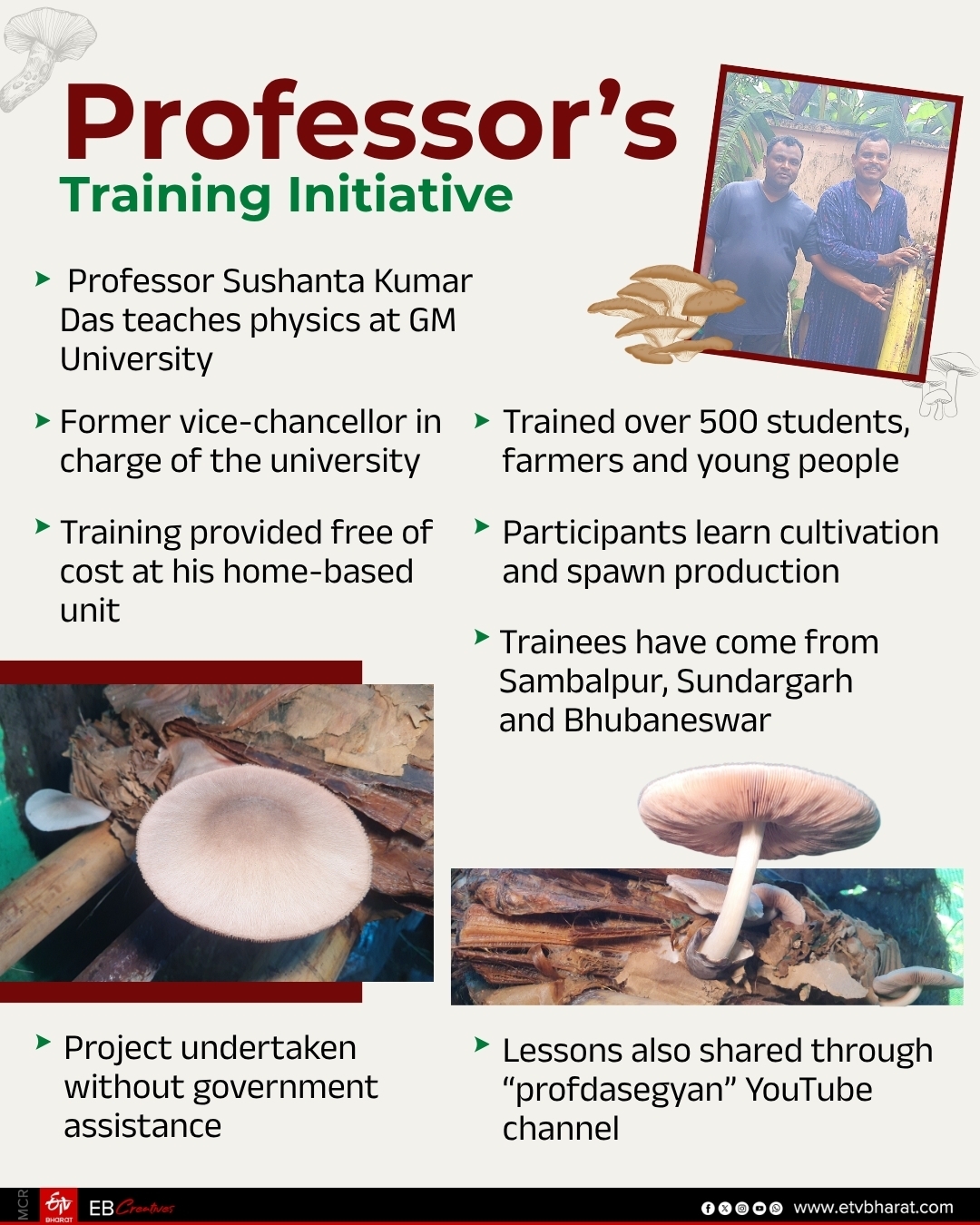
Growing mushrooms throughout the year requires control over light, temperature and humidity. Das initially worked with the usual paddy-straw method before testing banana stems as an alternative. The results, he said, were better than he had expected. “About 1.5 kg of mushrooms can be produced from 10 kg of paddy straw. With 10 kg of banana stem, the yield can go up to 2 kg. The banana-stem medium has given us better efficiency while reducing the cost,” he said.
What is the process?
The banana stems are first cut into pieces and mixed with cardboard. The material is then placed in a tank containing lime water and left there for 24 hours. After being removed the following day and transferred, while still wet, to the mushroom shed, mushroom spawn and a small quantity of gram flour are added to it. Mycelium begins to develop in about 10 days. The mushrooms are generally ready between 15 and 20 days after the process begins, Das explained.
The use of banana stems is particularly relevant in places where paddy straw is either expensive or not readily available. It also gives farmers another use for a material - the stem - that would otherwise be thrown away.
Preparing Mushroom Spawn At Home
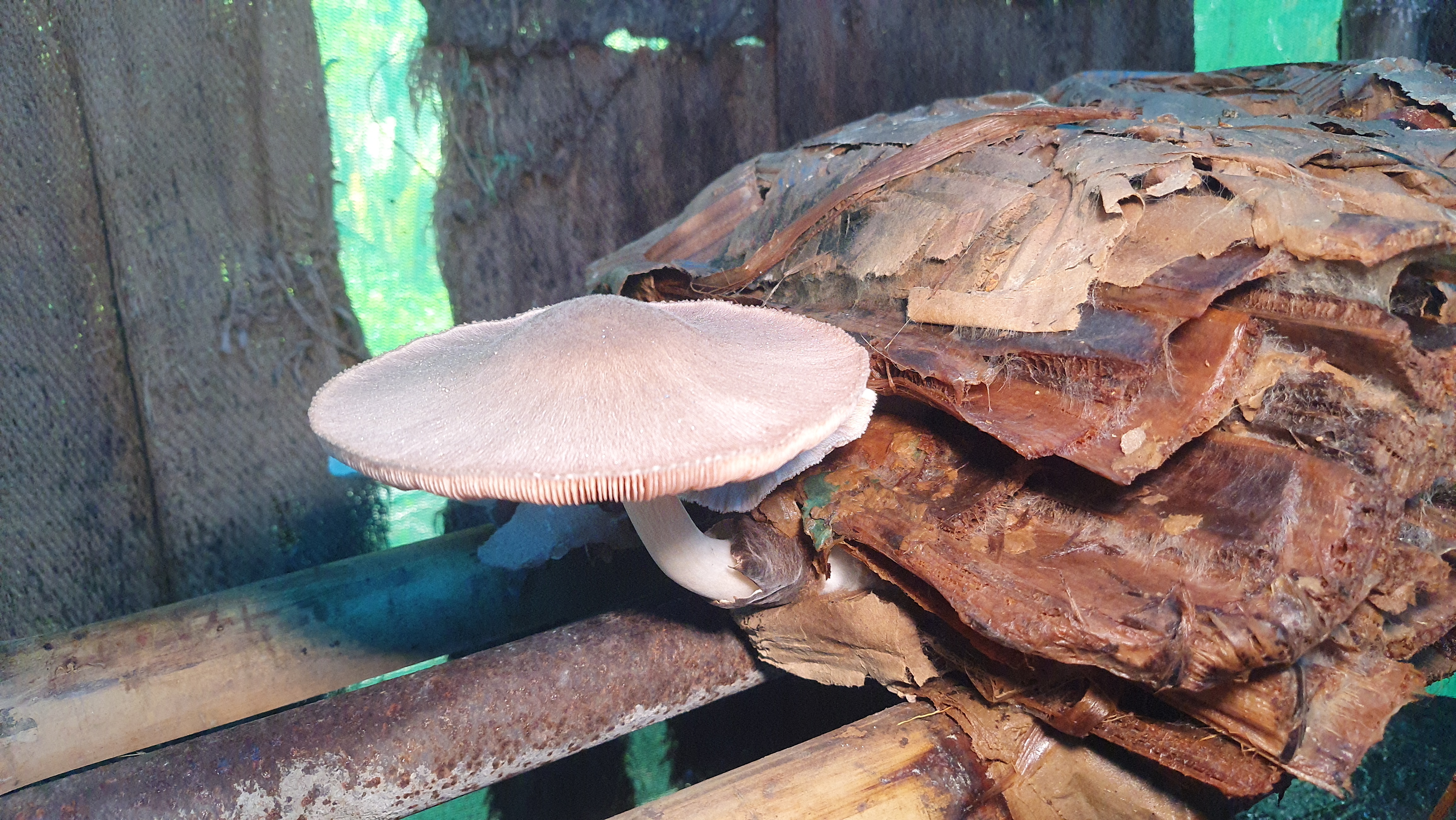
Das does not limit the training to cultivation. He also shows farmers and students how mushroom spawn can be prepared. The process begins with tissue taken from a mushroom. Wheat grains are boiled and mixed with a small quantity of lime. The mixture is filled into a bottle, which is closed with cotton at the mouth. The bottle is kept in an autoclave for about two hours to sterilise its contents. Once it cools, a small portion of mushroom tissue culture is introduced into the bottle.
Spawn develops in about 10 days. This first batch is known as first-generation spawn or mother spawn. It can later be used in place of fresh tissue culture to produce more spawn.
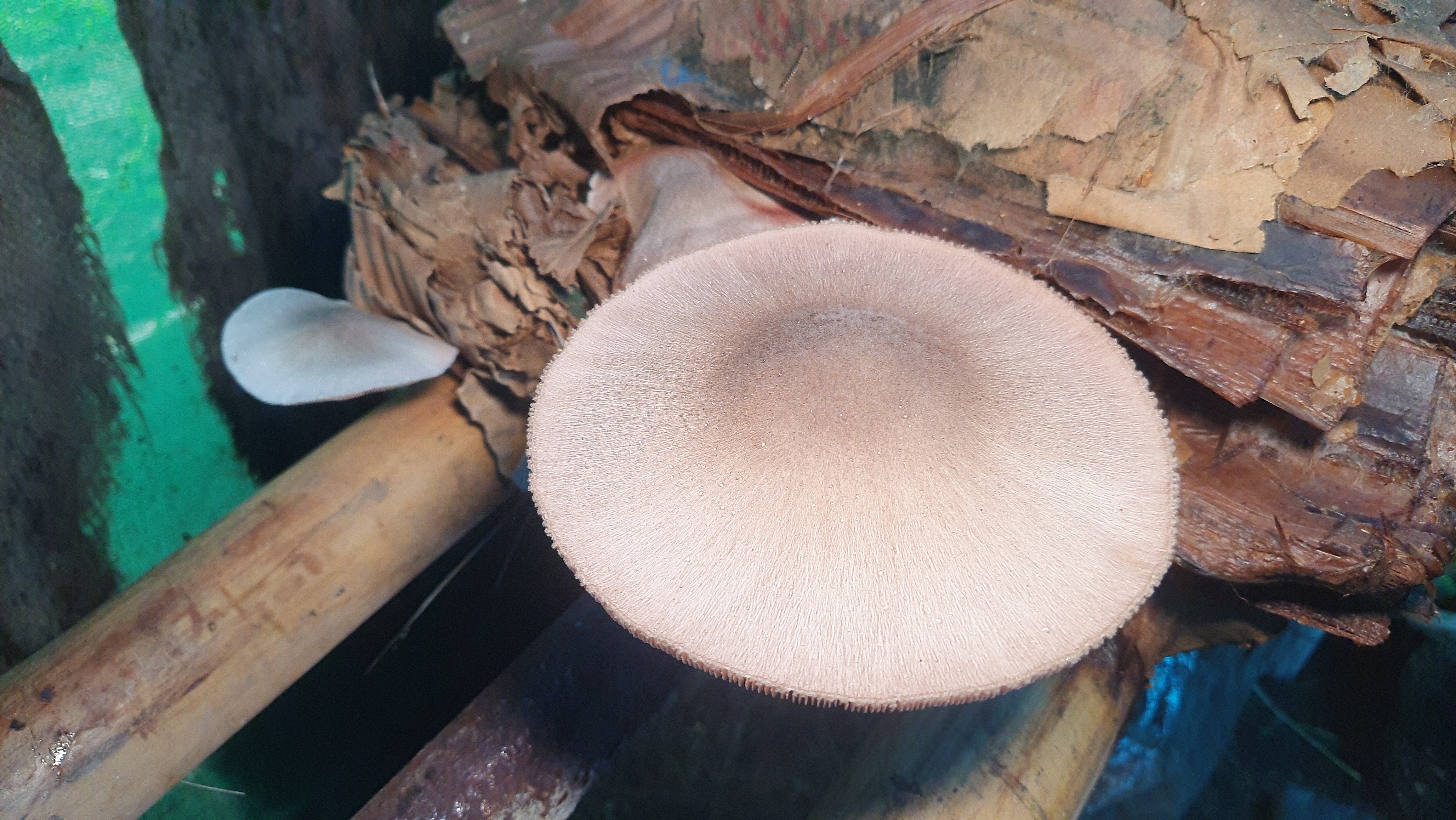
"Mushroom cultivation does not require an advanced academic qualification. A person willing to learn can understand the basic process through about 15 days of practical training," he said.
Young people and farmers from Bhubaneswar, Sundargarh and Sambalpur have attended sessions at his unit. Those unable to visit can watch demonstrations on his YouTube channel, “profdasegyan”.
Das describes the work as part of a “waste-to-wealth and circular economy” approach. His aim is to show how locally available discarded material can be used to reduce farming expenses and generate income. Several farmers trained by him have begun cultivating mushrooms or producing spawn.
Sambalpur Farmer Plans To Adopt The Method
Khirod Rana, a young farmer from Padiabahal in Sambalpur, is among those who received training from Das. Rana grows different varieties of mushrooms on a farm spread across two acres. “I am a farmer and cultivate paddy straw mushrooms. Professor Das helped me while I was setting up the farm and taught me different cultivation methods,” Rana said.
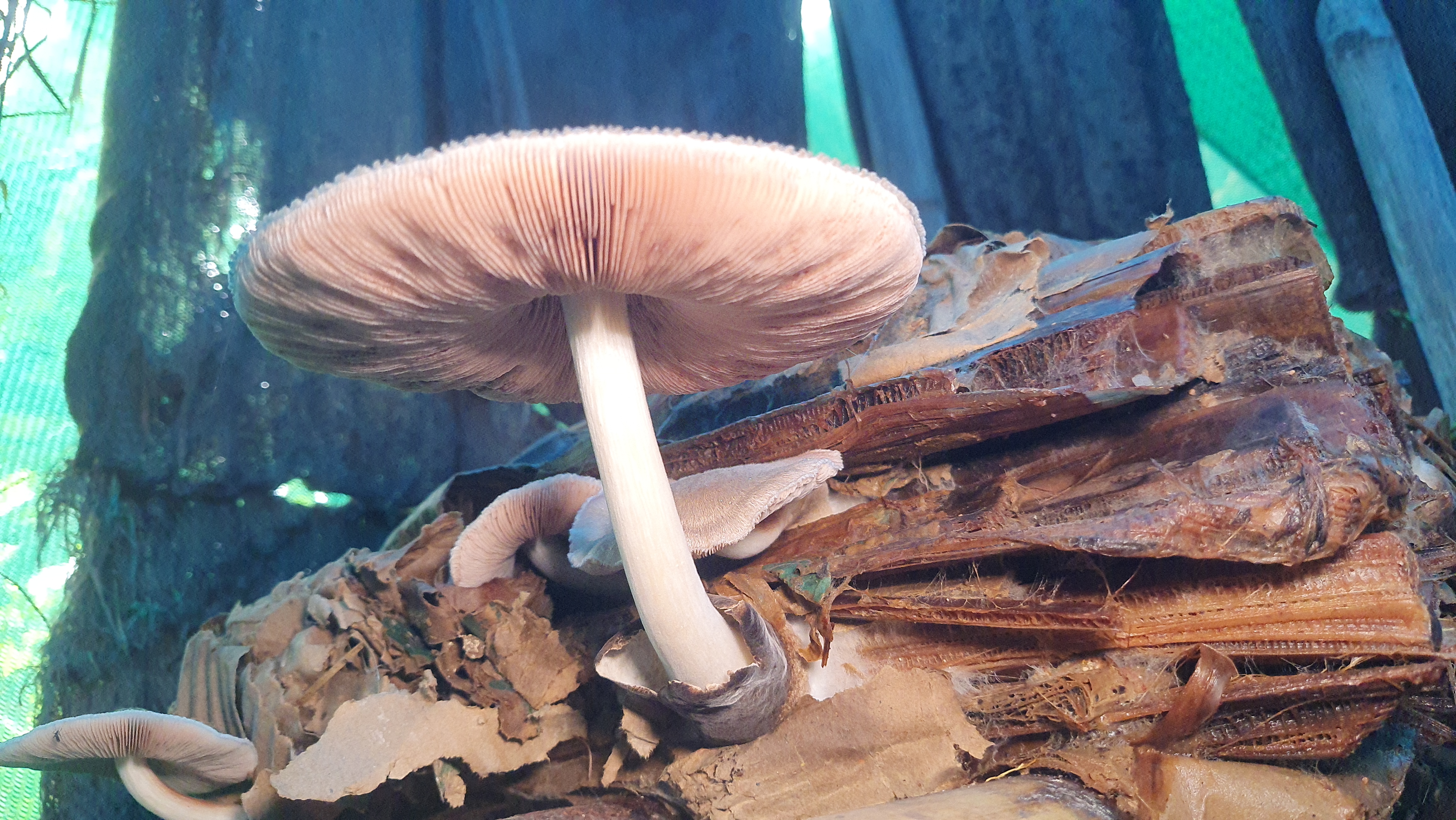
After seeing the mushrooms produced on banana stems, Rana is preparing to try the method on his farm.
“The mushrooms grown through this method are of good quality. I have been using paddy straw, but it is comparatively expensive. People usually throw banana stems away, so we can collect them and use them to grow mushrooms,” he said, adding that the method could be useful to farmers who want to reduce their dependence on purchased straw.
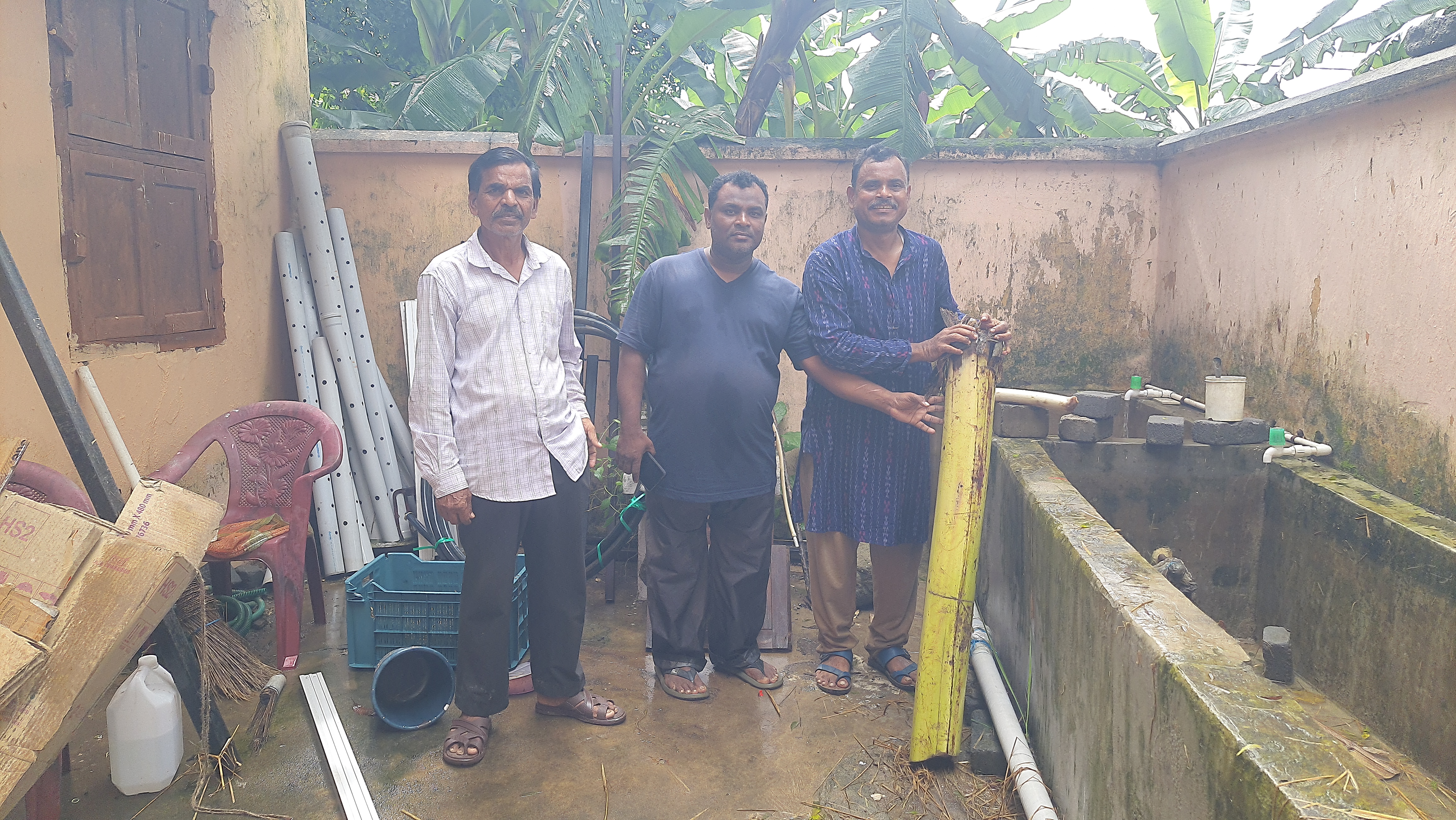
Hadipa Deep of Mudipada in Sambalpur, who produces mushroom spawn, has also trained under Das. He visited the professor’s unit after hearing about the use of banana stems. “No one in our area is growing mushrooms on banana stems. I came here to see the process. From what we observed, the production is good,” Deep said.
Paddy straw is costly in Sambalpur, he added. Using discarded banana stems could therefore lower the initial expense and leave farmers with a better return.
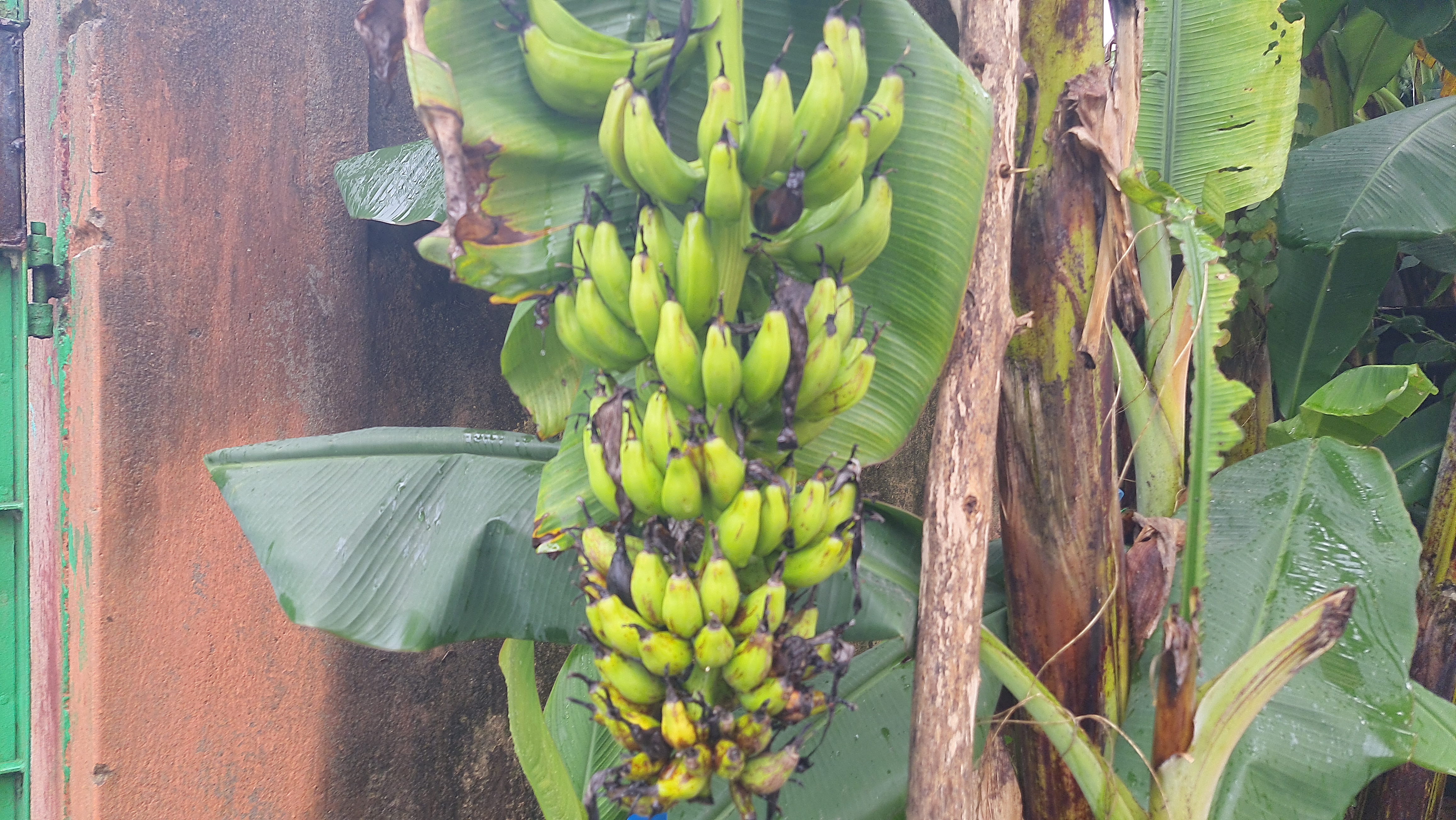
Das plans to continue the free training sessions at his home-based unit. Apart from teaching the cultivation process, he wants participants to learn spawn production so that they do not have to depend entirely on outside suppliers. For him, the experiment is useful only if farmers can repeat it with materials available around them. Banana stems, often left in fields or discarded after harvesting, are one such material. His shed is showing how they can be used for another crop before being disposed of.
Also Read: