New & Noteworthy: Six New Books To Watch Out For This Weekend
This week's exciting new titles take readers from Indian fiction and Swedish literary storytelling to the courtroom, the death row cell and the Hollywood spotlight.

Published : October 3, 2026 at 2:05 PM IST

This week's selection has a particularly varied collection: a novel rooted in memory and identity, a quiet Swedish story about friendship and loss, a look at equality and the law, a graphic novel about the death penalty, John Green's first novel for adults, and a new book from Grit author Angela Duckworth about the environments that shape us. Six books, six very different subjects, and a useful reminder that there is no single definition of a good reading week.
Here are the titles worth putting on your reading radar this week.
1. Gulabiya — Abha Purbey
Read this if: You like fiction that looks closely at people, place and the complicated business of belonging.
Published by Hachette India, Abha Purbey's Gulabiya is a new novel that arrives with the promise of a story rooted in the emotional and social textures of contemporary India. The title itself suggests something vividly Indian, and Purbey's fiction is likely to appeal to readers who enjoy novels in which the personal story is inseparable from the world surrounding it. This is the kind of book to put on your radar if you prefer literary fiction that asks questions about identity, relationships and the lives people construct within the circumstances they inherit.
Why add it to your list? Gulabiya is worth watching for readers who like novels that use individual lives to explore larger questions about society and belonging.
Best time to read it: When you want to settle into a novel rather than race through one. This feels like a book for a quiet weekend, preferably when you have enough time to let the characters and their world take up some space in your head.
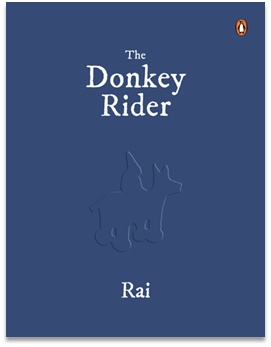
2. The Donkey Rider — Rai
Read this if: You want to encounter a difficult subject through an unusual form; and don't think serious nonfiction has to look like a report.
Some stories about the justice system are told through courtrooms, case files and statistics. The Donkey Rider takes a very different route. This graphic novel from Penguin India moves between the fictional cities of Pulse and Rukawa, following Huma, a young lawyer defending prisoners on death row, and Ghurbat, a man awaiting execution. Their lives converge inside the prison known as the Big Well. Its central question is an uncomfortable one: when a person is condemned, what story do we tell ourselves about the person being condemned?
Why add it to your list? Rai's background in art history and animation, along with her interest in space, memory, migration and histories shaped by ecology and colonialism, makes The Donkey Rider an especially interesting meeting point between research and visual storytelling.
Best time to read it: This is a book where the form matters as much as the subject. Read it when you are prepared for a book that doesn't give you the comfort of believing that justice is always a simple matter of right and wrong.
3. Small Comfort — Ia Genberg
Read this if: You like quiet, beautifully observed books about friendship, memory and the people who remain with us long after they have left our lives.
Ia Genberg's Small Comfort, published by Wildfire Books, belongs to that increasingly appealing category of novels that understand that a life can be changed by people who may not have remained in it forever. There is something inherently intriguing about a book built around memory. We like to imagine our memories as a reliable archive, neatly arranged and available whenever required. However, they are more like a bookshelf that someone keeps rearranging when we're not looking. Genberg is interested in those fragments.
Why add it to your list? If you enjoyed books that are intimate rather than sprawling, this is one to consider.
Best time to read it: On a quiet afternoon when you are in the mood for something reflective rather than plot-heavy. Ideally somewhere you can people-watch.
4. Courting Equality — Mihira Sood
Read this if: You want to understand what equality looks like when it meets the law, rather than just discussing it as an abstract ideal.
Published by Juggernaut, Mihira Sood's Courting Equality takes readers into the relationship between law and the pursuit of equality. The courtroom is often presented as a place where facts are established and arguments are won or lost. But the law also reflects the society in which it operates, and questions of equality inevitably bring questions of power, rights, discrimination and access into the picture.
Why add it to your list? Because equality is one of those words we use constantly without necessarily agreeing on what it means in practice. A legal perspective can make the conversation considerably more concrete. This is a book for readers who enjoy nonfiction that takes a familiar idea and examines what happens when it has to survive contact with institutions, judges, arguments and actual cases.
Best time to read it: When your brain is in nonfiction mode and you want something that gives you material to think about after you've put the book down. It may also be the book to pick up when someone starts an argument about the law at dinner. You may not win, but at least you'll have done the reading.
Also read: Gandhi-Tolstoy Letters To Decoding the Magic of Jasprit Bumrah, 6 New Books Worth A Read
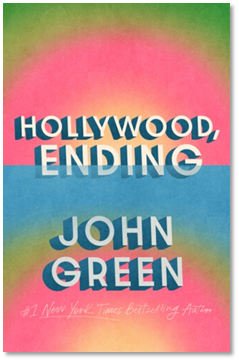
5. Hollywood, Ending — John Green
Read this if: You grew up with John Green and are curious about what happens when one of the defining writers of contemporary young-adult fiction turns his attention to adults, Hollywood and the attention economy.
After almost a decade away from fiction, John Green returns with Hollywood, Ending, his first novel written for adults. The author of bestsellers The Fault in Our Stars and Turtles All the Way Down has sold more than 60 million books worldwide. The novel follows Kai Laramie and Juniper Castillo, two young actors who are cast in a much-anticipated biopic about Andy Warhol. Their careers take off, their relationship develops and, inevitably, their private lives become part of the public spectacle surrounding them. Being watched is no longer confined to premieres, interviews and photographs in magazines. Every relationship, argument, outfit and awkward moment can potentially become public property.
Why add it to your list? For longtime Green readers, this is a chance to see what his familiar emotional intelligence looks like in an adult setting. For new readers, it offers a way into questions about fame, intimacy, creativity and the increasingly blurry boundary between having a public identity and having a private self. There is something amusingly appropriate about an author whose books helped define a generation of young readers now writing about what happens when those young people grow up and discover that adulthood comes with its own complications.
Best time to read it: When you want a contemporary relationship story with Hollywood glamour, celebrity anxiety and something more substantial underneath the surface.
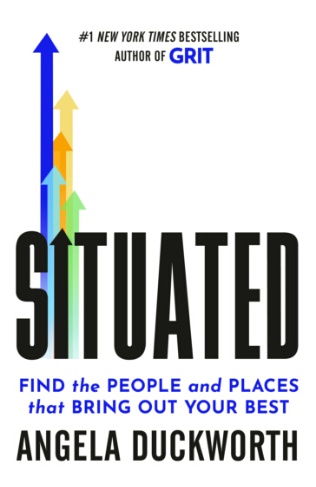
6. Situated — Angela Duckworth
Read this if: You've ever been told to work harder and wondered whether the problem might actually be the environment you're working in.
Angela Duckworth became internationally known for Grit, her bestselling exploration of passion, perseverance and sustained effort. Situated takes the argument somewhere rather more interesting.
Duckworth's new book asks what happens when trying harder isn't the whole answer. Sometimes, she argues, the difference between struggling and thriving has less to do with changing ourselves and more to do with changing the circumstances around us. Duckworth draws on research as well as experiences from her own life, including burnout and difficulties in her marriage, to explore how deliberately creating better environments can affect the way we perform and live.
Why add it to your list? Because Situated builds on the ideas of Grit without just repeating them. It introduces a useful counterpoint to the modern obsession with self-improvement: sometimes personal agency means recognising that you are allowed to change your surroundings too.
Best time to read it: When you're stuck. When you've tried the productivity system, downloaded the app, bought the notebook and promised yourself that Monday will be different.
Also read: