Meet The Award-Winning Student Using AI To Help Neurodivergent Children Be More Independent, From Ordering Coffee To Taking The Bus
National Winner of the 10th IET India Scholarship Award, Kush Garg is building a compact, AI-enabled IoT device designed to provide real-time assistance.
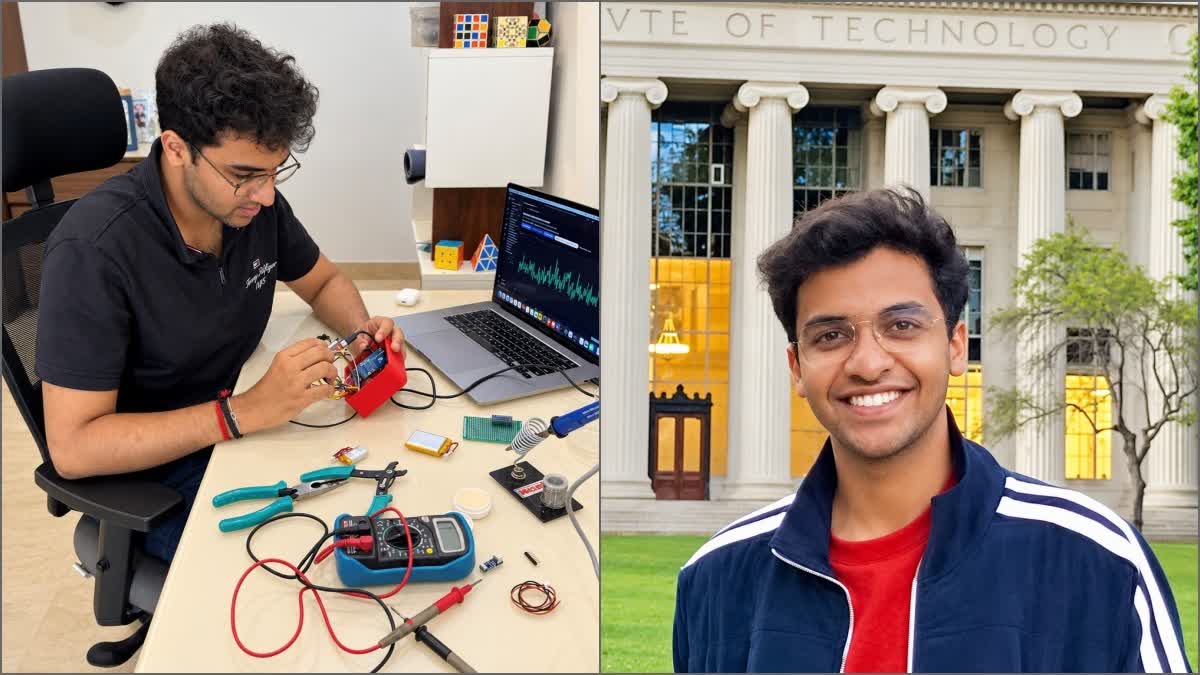

Published : November 4, 2026 at 5:23 PM IST

There's one kind of engineering that begins not with a machine, a circuit board or a line of code, but with a question: What if we could make someone's everyday life a little easier? It is a simple question, but answering it requires something that isn't always taught in engineering classrooms: the ability to recognise a problem from another person's perspective. For Kush Garg, a student at Delhi Technological University and the National Winner of the 10th IET India Scholarship Award, that question led to an innovation with the potential to make everyday environments more accessible to neurodivergent children.
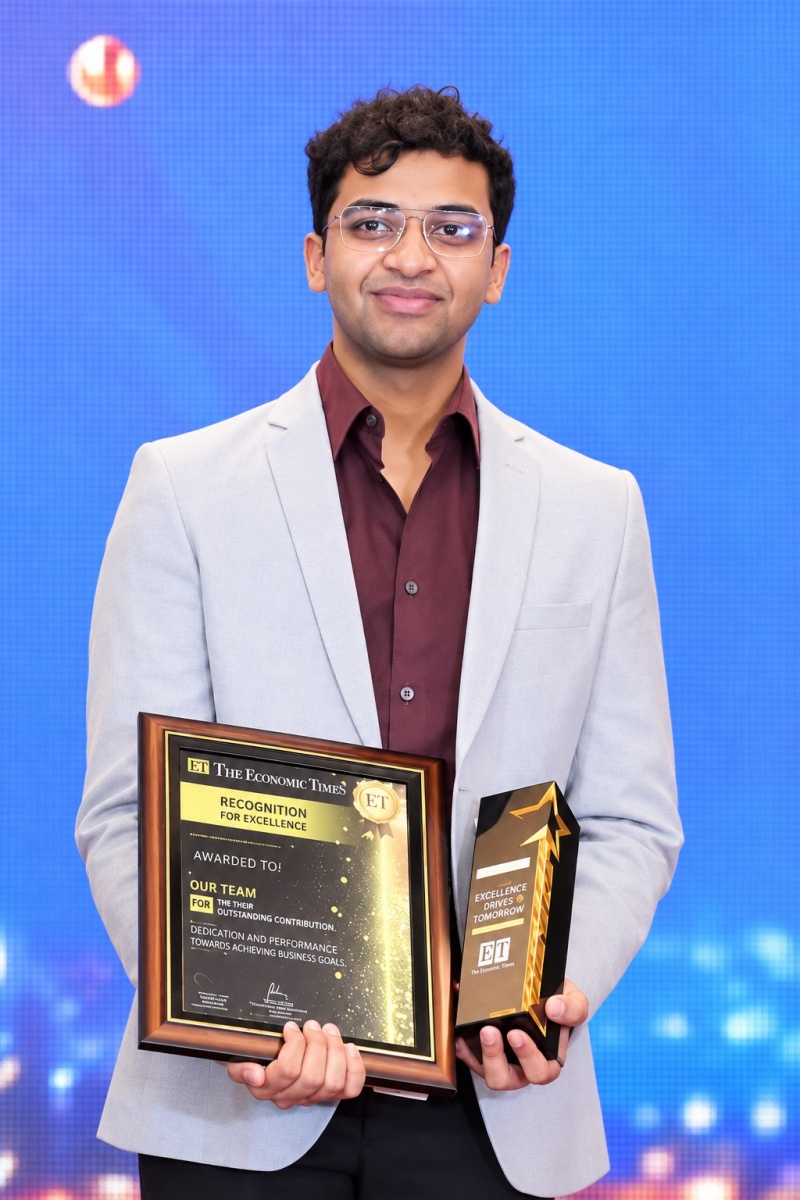
The IET India Scholarship Award recognises and supports undergraduate engineering students who demonstrate strong academicperformance, innovation, leadership and the ability to apply engineering knowledge to real-world challenges. IET stands for the Institution of Engineering and Technology, one of the world's largest engineering bodies. The 2026 edition marked the 10th edition of the scholarship, with a total prize pool of ₹20 lakh, where Garg bagged the top prize. In 2024, he also won 2nd place ($60,000) at the DARPA Triage Challenge with Team UAS-DTU and secured the 3rd position globally at the ICUAS UAV Competition in Greece.
Also read: The Talk About Autism Is Changing, From Special Needs To Special Strengths
Garg's latest winning idea is a compact, AI-enabled Internet of Things (IoT) device designed to provide real-time assistance when children navigate situations that many of us take for granted. Ordering a coffee, buying groceries, travelling on public transport or following a classroom conversation may appear to be routine activities. But for some neurodivergent children, these interactions can involve complex social cues, communication challenges, sensory sensitivities and uncertainty about what to say or do next.
The device aims to bridge that gap by understanding the child's preferences, activities and immediate surroundings, then offering context-aware suggestions at the moment they are needed. Rather than expecting children to depend constantly on parents, teachers or caregivers to interpret situations for them, the technology is designed to help them participate more independently. “I think just knowing that there is something to fall back on when you are stuck will empower children to try these things by themselves,” he tells ETV Bharat in an exclusive interview.
Q 1. How does your AI-enabled device interpret a child's surroundings and decide when assistance is needed?
I didn't want this device to begin each interaction as a blank slate. So, it gradually learns about the child through conversations, routines and preferences. It hears speech and even preserves the context in its “memory”, and uses AI to know what's happening and what the child is trying to say.
It works on states. Say a waiter asks, “What coffee would you like to have?” The device can tell from the conversation that the child is in a café. It also looks at the time of day and what it already knows about the child. If it has learnt that the child usually picks cold coffee in the evening, 'Cold coffee' shows up as a suggested reply. The same context can help with what comes next, like paying.
In the current prototype, the child turns the device on and off with a physical button, so they're the one deciding when they want help. I also chose an e-paper screen instead of an ordinary screen. After the text is entered, it stays there without power, so the device can keep communicating throughout the day.
Q 2. How can the device help children navigate everyday social interactions with greater confidence and independence?
What really struck me at the beginning was seeing how much these kids look to parents or teachers to say what it is they need. Even a simple outing to the shops, ordering food or even talking to a stranger can become difficult without the familiar presence of a parent or carer.
I think just knowing that there is something to fall back on when you are stuck will empower children to try these things by themselves. The device will say a suggestion and display it so the child can communicate it without having to speak.
Q 3. Could this technology reduce anxiety in unfamiliar or overstimulating environments, and how would you measure its impact?
I think it can, mainly because it makes communication less stressful. A child might not find the right words, or might freeze up in front of a stranger, or can't explain what they're feeling. With the device, they can just show the text and the other person gets it. There's also an audio mode that tones down some of the background noise while keeping the voices nearby clear. That could help children who are sensitive to loud noises stay calm and feel more comfortable in noisy environments. However, I don't want to just assume it reduces anxiety. That needs testing. I'd like to work with children, parents and caregivers, see how it holds up in real situations, and find out whether it actually makes communication easier for them.
Q 4. How do you ensure that the device supports neurodivergent children on their own terms rather than pressuring them to conform to social expectations?
I see the device as something that sits between neurodivergent children and the people around them. It isn't meant to make children change how they behave or communicate, and it isn't asking other people to change either. What I want is to take some of the pressure off both sides.
Every child communicates and handles situations in their own way. The device should be there when a child wants help, and the child shouldn't feel they have to use it or respond in any set way. My focus is on helping children get through everyday situations while respecting what each of them needs and prefers.
Q 5. How are privacy, parental consent and responsible AI being addressed when the technology is designed for children?
Because this is a device for children, privacy had to be a priority from Day One. Right now the prototype doesn't store any audio recordings. Only the text taken from conversations is kept. I'm also working on moving the AI processing onto the device itself, so sensitive information never has to leave it. I'm not there yet, but it's an important part of the development.
Before the device goes out to more people, parental consent and stronger AI safeguards will have to be in place. I also plan to keep parents updated on relevant activity in real time, without taking away from the child's privacy and independence.
Q 6. What feedback from children, parents or caregivers most significantly changed your approach?
The feedback that mattered most came from parents, teachers and caregivers when I visited a neurodevelopment centre in Gurugram. When I started, I thought the main problem was that children struggled to put their needs into words. In those conversations, I realised that sometimes the children themselves aren't fully sure of what they need or what they're feeling.
Parents also talked about how hard it is for them to let their children handle everyday situations alone. That changed how I saw the problem. I stopped thinking of it as a device that just helps children communicate, and started thinking about how it could understand the context around them and help them to recognise their own needs.