The Well-Read: Author Nona Walia Talks Family Libraries, Finding Happiness And The Magic Within
From Enid Blyton and Nancy Drew to Pema Chödrön and Elizabeth Gilbert, Nona Walia’s reading journey has travelled from stories to self-discovery
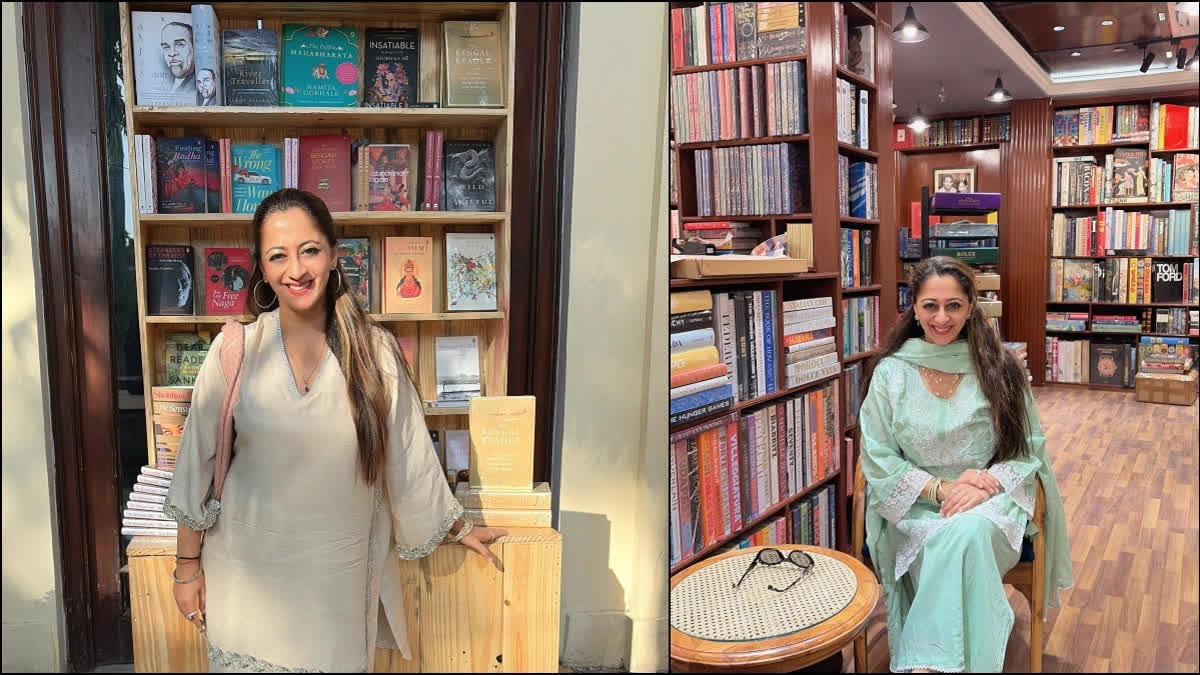

Published : September 26, 2026 at 5:23 PM IST

There are families in which books are objects. They sit on shelves, gather dust, occasionally get moved from one room to another, and opened once in a blue moon. Then there are homes in which books are practically family members. They travel across borders and survive generations. They acquire the faint smell of old paper and, with it, the slightly grander smell of history. Nona Walia grew up in the second kind of family.
The author, motivational expert and wellness writer has spent decades writing about happiness, mental toughness, wellbeing and personal growth. Her books include The Art of Mental Toughness: Survival Lessons from the Pandemic, Own Your Energy: Being Energetic in a Drained World and The Magic Is Within.
Walia's grandfather had an extraordinary library and spent much of his time surrounded by books. Her father was a professor at Delhi University, immersed in history books and research. Her mother, meanwhile, had a completely different reading life: Femina, Hindi fiction and the novels of Shivani, alongside a substantial collection of Mills & Boon romances. It was, Walia recalls, an early lesson in the fact that there isn't one correct way to read.
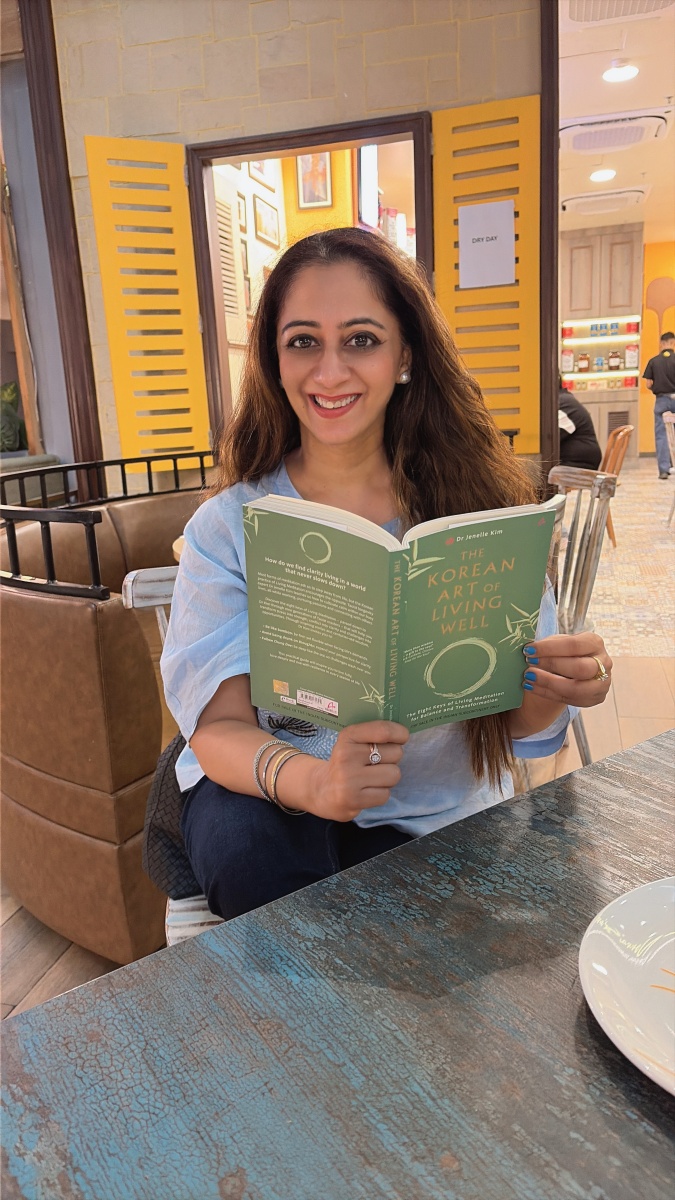
“My grandfather was always at his desk working and writing and I was very intrigued by what he was doing, surrounded by books and books and more books,” she says in a long phone conversation from her Delhi home. “At that point he was translating the Guru Granth Sahib into French. So, there were Punjabi books, French books, and poetry. He used to write a lot in both French and Punjabi.”
“I saw everybody having very, very different tastes in books,” she adds. Nobody told Walia that a Mills & Boon was inferior to a history tome, or that a magazine could not sit comfortably alongside scholarship. “They all would be into deep reading and light reading and yet I was allowed to choose what I wanted to really read,” she says.
Her own journey began, as it did for so many readers of a certain generation, with Enid Blyton books. Then came The Hardy Boys and Nancy Drew, those endlessly efficient literary machines that taught children the pleasures of suspense, friendship and turning one more page when they should really have been asleep. “We used to read that in school and then we slowly graduated to deeper books,” she says. If Blyton opened the door, it was Barbara Taylor Bradford's A Woman of Substance that made Walia realise that books could do something more personal. It arrived in her late teenage years and became something that had to be documented.
“I still have it,” she says. “That one had a huge influence. The movie had also come out around the same time. I made notes in my notebook because it felt very personal.” The book's protagonist, Emma Harte, particularly stayed with her: a woman who starts with almost nothing and builds an empire, while retaining what Walia describes as her “substance”. It was, she agrees, a coming-of-age book. “That was the book that sort of ushered me into the world,” she says. “The feelings, the mood, the emotion of the character, her journey as the protagonist, how she had nothing and she built this empire and she was still the woman of substance. That really called out to me.”
The other book that occupies this particular shelf in her memory is Ayn Rand's The Fountainhead. "These two books were gold," she says. There is an interesting symmetry here. The young Walia was reading stories about ambition, identity, independence and the construction of a life; decades later, her own writing would focus on resilience, happiness, mental toughness and the possibility of changing one's relationship with life.
Walia's relationship with books is also tied to a much larger family history. Her grandfather had come from Lahore and, when Partition forced a rupture in countless lives, he carried a suitcase of books with him. “There was this shelf of books that had come from Lahore,” she says. “My grandmother always had this small Gutka, which is a religious book. It belonged to my great-grandmother, who also came here with my grandfather from Lahore.” The books have not remained untouched by time. Their pages have yellowed. Some of the ink has faded. Some had to be given away. But enough survived to become something more than reading material.
Walia's professional life eventually moved her closer to the world of ideas she had grown up around. As a journalist, she spent years writing about wellness, personal growth, happiness and mental health, interviewing authors and engaging with a genre that was still finding its place in India.
The work demanded reading. Lots of it. “I was writing for a Sunday paper, so I was interviewing a lot of authors, especially in the personal growth and self-help genre, which was new and coming up in the late 90s,” she says. Louise Hay was an important influence. So were Rumi, Paulo Coelho and the emerging wave of new-age writers who treated happiness and self-understanding not only as philosophical questions but also as things that could be explored, practised and learned. The journalist in Walia also encountered an old problem in a new form: happiness is not exactly a subject on which human beings agree.
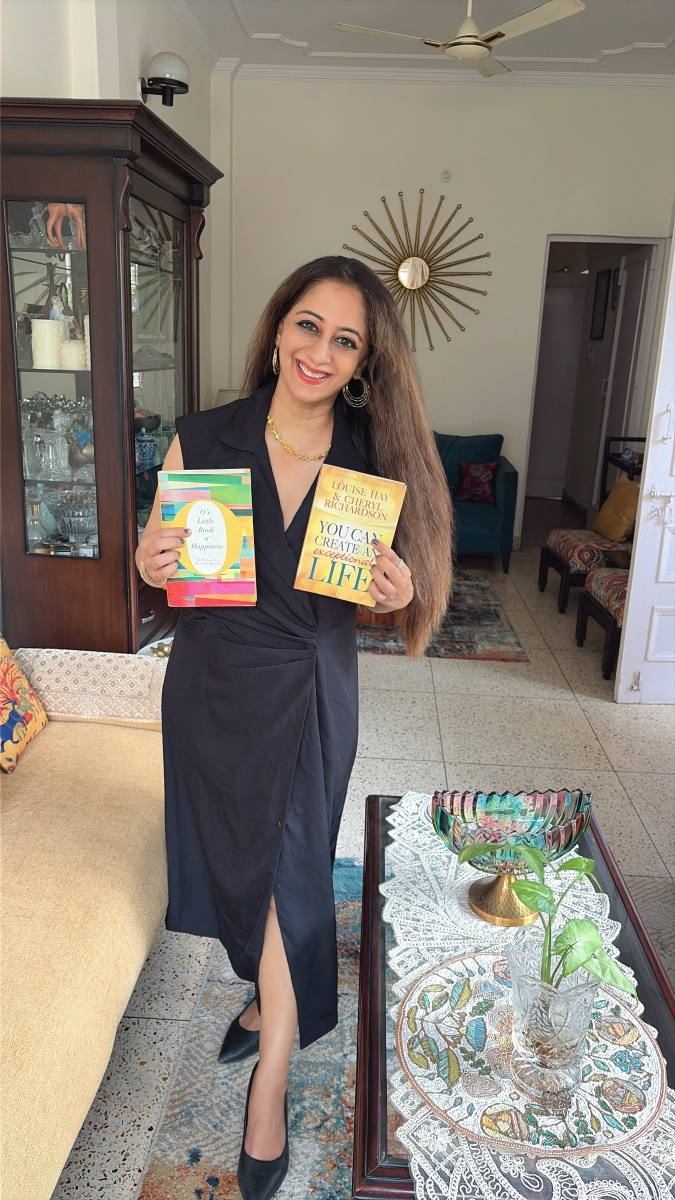
“I did a whole lot of cover stories on happiness,” she says. “One had to be well read to write because every day, a new study was coming out. It was conflicting and contradictory, but you had to engage in the books and draw inspiration from your own life.”
Her reading around happiness became extensive. She loved Stephen Klein's The Science of Happiness, Meik Wiking's The Little Book of Hygge: Danish Secrets to Happy Living, Ruskin Bond's writings on happiness, Eckhart Tolle's bestseller The Power of Now, Russ Harris's The Happiness Trap and Oprah Winfrey's The Little Book of Happiness. There is a practical quality to the way Walia talks about these books. She isn't interested in reading as a competition or in collecting impressive titles to display on a shelf. The question is always: “What does this book do to me?”
This is also where her academic study of wellbeing has made a difference. Walia completed Yale University's Science of Well-Being programme online. It changed the way she approaches literature about mental health, happiness and wellbeing. “That was a good grounding,” she says of the programme. “Whenever I'm reading a new book, say on mental wellness, mental health, happiness, you can actually go deeper and understand the mind, the brain, the functioning of the brain better.” She believes the benefits extend beyond professional application. “I think that is also the point of reading a lot,” she says, “that you understand the world and your own life and whatever happens, you process it better.”
Walia is predominantly a non-fiction reader, although that wasn't always the case. “I used to read a lot of fiction. But after the internet boom, I have to admit that I've moved on to non-fiction.” She still reads fiction when something manages to get through the increasingly crowded gates of recommendation.
Her ideal reading environment is laidback. There is no elaborate reading nook, no carefully curated chair positioned beside a window, no rustic cottage in the mountains. Her bed will do. “With a cup of coffee or green tea,” she adds. Sometimes a smaller book accompanies her to a café. Sometimes a traffic jam becomes an opportunity to read. Reading fits into life rather than requiring life to stop.
That may also explain why Walia gravitates towards authors who make their ideas accessible. When asked which psychology or wellness book she would recommend to someone feeling mentally exhausted, she doesn't reach for the densest academic text on her shelf. “Robin Sharma's The Everyday Hero Manifesto,” she says. “I like simple books where you can get a lot of takeaways that you can implement in your own life. Rather than going into heavy words and deep psychology.”
It is an approach that runs through her own writing too. Her third book, The Magic Is Within, is built around the idea that people often overlook the resources they already possess. The book emerged from years of conversations, interviews and observations, but its central message is the thing we are looking for may not be somewhere outside us. Her own younger self, she says, is exactly the person to whom she would give the book. “It's sad that we waste so much time sitting and mourning about things that don't happen, things we cannot control,” she says. “The message to my younger self would definitely be: please don't waste a minute on anything. Because the magic to make whatever possible, to make your biggest dream possible, is within you.”
It is not surprising that Walia's reading list contains Elizabeth Gilbert's Big Magic. Gilbert's book, along with Robin Sharma's work and Pema Chödrön's Living Beautifully, influenced the way Walia approached her own writing. Pema Chödrön, in particular, seems to occupy a significant place in Walia's personal bookshelf. Living Beautifully speaks to her because it doesn't pretend that a beautiful life is a life without pain. “We all have a relationship with pain and yet try to live beautifully,” Walia says. “Pema Chödrön describes that journey, how to turn your pain and still live beautifully.” She also recommends Chödrön's The Places That Scare You, which explores fear and the temptation to remain safely inside one's comfort zone. “We all have places that scare us,” Walia says. “We don't want to move out of our comfort zone.”
This idea of books as agents of change comes up repeatedly in our conversation. Walia is not necessarily claiming that every self-help book will transform a reader's life. Instead, she believes something subtler happens through sustained reading: our patterns of thought can shift. “I don't know whether you'll agree that self-help literature changes you, but somewhere, it changes your thought process.” For Walia, this is the real power of reading. “Somewhere it changes your brain's chemistry and way of thought, which no other person can do.”
Her description of reading as therapy is equally emphatic. "If you're reading, it is the best therapy. I mean, if you're reading a great book, it does a better job than going to a therapist.” It reveals something important about the intensity with which she regards reading. That is probably why she likes Louise Hay. “Her book of meditation is so powerful, very simple, very basic, but very doable. So you can be consistent.” She describes Hay's approach as working “at a base level”.
There is nothing complicated or intimidating about it. The ideas can be incorporated into a busy day. Walia's admiration for Hay is personal, too. Her mother reads a page of Hay's book every night before going to sleep. Walia herself interviewed Hay before her death. The encounter remains memorable. “She was very grounded and humble.”
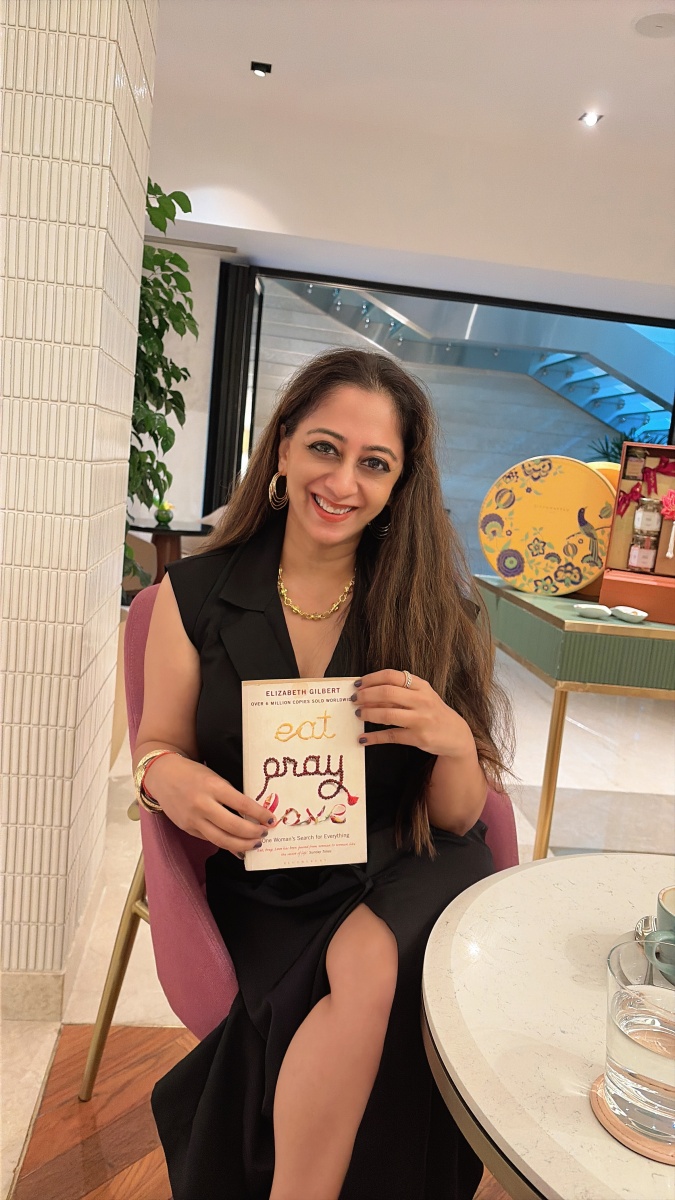
Her choices today are considerably different from those of her grandfather or her parents. If Walia had to choose three books to describe her personality, they would be Elizabeth Gilbert's Big Magic, Gilbert's Eat, Pray, Love and Pema Chödrön's Living Beautifully. And if she could spend an afternoon inside a fictional world, she wouldn't choose a wellness manual or a philosophical text.
She would choose Arundhati Roy's The God of Small Things and Chitra Banerjee Divakaruni's The Palace of Illusions. “The Palace of Illusions is quite feminine, and the whole plot is so interesting and fascinating that you can get lost into it.” For all the talk of self-help, research, wellbeing and neuroscience, the original pleasure of books remains wonderfully uncomplicated. Sometimes you read to understand yourself. Sometimes you read to understand the world. And sometimes you read because you have disappeared into a story and have no particular desire to be found.
Her relationship with books also includes a strong belief in the physical life of reading. She has a particularly passionate opinion about libraries. “We must save the public libraries,” she says. The problem, she believes, isn't only that libraries are disappearing. It's that they need to be reimagined. “We need to modernize, recreate and make the libraries trendy again, because that is going to make reading popular again.” She feels we need to have a relationship with books. “You could be on one path and you read something completely different from what you usually normally read. And it can just open your mind to something new and fantastic.”
That is the magic Walia has been writing about all along, the small, persistent possibility that a sentence, a character, an idea, a memory might change the way you see your own life.
