Explainer: Why Some Indian Exporters Have To Pay Europe For Carbon Emissions In India
The Carbon Border Adjustment Mechanism puts a carbon cost on imports, calculated per tonne per product.

Published : October 3, 2026 at 6:17 PM IST

New Delhi: India and the European Union committed to increasing trade by concluding negotiations on the long-pending Free Trade Agreement, labelled the "mother of all deals," early this year.
But as the two-decade-long negotiations drew to a close, a wrinkle emerged in the form of the EU's Carbon Border Adjustment Mechanism (CBAM), which sets a cost on products that release a large amount of greenhouse gases, such as carbon dioxide, during manufacturing.
The CBAM came into full force on January 1, raising the possibility of higher export costs and potential diversification away from the EU market for carbon-intensive exports. Officials on both sides have continued discussions on the CBAM, ranging from how India's own carbon pricing policy will be factored into the carbon price to how emissions will be calculated.
So as the two countries look to deepen trade, will CBAM prove to be a drag on carbon-intensive Indian exports like steel to the EU?
Why are companies paying for emissions in India in the EU?
The EU has the world’s biggest emissions trading market in its Emissions Trading System, which accounts for three-quarters of international carbon trading.
Within this, the CBAM is a mechanism that puts a carbon cost on imports, calculated per tonne per product.
CBAM is applied to carbon-intensive products such as iron, steel, aluminium, cement, fertilisers, hydrogen, and electricity imported into the EU.
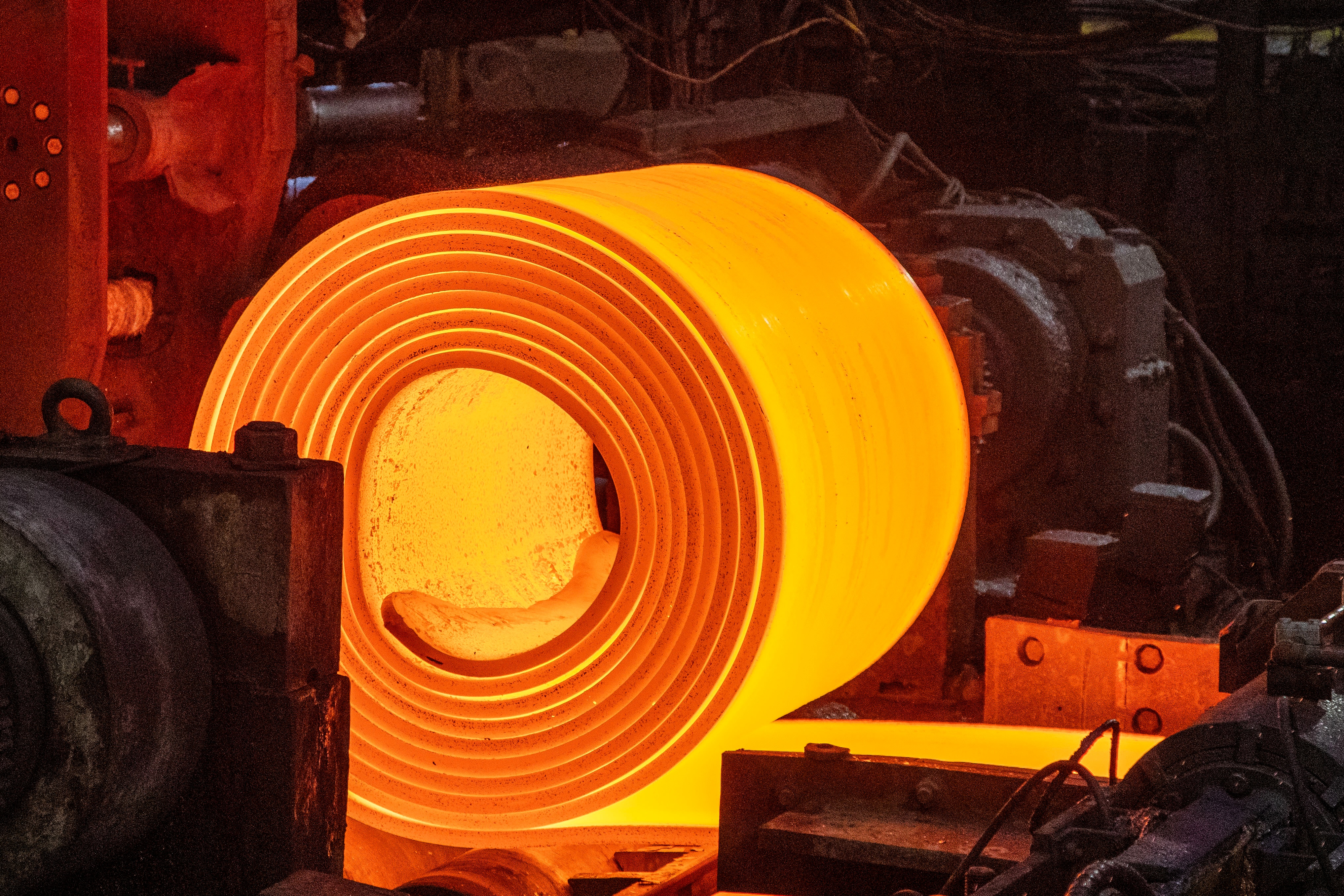
On steel, for instance, the rate will be calculated according to the carbon intensity of the specific steel production multiplied by the EU Emissions Trading System which is around €70–€80 per tonne of carbon dioxide (CO₂) with any free allocations and carbon price paid domestically also factored into the final Carbon rate.
The EU implemented the definitive CBAM regime from January 1 this year to put non-EU manufacturers on par with domestic ones who pay carbon rates. But importers will only have to start submitting the CBAM certificates next year, with annual declarations by September.
In order to implement CBAM, manufacturers first calculate the carbon emitted per tonne of production and then report the emissions. Importers are required to buy CBAM certificates to cover those emissions.
Put simply, an Indian steel producer, exporting to the EU, will provide verified emissions data or carbon emitted per tonne of production to the EU importer who would then calculate the carbon rate and buy CBAM certificates for the corresponding carbon rates. The importer will then submit the certificate as payment.
Though CBAM costs are paid by the importers, the cost is passed down to non-EU exporters or manufacturers in the form of lower prices or reduced margins for importers. If the EU finds incorrect emission details have been submitted, the fine includes €100 per tonne of Co2 equivalent.
A key aim of the CBAM for the EU is to prevent carbon leakage or prevent companies from moving production overseas to countries with less stringent climate rules.
Indian exporters to feel the carbon pinch
While India’s CBAM-exposed exports to the EU account for only 0.2 per cent of its GDP, the iron and steel sector constitutes 90 per cent of these exports, making the sector "particularly vulnerable", according to a report by think tank Centre for Social and Economic Progress (CSEP). India exports around $75.85 billion worth of goods to the EU with 10 per cent of this attracting CBAM for now.
India is taking steps to strengthen preparedness for the EU’s Carbon Border Adjustment Mechanism (CBAM), with a focus on compliance, emissions data, verification and exporter awareness.
— Dept of Commerce, GoI (@DoC_GoI) September 29, 2026
From industry engagement and training to work on steel emission data, verifier accreditation… pic.twitter.com/5B1sm2w1cQ
According to CSEP, Indian steel exports are vulnerable due to the industry’s relatively higher carbon footprint compared to their European counterparts. For instance, India averages roughly 2.3 to 2.5 tonnes of CO₂ per tonne of crude steel, higher than the EU benchmark of 1.37 and world average benchmark of 1.92.
Studies and analysts believe that, as a result of the CBAM smaller manufacturers who operate on smaller margins may not be able to pay the cost of decarbonising their business. Analysts also believe that exporters might look for alternative markets that do not have such a carbon pricing policy.
According to an estimate by the Global Trade Research, CBAM will force Indian steel and aluminium exporters to slash prices by 15 to 22 per cent to stay competitive.
Why is CBAM linked to climate justice?
Beyond the trade aspect, there is a larger issue concerning CBAM. International treaties have recognised that developed countries have a greater responsibility towards climate change as they contributed the most and have more resources to adopt clean technologies and create solutions.
The criticism is that revenue under CBAM moves away from developing nations and emerging economies, which require climate funds, into the EU, which is imposing its environmental standards on countries that have different levels of development.
So the question is whether developed nations, that share a larger burden of historical emissions and pollution, should face the CBAM. India has criticised the CBAM as arbitrary and a protectionist non-tariff trade barrier that violates core multilateral trade rules at the World Trade Organisation (WTO).
While India is engaged in CBAM discussions with the EU, it is closely tracking proceedings brought by Russia at the WTO against the CBAM alleging it is a trade barrier and an export subsidy under the EU emissions trading system. The WTO's dispute settlement body in September agreed to Russia's request for a panel to examine the CBAM in a test for the EU.
How are exporters being protected?
While the EU is not providing any CBAM waivers, it has provided a tariff-rate quota of 1.9 million tonnes (MT) annually, meaning the limit on how much steel a particular country can export to the EU without paying extra taxes.
Within India, the government has started creating awareness among exporters, particularly small and medium-sized firms, and is also looking at developing a mechanism for measuring the embedded emissions and providing financial assistance for smaller players under the Export Promotion Mission
Most importantly India is also rolling out its own Carbon Credit Trading Scheme to mitigate overseas tax liabilities.
Still, exporters feel much more needs to be done and are also pushing for the domestic Carbon Credit Trading Scheme to be formally recognised by the EU, which remains under discussion between the two sides.
How India handles CBAM will be critical, as carbon trading is increasingly adopted by other countries and Indian exports will have to increasingly adopt clean technologies to make exports more competitive.