Afghanistan Under The Taliban: Five Years Of Rule, Global Isolation And Regional Diplomacy
The Taliban have consolidated power, but Afghanistan remains economically fragile.

Published : August 15, 2026 at 9:27 PM IST

New Delhi: Five years after the Taliban returned to power, Afghanistan is no longer defined by the dramatic collapse of the US-backed order in August 2021.
It is now defined by the durability of the new order that replaced it.
The Taliban have consolidated their control, but Afghanistan remains economically fragile, heavily dependent on humanitarian support and diplomatically isolated, while sweeping restrictions on women and girls have deepened the divide between Kabul and much of the international community.
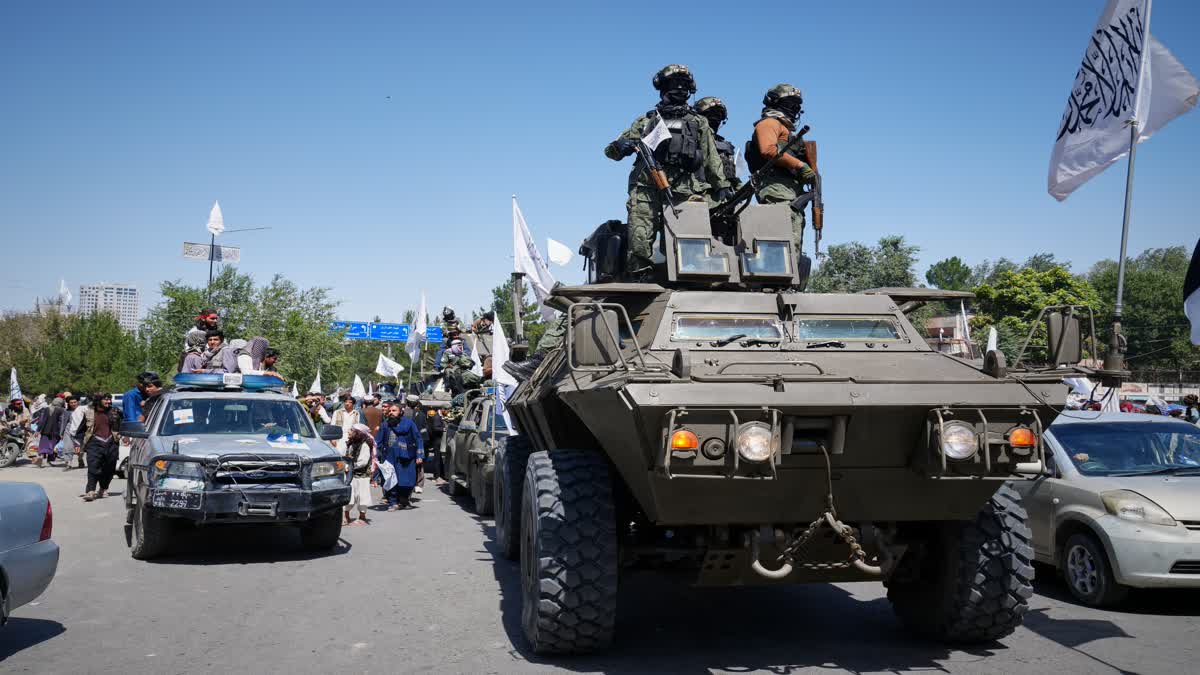
On Saturday, the Taliban government celebrated the five-year milestone with flags galore and convoys of military vehicles, belying the troubles that Afghanistan faces.
Afghans riding rickshaws and motorbikes decorated with flags drove around Kabul and gathered around a square beside the former US embassy, according to a report by the AFP news agency.
The Associated Press reported that Taliban rulers and other officials gathered at Afghanistan’s traditional Loya Jirga assembly hall on Saturday to celebrate the fifth anniversary of their return to power, touting having brought stability after decades of upheaval.
Still, the post-2021 political system is not an inclusive republic with competitive elections.
The Taliban have constructed an Islamic Emirate based on their interpretation of Islamic law and have concentrated authority within the movement’s religious and political leadership.
The regime’s priorities are substantially different from those of the internationally backed Afghan Republic. There is no meaningful national electoral process, political opposition has been heavily constrained, and independent civil society has come under intense pressure.
The Taliban argue that they have brought security after decades of war and that Afghanistan is now sovereign and free from foreign military occupation.
Reversal of women's rights
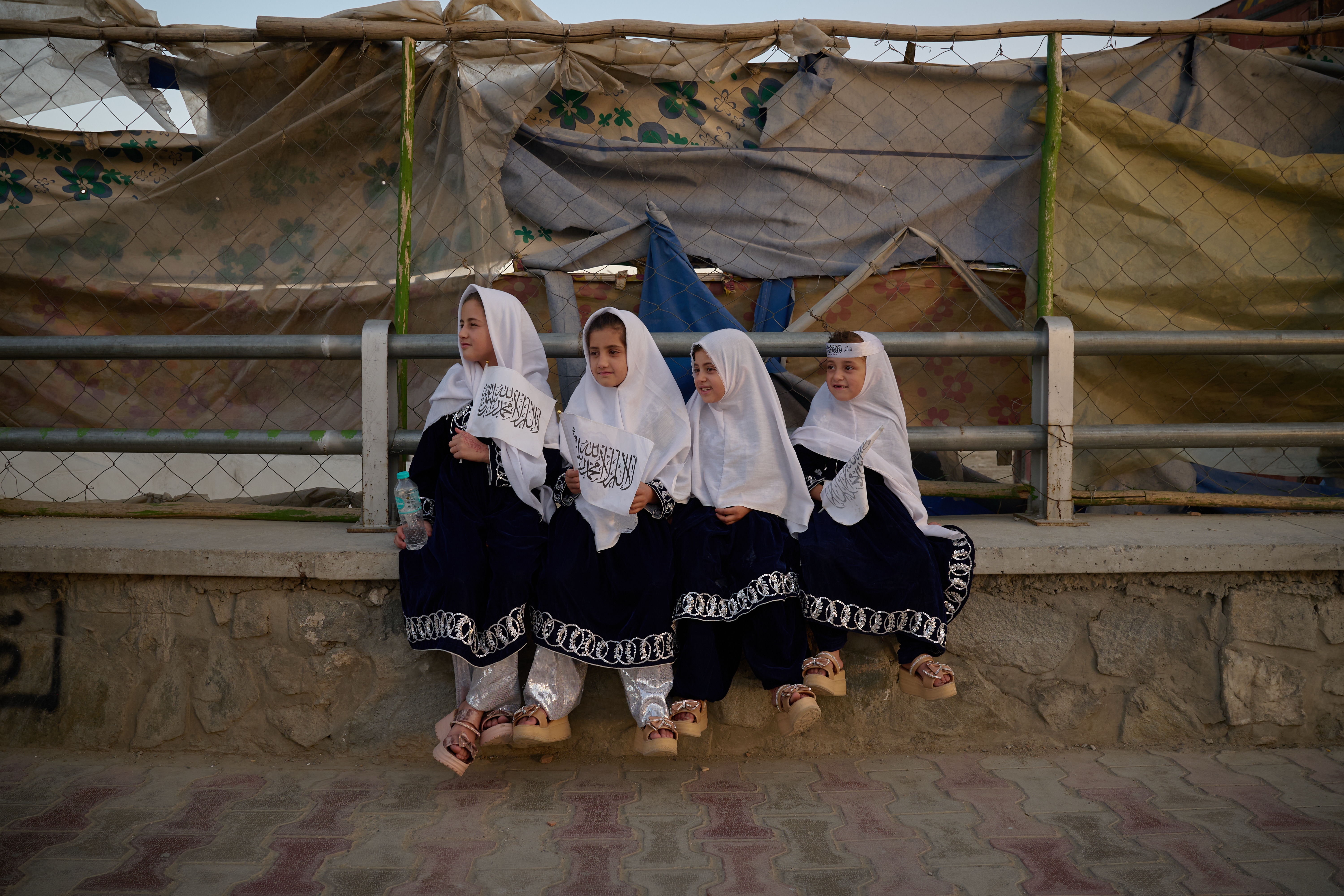
But the most defining feature of Taliban rule has been the systematic restriction of women and girls.
Girls are barred from secondary education beyond the primary-school age, and women have been excluded from universities and large parts of the labour market.
Restrictions have also been imposed on women’s movement, access to public spaces, dress and participation in public life.
A recent UN Women assessment found that half of surveyed Afghan women now leave their homes only once or twice a month, while only about 7 per cent were employed.
The report also found widespread deterioration in women’s mental health.
Talmiz Ahmad, former Indian Ambassador to the United Arab Emirates, Saudi Arabia and Oman, said that the Taliban have a very medieval mindset when it comes to understanding Islam.
"It is actually a very primitive mindset," Ahmad told ETV Bharat.
According to Robinder Sachdev, strategic affairs expert and president of the New Delhi-based Imagindia think tank, some of the data and reports which are coming out are actually quite bleak for some aspects of Afghanistan, especially women’s rights.
"So, on those parameters, I think the scorecard of the Taliban regime is perhaps not very encouraging," Sachdev told ETV Bharat.
Meanwhile, the economic picture is more complicated than either the Taliban’s optimistic narrative or a description of Afghanistan as an economy in complete collapse.
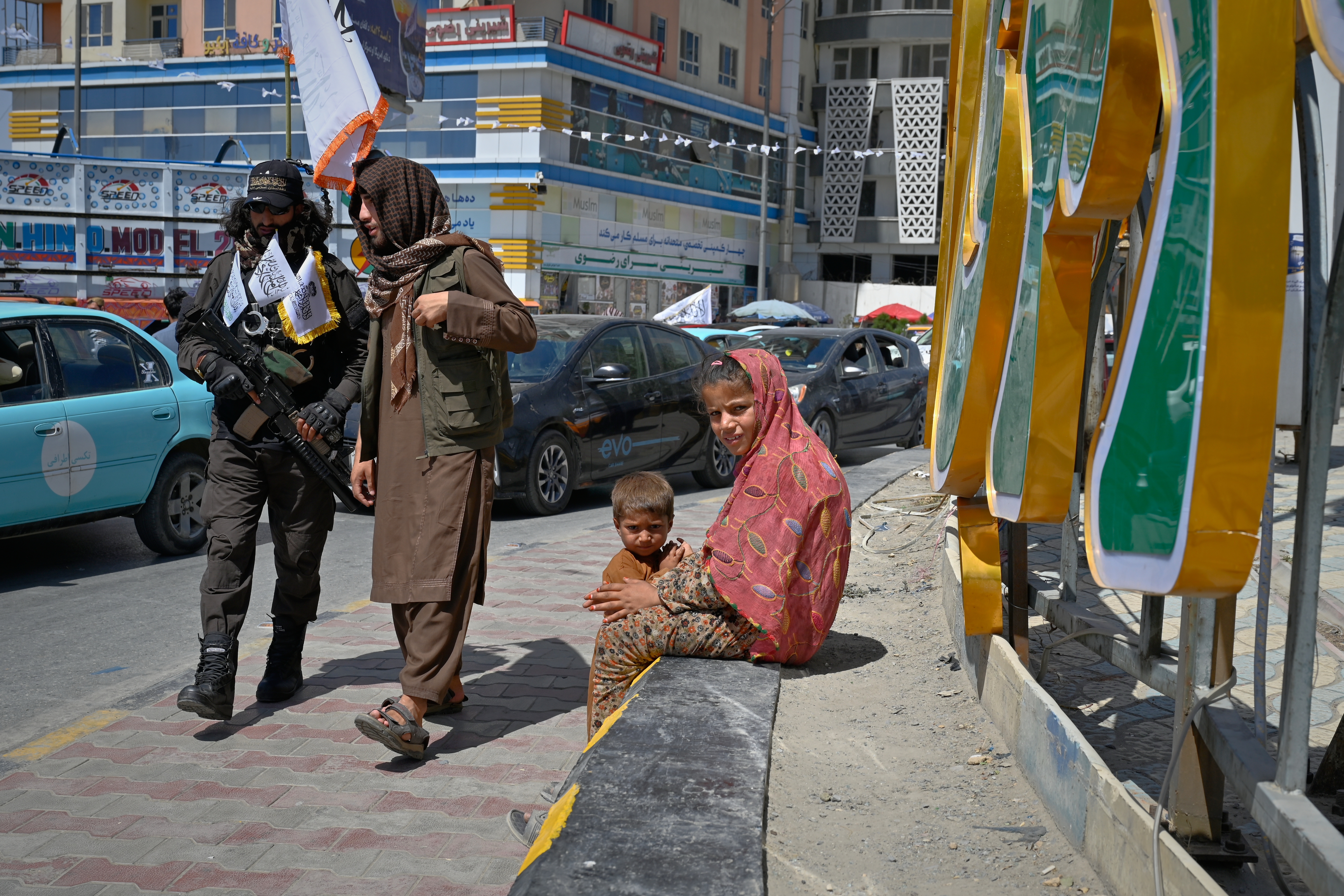
The economy has recovered from the severe contraction immediately following the Taliban takeover.
The World Bank estimates real GDP growth of about 4.8 per cent, although it expects growth to moderate to around 4 per cent in 2026.
But headline GDP growth is misleading if considered without population growth and living standards.
The return of roughly 3.7 million Afghans has contributed to a population increase of about 11 per cent and outpaced economic expansion, resulting in a 5.6 per cent decline in GDP per capita. Inflation has also accelerated, while weak investment, declining aid and structural constraints continue to weigh on the economy.
Afghanistan's diplomatic conundrum
Afghanistan’s international position in 2026 can best be described as engaged without being fully legitimised.
Countries that refused to recognise the Taliban government have nevertheless expanded practical engagement with it, driven by concerns over terrorism, migration, trade, regional stability and humanitarian access.
India is an important example of this shift. New Delhi, which initially maintained a cautious distance from the Taliban, has steadily moved towards pragmatic engagement without formally recognising the regime.
The Taliban have not obtained broad diplomatic recognition. Russia and China remain the only countries to have formally recognised the Taliban government, while numerous other countries maintain working relationships with Kabul without extending full recognition.
However, according to Ahmad, it is not that the Taliban regime is seeking international recognition.
"It is the other way around," he said. "The international community is approaching Afghanistan because of its geopolitically sensitive location. It shares borders with three Central Asian countries, besides Iran and Pakistan."
Ahmad said that the current buzzword is "critical minerals" and Afghanistan is rich in these resources.
This distinction is important. Recognition is a political decision. Engagement is a practical necessity.
Countries increasingly need to deal with whoever controls Afghanistan because of issues such as terrorism and militant networks, refugee and migrant flows, drug trafficking, trade and transit, border security, humanitarian assistance, mining and natural resources, and regional connectivity.
India's evolving Afghan outreach
India’s position towards Taliban-ruled Afghanistan has evolved considerably since 2021.
New Delhi initially adopted a cautious policy centred on humanitarian assistance and maintaining contact with the Afghan people without recognising the Taliban regime.
That approach reflected India’s longstanding relationship with the pre-2021 Afghan Republic and its concerns about terrorism, Pakistan-based militant networks and the Taliban's political ideology.
But India never abandoned Afghanistan.
New Delhi continued humanitarian assistance, including wheat and medicines. The Ministry of External Affairs recorded the delivery of tens of thousands of tonnes of wheat and large quantities of medicines after August 2021.
In October last year, when Foreign Minister Muttaqi visited New Delhi for talks with External Affairs Minister S Jaishankar, India restored the status of its technical mission in Kabul to that of an embassy. India also allowed the Taliban to post a charge d’affairs at its embassy in New Delhi.
In fact, according to media reports, the Taliban are going to hold a "Victory Day" event for the first time on August 17 at the New Delhi embassy.
Addressing a media briefing here on Friday, External Affairs Ministry spokesperson Randhir Jaiswal said that in the last few months and over a year now, India has had several engagements with Afghanistan and that these have led to a "strengthening of partnership in several areas including development cooperation, trade, connectivity."
Ahmad, however, said that it is the Taliban that is seeking recognition from India for humanitarian assistance and developmental aid.
"India is not freely releasing funds as New Delhi is not sure these are going to where these are targeted," he said. "Maybe, in the future some new projects will come up."
Five years after the dramatic fall of Kabul, Afghanistan remains deeply troubled.
But it is no longer simply the story of America’s longest war or the Taliban’s return. It has become a test of whether a region led increasingly by its own powers can manage an Afghanistan that is sovereign, strategically important, economically fragile and governed by a regime that much of the world still refuses to fully accept.
Also Read
Afghanistan's Child Deaths Are Rising As Food Distributions Face Cuts, Says UN