Young Women In India Are 12% More Stressed Out Than Men, Reveals Nationwide Stress Test
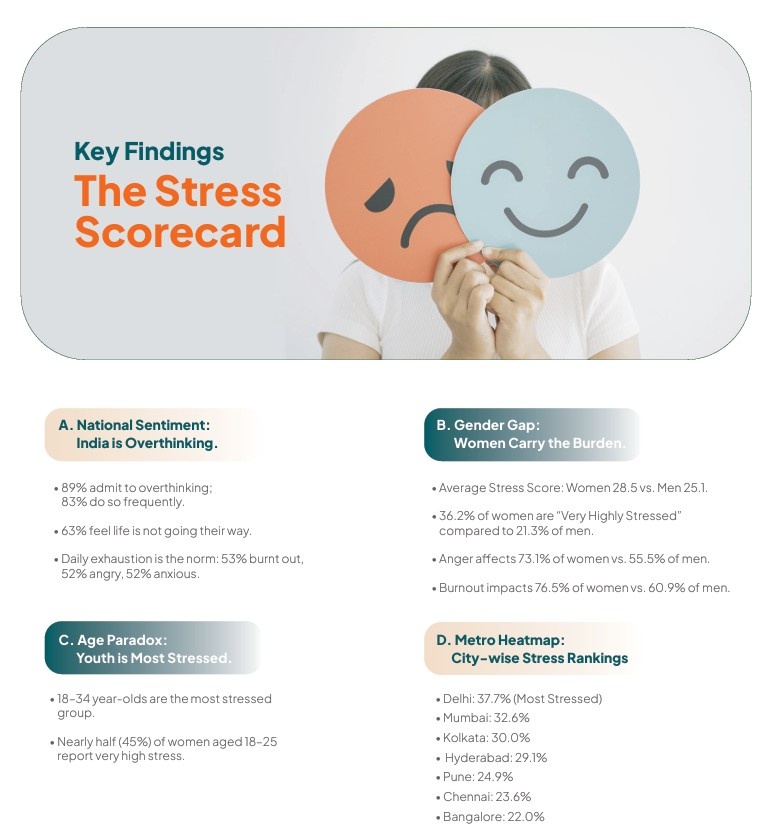
Over 36% of women fell into the very high stress category, compared to 21% of men, in a pan-India stress test.


Published : February 5, 2026 at 1:11 PM IST

Women report significantly higher stress levels than men, with average stress scores nearly 12% higher. Over 36% of women fall into the very high stress category, compared to 21% of men. This heightened vulnerability is particularly pronounced among younger adults, with stress most prevalent in the 18-34 age group.
A striking proportion of young women in this cohort report very high stress levels (nearly double that of women aged 35 and above) while similar trends among men indicate mounting pressures linked to work demands, relationships, and rising expectations faced by India’s youth.
These are the findings of a nationwide stress awareness campaign Himalaya Wellness Company for addressing this mental health concern. It is anchored by a simple yet insightful Stress Test to help Indians recognize, understand, and validate their stress levels. The initiative recorded responses from more than 75,000 participants across the country and focused on helping individuals reflect on their stress through a short set of questions covering lifestyle, work pressures, and work–life balance.
Stress is increasingly being recognized by health experts as a growing public health concern in India, driven by changing work patterns, urbanization, and sustained mental load across age groups. The early signs of stress frequently go unacknowledged until they show up as burnout or chronic health conditions.
What Was The Test About?
The simple 10-question self assessment was designed to bridge this gap, helping people move from dismissing everyday symptoms to acknowledging stress. The assessment categorized responses into low, moderate, and high stress levels. It was meant to reflect Himalaya’s science-backed, people-first approach to wellness.
These stress patterns are further amplified by geography. Respondents from metropolitan cities reported consistently higher stress levels than those from non-metro regions, with Delhi emerging as the most stressed city, followed by Mumbai, Kolkata, and Hyderabad.
Across demographics and locations, stress is most often experienced as a persistent mental burden rather than an isolated episode. Overthinking emerged as the most prevalent symptom, reported by more than four-fifths of respondents, alongside recurring feelings of things not going right, burnout, anxiety, and irritability. Notably, women reported a higher incidence of these symptoms than men, including frequent anger, tension headaches, constant exhaustion, and burnout.
As part of the campaign’s broader focus on stress awareness and management, Himalaya highlights Ashwagandha, a well-researched adaptogenic herb traditionally used in Ayurveda to help the body cope with stress and restore balance. The initiative contributes to the broader public discourse encouraging conversations around stress and highlighting the need for supportive environments and preventive approaches to mental well-being.
Read more: