From Elevated Debt To AI Valuations: RBI Governor Flags 5 Emerging Threats To Global Financial Stability
Sanjay Malhotra stressed that while India is "better placed", the current resilience should not be mistaken for permanent immunity, reports Saurabh Shukla.
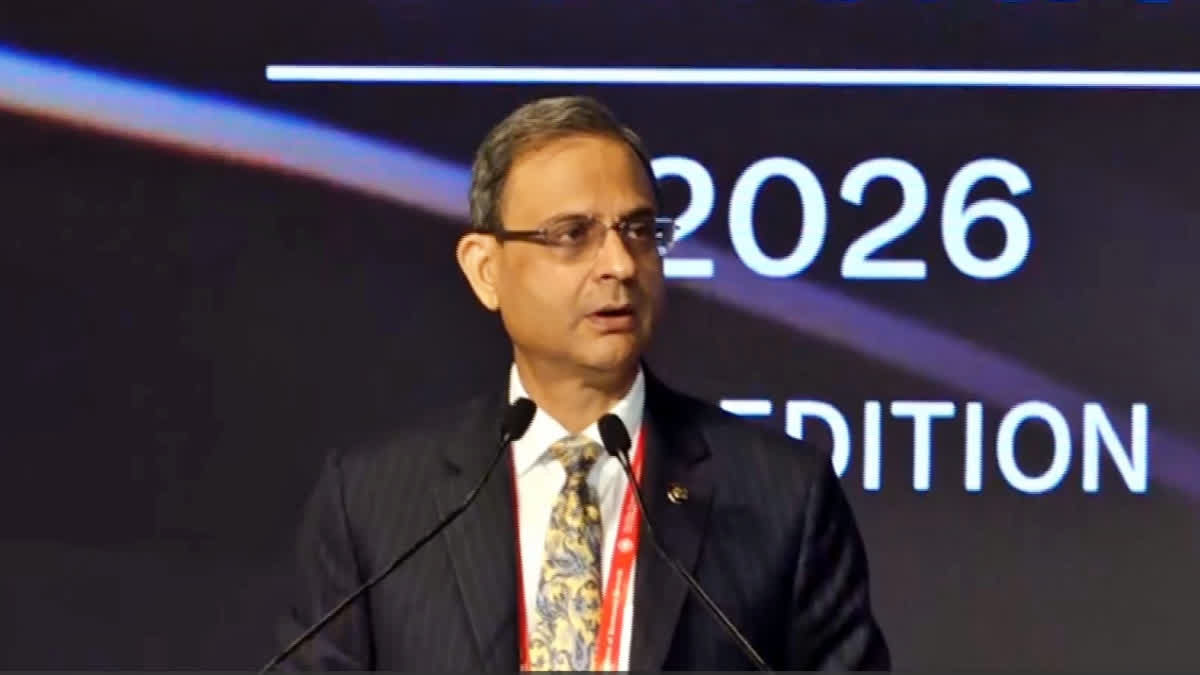

Published : October 3, 2026 at 3:51 PM IST

New Delhi: The financial system may look strong today, but that does not mean it is free from risks, Reserve Bank of India Governor Sanjay Malhotra said on Saturday as he flagged five areas of concern facing the global economy.
In his keynote address at the special session 'Central Banking in an Age of Flux' at the Kautilya Economic Conclave 2026 here, Malhotra said wars and geopolitical tensions, trade restrictions, supply disruptions, climate-related issues and rapid technological changes are currently affecting economies all at the same time, making future shocks harder to predict.
Jean Claude Trichet, Chairman Group of 30 and former President of the European Central Bank, chaired the session with Nandalal Weerasinghe, Governor, Central Bank of Sri Lanka, as speaker.
Five Emerging Areas Of Concern
According to Malhotra, the global economic environment is changing rapidly, with geopolitical and geoeconomic fragmentation, trade restrictions, supply shocks, technological disruption and climate change increasingly interacting with each other.
"The next financial crisis may not originate in a bank or even in the world of finance. It may begin with a geopolitical event, a cyber attack, or a technological failure that affects the financial system through multiple channels," he added.
The RBI Governor also flagged five emerging global financial stability risks, including elevated global debt, stretched valuations linked to artificial intelligence, rising leverage among non-bank financial intermediaries, risks in private credit and growing cyber risks linked to AI.
"While each risk may not be a major concern individually, their simultaneous occurrence could put significant pressure on the global financial architecture," he said.
'India Cannot Afford To Become Complacent'
Malhotra said the long period of financial stability seen globally, including in India, should not create a false sense of comfort. "It is these very prolonged periods of stability that can encourage risk-taking and leverage. Fading memories of past crises can weaken the appetite for prudence," he added.
The RBI Governor also stressed that India’s financial system needs to remain prepared for shocks even though there are no immediate signs of financial stress. He pointed to the experience of the past two decades, when banking stress and non-performing assets took years to resolve.
"We cannot afford to become complacent. The economic and financial costs of allowing vulnerabilities to build are simply too high," Malhotra said.
Building Resilience Against External Shocks
Malhotra stressed that India is "better placed" to absorb external shocks, supported by strong macroeconomic fundamentals, resilient financial institutions and healthy bank balance sheets. He, however, cautioned that current resilience should not be mistaken for permanent immunity.
"Today's resilience may not necessarily imply tomorrow's immunity, and we are committed to remain vigilant of emerging vulnerabilities and continue to keep our financial system strong and resilient," the RBI governor said.
Sri Lanka Crisis Experience
Sri Lanka's Central Bank Governor Nandalal Weerasinghe said the country’s economic crisis was a painful lesson in the importance of monetary stability and financial-sector resilience. He recalled that inflation had reached around 70 percent during the crisis and said the central bank had to sharply raise its policy rate to bring the situation under control.
Describing it as a difficult but necessary decision, Weerasinghe said that we had to raise monetary policy by 700 basis points, 7 percent, within one day, from 7 percent to 14 percent.
He stressed that Sri Lanka also faced the risk of a banking crisis when the currency weakened sharply and interest rates rose. Preventing a banking crisis alongside the foreign exchange and debt crises was critical because another banking shock could have significantly extended the recovery period, he added.
Global Shocks And Central Banks
Both governors also discussed how higher global interest rates, debt levels, capital flows and new technologies are making monetary policy more complicated, particularly for emerging economies. Weerasinghe said global shocks can reach smaller economies quickly through energy prices, trade, capital flows and financial markets.
Malhotra said India, while closely linked to global markets, continues to focus its monetary policy on domestic inflation and growth conditions. He also clarified that the RBI’s monetary policy and government debt management functions are handled separately within the central bank.
On cryptocurrencies, Malhotra said the RBI remains cautious but supports innovation in the underlying technologies.
"So, our approach has been to promote the underlying technologies, and we are using some of these in the central bank and outside in PPP (public-private partnership) mode. But insofar as crypto is concerned, it has been a cautious approach," he said.
The broader message from the session was that central banks cannot prevent every economic shock. Their task is to ensure that banks, financial markets and payment systems remain strong enough to absorb those shocks and prevent them from turning into wider financial crises.
Also Read
- Economic Resilience Must Balance Security, Sustainability And Globalisation: Experts
- From Delayed Payments to Family Pension: How Pension Adalat Helps Retirees
- Sebi To Soon Issue Framework On Closing Auction Session; Receives Over 3,500 Comments
- Airlines Need To Cut 265 Weekly Int'l Flights Connecting Mumbai Airport From Oct 25