Delhi-NCR AQI Remains 'Severe' In Several Areas; Sirsa Accuses Punjab For 'Misleading' People Over Stubble Burning
Air quality readings across neighbouring cities show widespread pollution, with Gurugram, Noida and several monitoring locations recording elevated levels, reports Ankita Kumari.

Published : November 5, 2026 at 12:10 PM IST

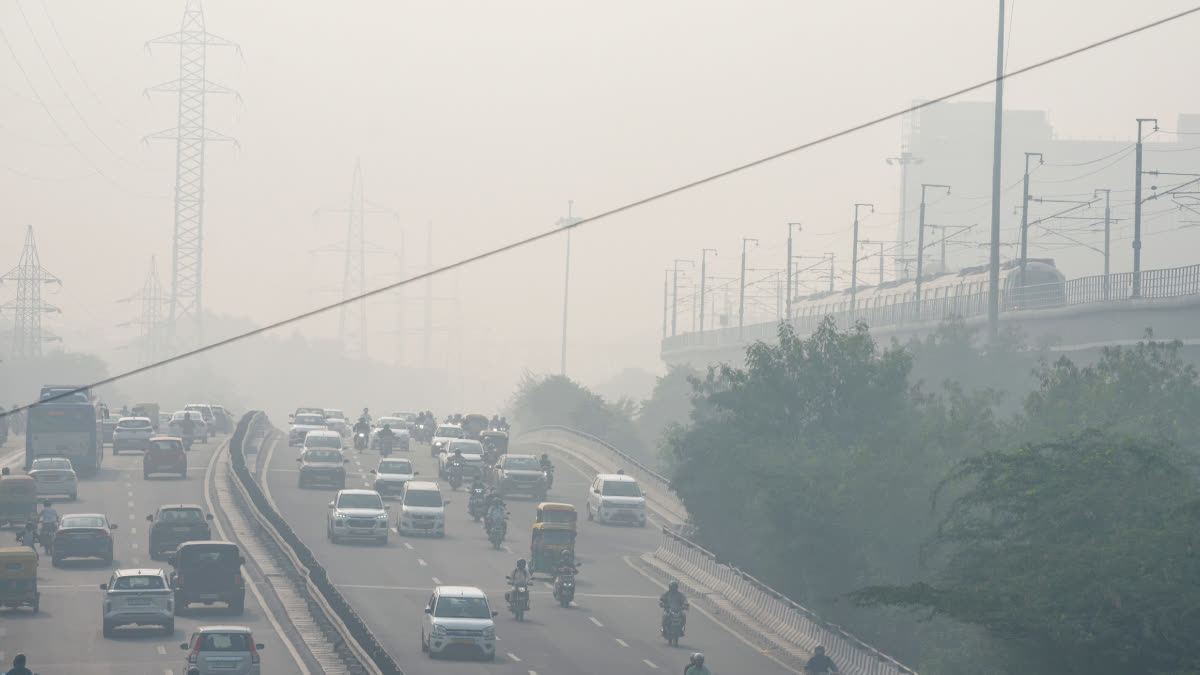
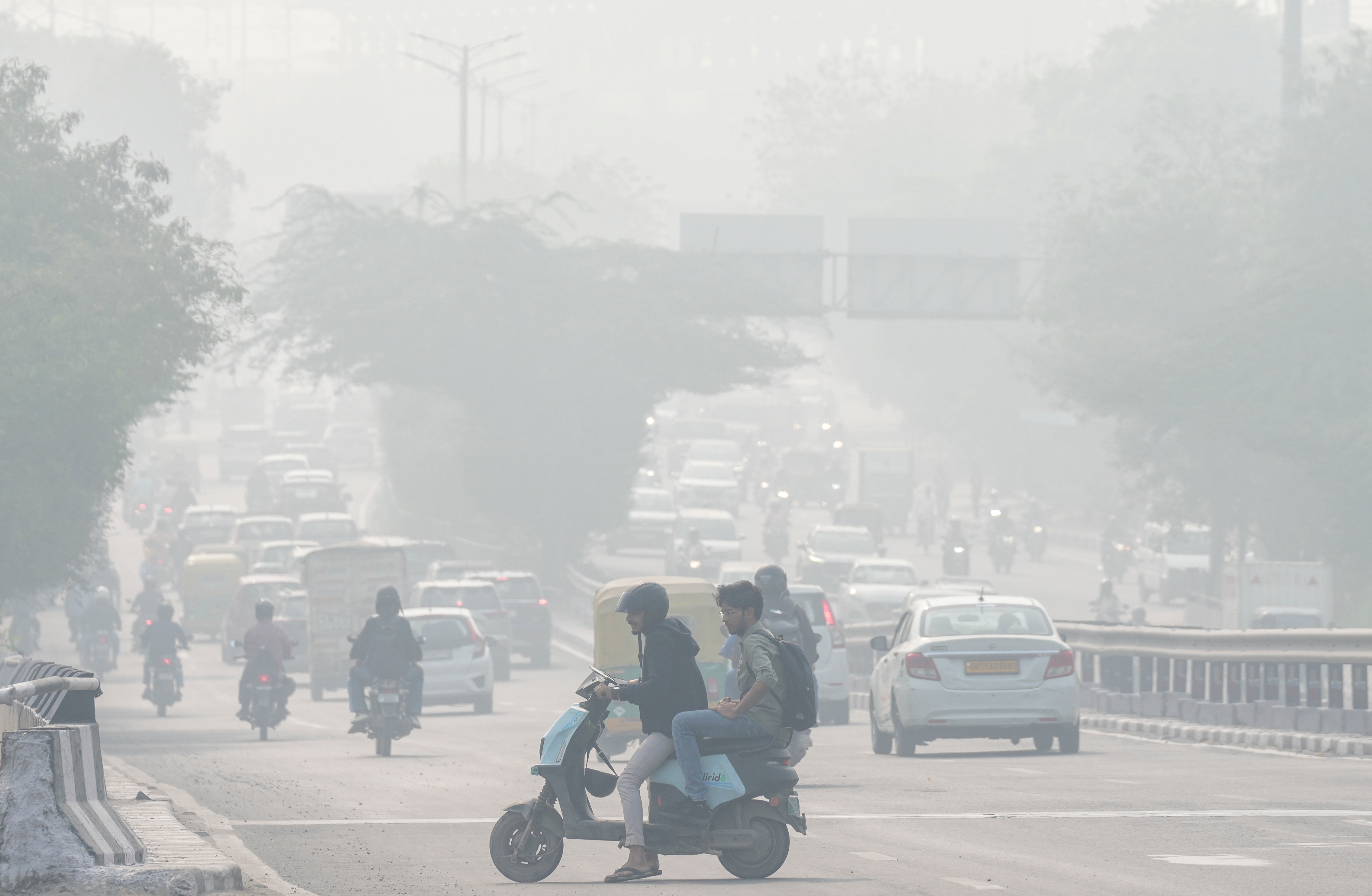
New Delhi: A thick layer of polluted air continued to cover Delhi and several parts of North India on Thursday, with the national capital recording an average Air Quality Index (AQI) of 370 on November 5.
The reading placed Delhi in the 'Very Poor' category, while several monitoring stations across the city reported pollution levels above 400, entering the 'Severe' category.
Jahangirpuri recorded the highest AQI at 459, followed by IIT Delhi at 450 and Punjabi Bagh at 448. DTU reported 437, Vivek Vihar 436, Narela 434, Alipur 433 and Rohini 432.
Other locations in the 'Severe' category included Mundka and Sonia Vihar (423 each), R K Puram (418), Bawana (413), North Campus, Delhi University and Pusa (IITM) (410 each), Dr Karni Singh Shooting Range and Patparganj (407 each), Sirifort (404) and Okhla Phase-2 (401).
Several other monitoring stations recorded AQI levels in the 'Very Poor' category. Burari Crossing and ITO stood at 399 each, followed by Mandir Marg (396), Dwarka Sector 8 (395), Jawaharlal Nehru Stadium (393), JNU (387), NSUT Jaffarpur (384), CRRI Mathura Road and Major Dhyan Chand National Stadium (381 each), Pusa (DPCC) (380), Commonwealth Sports Complex and Talkatora Garden (376 each), Najafgarh (375), Aya Nagar (370), Nangloi (369), Burari (361), Chandni Chowk (357), IGI Airport Terminal 3 (353), Ashok Vihar (345), Ghoga (342), Nehru Nagar (338), Vasundhara Enclave (331), Badarpur and Tikri Kalan (329 each), IGNOU-Maidan Garhi and Uttam Nagar (327 each), IHBAS Dilshad Garden and Jharoda Kalan (310 each), Sri Aurobindo Marg (309), Karala (307), NSIT Dwarka (303), Chhawla (302), Shadipur (301) and NHI Narela (400).
Anand Vihar recorded an AQI of 296, Cantonment Area 287, Lodhi Road 286 and IMD Lodhi Road 268, placing these locations in the 'Poor' category.
Delhi's overall AQI has remained elevated over the past few days, rising from 324 on November 2 to 350 on November 3 and 377 on November 4. The latest reading of 370 indicates a marginal improvement, but the city's air quality remains a concern.
Sirsa Accuses Punjab Government Of Misleading People Over Stubble Burning

Delhi Environment Minister Manjinder Singh Sirsa on Thursday accused the AAP government in Punjab of "misleading" people over stubble burning, alleging that a sharp rise in farm fires had contributed to the deterioration in the national capital's air quality.
Sirsa questioned Punjab Chief Minister Bhagwant Mann's claim that paddy harvesting had not started in the state, saying government figures showed that 77 per cent of the harvesting had already been completed.
Citing Punjab Pollution Control Board data, the minister claimed that 2,196 farm-fire incidents had been reported in the state and 494 FIRs registered so far. He said Punjab recorded 584 farm fires on November 3, the highest single-day count this season, compared with 292 incidents on November 4 last year.
Sirsa also questioned the state's claim of a 90 per cent reduction in stubble burning and alleged that farmers were being penalised while officials responsible for enforcement were being spared. He further accused the Punjab government of failing to make equipment such as happy seeders and balers adequately available to farmers despite the Centre releasing Rs 5,000 crore for the purpose.
The minister said the Commission for Air Quality Management (CAQM) had summoned deputy commissioners and senior police officials from several Punjab districts on November 4 over their alleged failure to curb farm fires.
Sirsa blamed smoke from Punjab, carried towards Delhi by winds associated with Western Disturbances, for contributing to the pollution. The AAP did not immediately respond to his allegations.
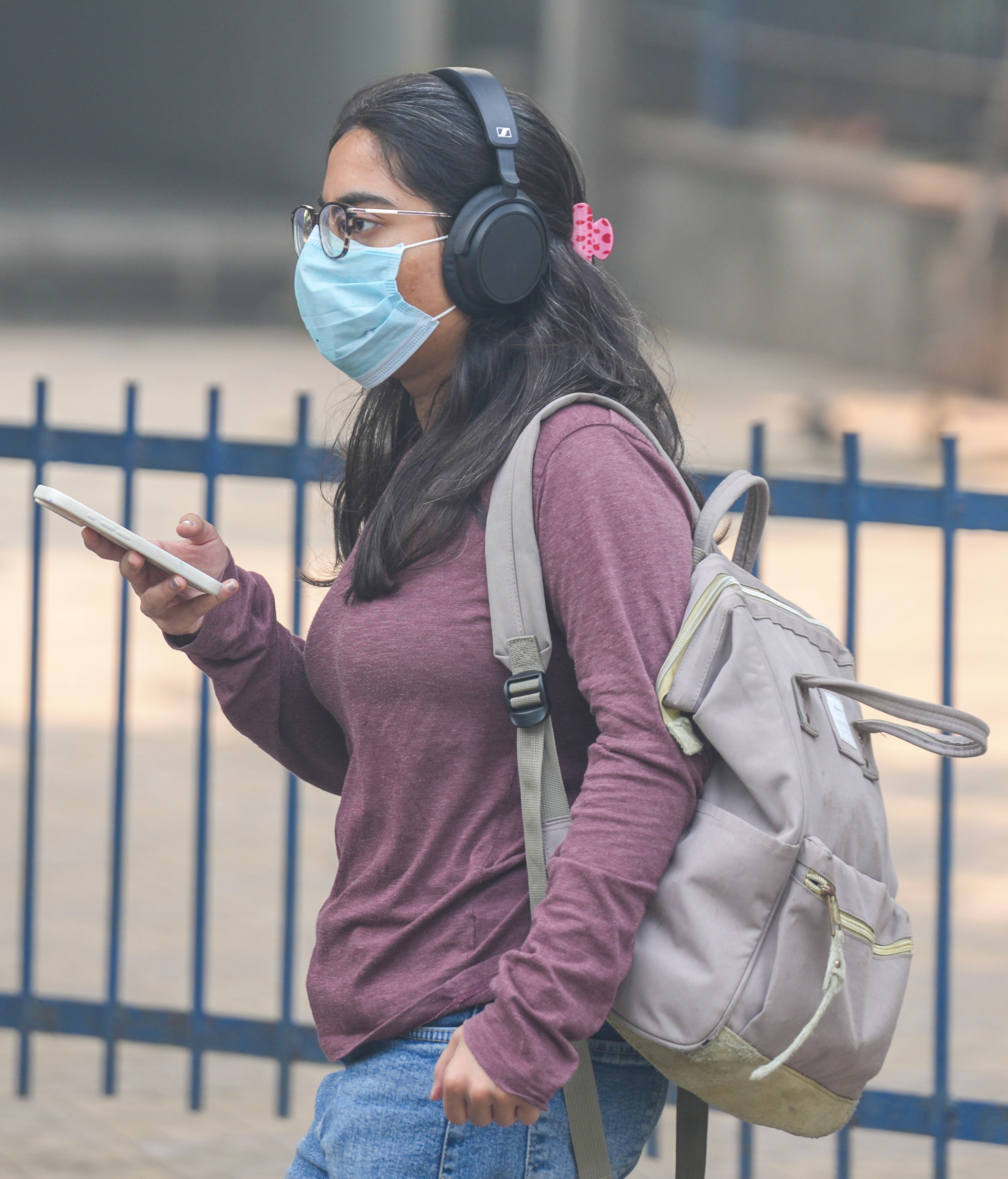
Sirsa also apologised to residents of the National Capital Region (NCR) who were facing inconvenience due to restrictions on the entry of vehicles below BS-VI emission standards into Delhi. He said the measures had been introduced to protect public health and urged people from neighbouring areas to cooperate.
The minister maintained that vehicle emissions from the NCR also contribute to Delhi's pollution levels.
Gurugram AQI At 322, Noida At 312
Gurugram also remained in the 'Very Poor' category, with its overall AQI at 322 on November 5 at 7.05 am. The city's AQI rose from 246 on November 2 to 305 on November 3 and 322 on November 4, then stayed at that level on Thursday.
NISE Gwal Pahari recorded the highest AQI at 373, followed by Teri Gram at 343. Sector 51 reported 298, while Vikas Sadan recorded 273. Both locations remained in the 'Poor' category.
Noida recorded an overall AQI of 312 on November 5, placing it in the 'Very Poor' category. The city's reading stood at 330 on November 2, improved to 291 on November 3, rose again to 330 on November 4 and declined to 312 on Thursday.
Sector 62 emerged as the most polluted location, with an AQI of 418, falling in the 'Severe' category. Sector 125 recorded 330, while Sector 150 stood at 293, Sector 110 at 292, Sector 39 at 288, and Sectors 1 and 116 at 283 each.
Greater Noida recorded an AQI of 279 on November 5 at 6.05 am, placing it in the 'Poor' category. The reading had fluctuated considerably over the previous days, moving from 228 on November 1 to 289 on November 2, dropping to 189 on November 3 and climbing to 309 on November 4.
Shiv Nadar University recorded an AQI of 287, followed by Knowledge Park-V at 284 and Knowledge Park-III at 266.
Ghaziabad, meanwhile, recorded an overall AQI of 268, also in the 'Poor' category. Its reading increased from 235 on November 3 to 257 on November 4 and 268 on Thursday, after standing at 289 on November 2.
Indirapuram was the most polluted location in the city, with an AQI of 353, followed by Sanjay Nagar at 313 and Wave City at 304. Govindpuram recorded a comparatively lower reading of 133, while Vasundhara stood at 195.
Several North Indian Cities Report High Pollution Levels
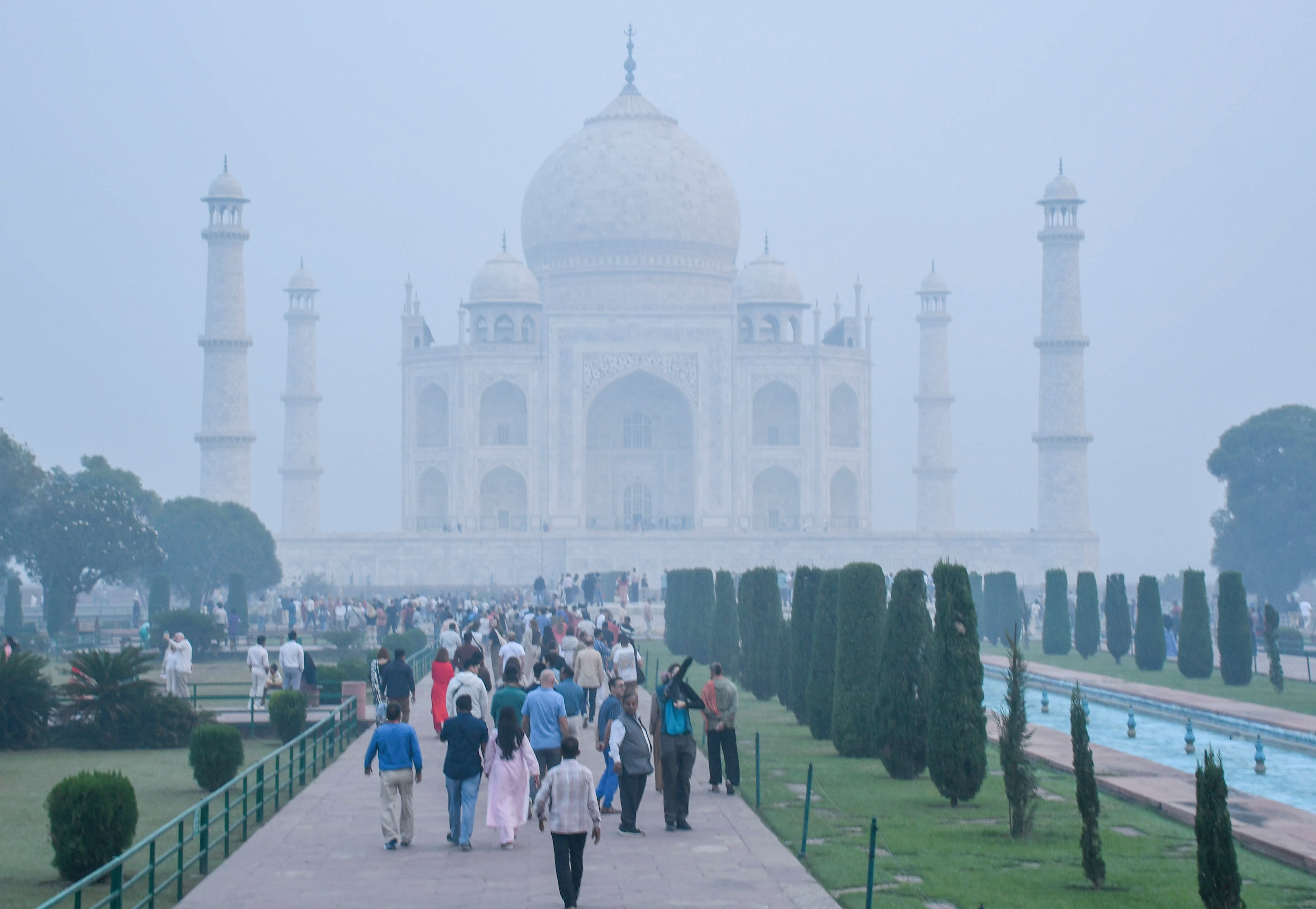
Pollution continued to affect several other cities across North India. Among the locations recording AQI levels above 300, Gajraula in Uttar Pradesh reported 397, Ballabgarh in Haryana 371, Bahadurgarh 350, Gopalganj in Bihar 333, Bhiwadi in Rajasthan 318, Bulandshahr in Uttar Pradesh 316, Jind in Haryana 316, Anpara in Uttar Pradesh 315 and Khairthal in Rajasthan 301.
Other cities remained in the 'Poor' category. These included Khora (290), Ambala (287), Hisar (286), Kaithal (283), Charkhi Dadri (283), Baraut (275), Rohtak (274), Khanna (273), Faridabad (264), Hanumangarh (259), Bileipada (253), Sonipat (251), Khurja (249), Bhiwani (245), Dausa (243), Bikaner (236), Pithampur (228), Gwalior (217), Hapur (214), Deeg (212), Churu (211), Sri Ganganagar (211), Dharuhera (204), Ludhiana (203), Araria (202), Greater Noida (279), Ghaziabad (268), Hajipur (230), Kaithal (283), Yamuna Nagar (251), Sawai Madhopur (297), Agra (188) and Vrindavan (183).
Several major cities outside North India reported comparatively better air quality. Mumbai recorded an AQI of 103, while Ahmedabad stood at 164 and Pune at 139, all in the 'Moderate' category.
Patna reported an AQI of 134, while Agra recorded 188 and Vrindavan 183. Chennai stood at 98, placing it in the 'Satisfactory' category, while Puducherry recorded an AQI of 30, indicating 'Good' air quality.
Also Read:
