CNG Price Hike: Delhi-NCR Auto, Cab Drivers Feel the Pinch As IGL Raises Rates By Rs 3.89/kg
Experts said declining APM gas availability, rising LNG prices, Qatar supply constraints and rupee depreciation are driving up CNG costs, reports Surabhi Gupta.

Published : August 29, 2026 at 8:42 PM IST
|Updated : August 29, 2026 at 9:54 PM IST

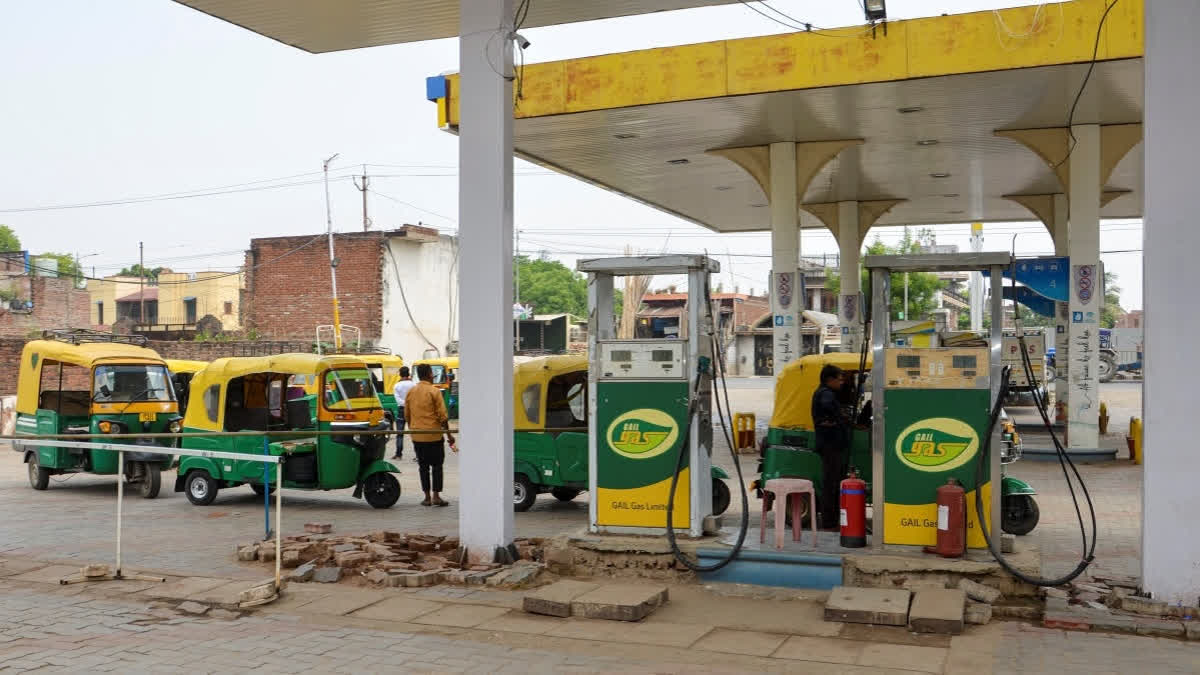
New Delhi: Compressed natural gas (CNG) prices have gone up by Rs 3.89 per kg in Delhi and several other cities from Saturday, adding to the financial pressure on auto-rickshaw drivers, app-based cab operators and goods carriers who rely heavily on the fuel.
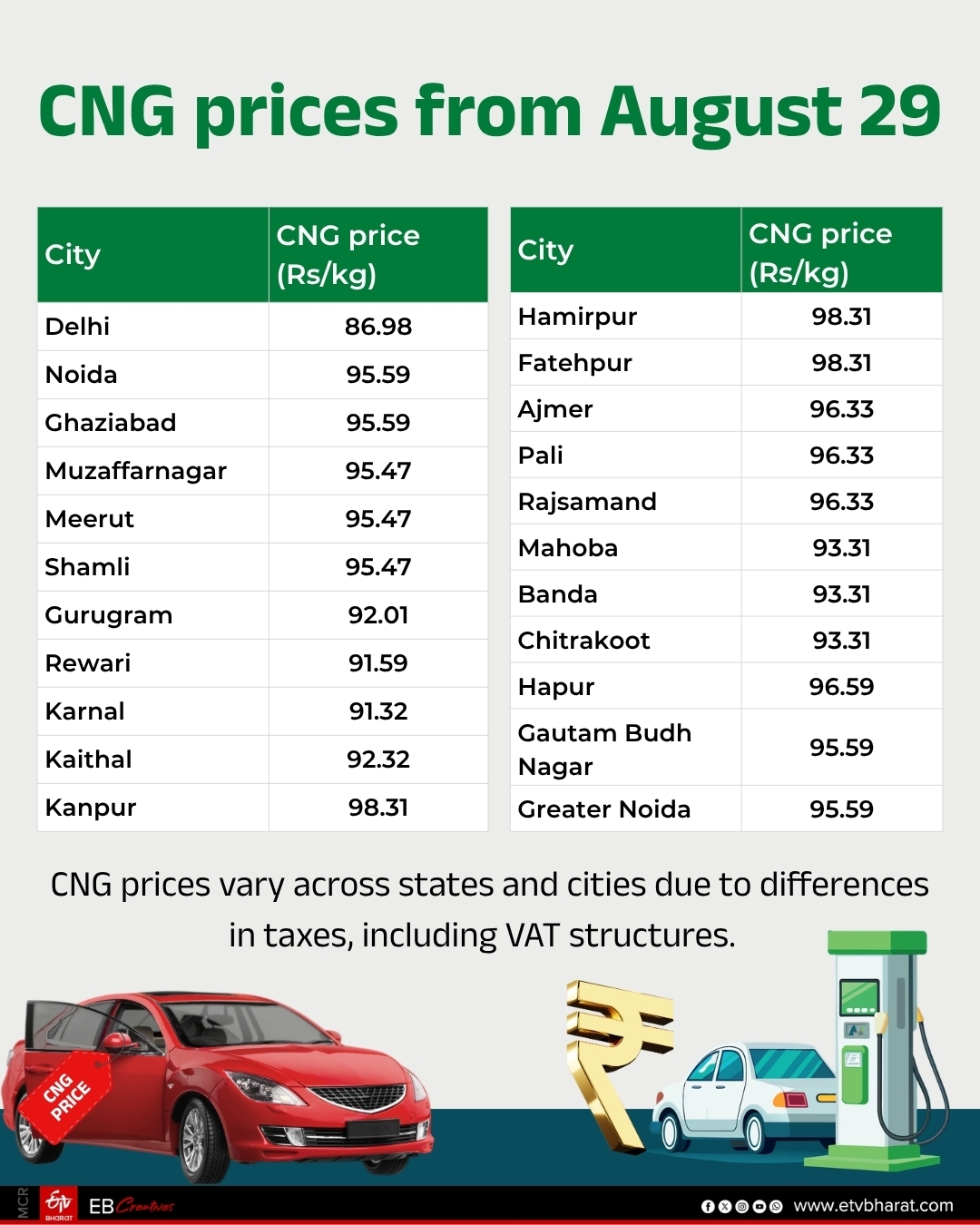
Indraprastha Gas Ltd (IGL) said the revision, effective August 29, was necessitated by elevated international liquefied natural gas (LNG) prices and the growing cost of imported gas used to meet CNG demand. Following the hike, CNG will cost Rs 86.98 per kg in Delhi, while consumers in Noida and Ghaziabad will pay Rs 95.59 per kg. The revised price in Gurugram is Rs 92.01 per kg. The latest increase is the fifth CNG price hike this year. In May, IGL had raised prices by a cumulative Rs 6 per kg in four phases over 10 days.
‘We are being squeezed from both sides’: Cab drivers
For auto and cab drivers, the latest increase comes at a time when operating costs are already under pressure. Deepak Sidhu, an Ola cab driver, said the repeated increase in CNG prices is directly affecting his earnings. “Every CNG hike directly affects our income. With app commissions and other running costs already high, we cannot simply keep increasing fares because passengers may choose another option. We are being squeezed from both sides,” Sidhu said.

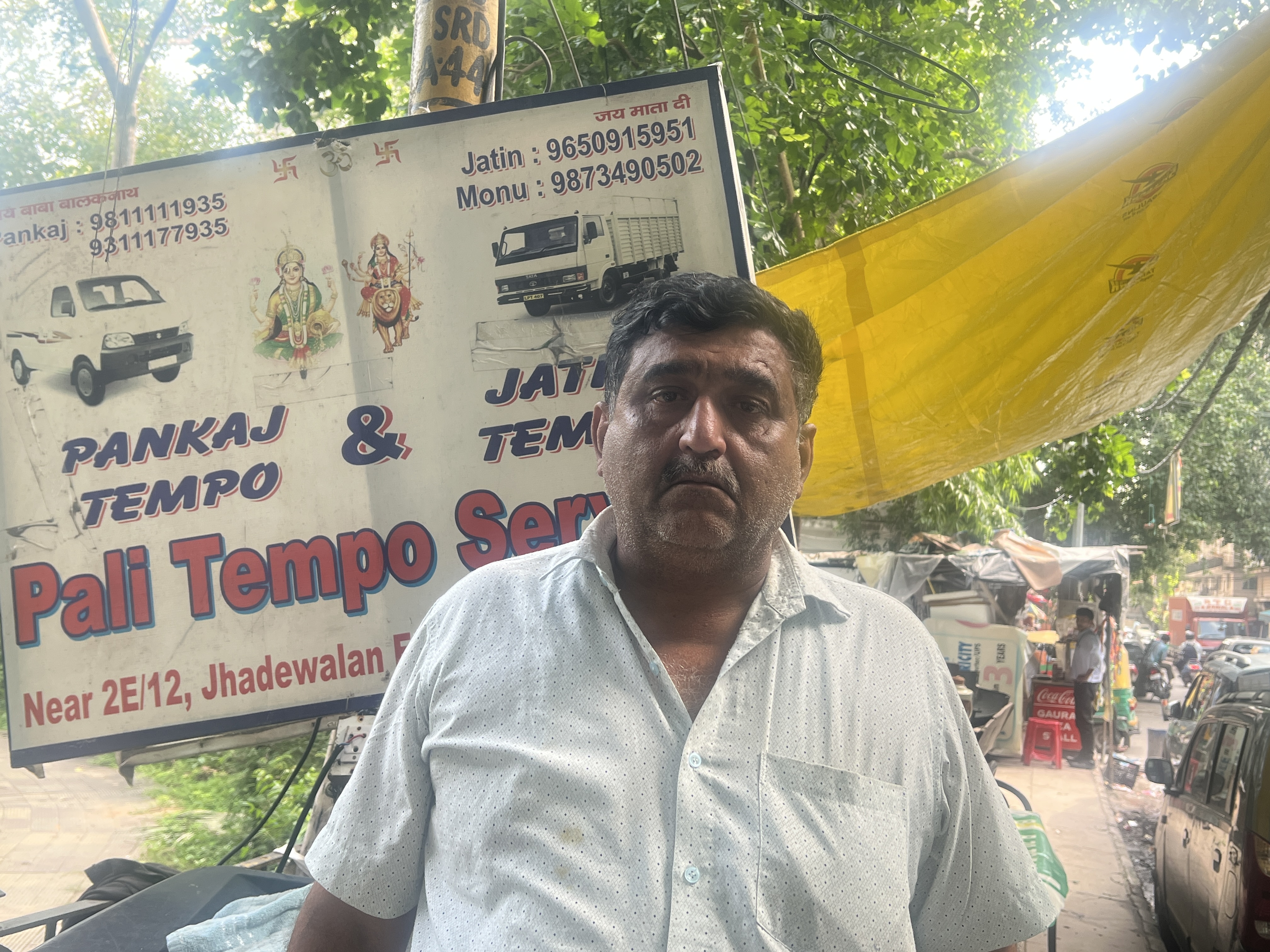
Pankaj Chaddha, who operates tempo services, said higher fuel costs are eating into daily earnings. “CNG has become expensive again, but our fares have not increased in the same proportion. Fuel is taking away a bigger share of our daily earnings, and after paying for maintenance and other expenses, very little is left for us,” Chaddha said.
The impact is likely to be felt not only by individual drivers but also by freight and passenger transport operators, as a significant portion of Delhi-NCR’s auto-rickshaws, taxis and goods carriers run on CNG.
Why has CNG become more expensive?
According to Prashant Vasisht, Senior Vice President and Co-group Head, Corporate Ratings, ICRA, one of the major factors behind the increase is the declining availability of cheaper APM gas for the CNG sector. “The availability of APM gas for CNG companies has fallen significantly and is currently only around 20% of their requirement. The balance has to be met through other sources, including imported gas, which is not subject to the same price ceiling,” Vasisht said.
He said the growing LNG component in the gas mix of city gas distribution companies has further increased costs. Spot LNG prices, according to Vasisht, have risen to around $18-19, compared with approximately $15 a year ago. With winter approaching, demand is also expected to remain firm, putting additional pressure on prices.
Another factor is the availability of contracted LNG. According to Vasisht, companies are receiving only quantities that do not trigger take-or-pay obligations, leading to some supply shortfalls. He also pointed to constraints in LNG supplies from Qatar. Companies that had contracted quantities from Qatar Gas are facing additional pressure and are having to look for alternative sources.
The increasing dependence on imported LNG is also exposing city gas distributors to currency movements.
“Many CNG suppliers are increasingly relying on LNG, including relatively expensive spot LNG. At the same time, the depreciation of the rupee against the US dollar over the past year has further increased the cost of imported gas, since LNG is largely dollar-denominated,” Vasisht said.
He added that the availability of APM gas has been declining for more than two years. While new-well and HPHT gas have been given priority, their availability is still insufficient to fully meet the requirements of the CNG sector.
This has increased dependence on LNG and put pressure on the margins of city gas distribution companies.
“CNG is the largest segment for most CGD companies, including major players such as IGL and several others. Therefore, margins in the CNG segment have come under pressure over the past one to two years,” Vasisht said.
According to him, the combination of lower availability of cheaper APM gas, insufficient new-well and HPHT gas and greater dependence on expensive LNG has contributed to the recent price revisions.
Middle East conflict, Qatar supply disruption
Veteran energy expert Sudhir Bisht said the current increase is also closely linked to international supply disruptions.
Explaining the gas mix, Bisht said CNG and PNG are essentially methane, with CNG primarily used as a transportation fuel while PNG is supplied through pipelines to households, restaurants, commercial establishments and industries.
According to Bisht, around 60% of CNG demand is linked to transportation, while the remaining demand comes from industrial and other segments.
He said India sources around 59% of its overall natural gas domestically, with the remaining requirement being met through imports. Qatar has historically been an important source of LNG for India.
Bisht said disruptions linked to the Middle East conflict and shipping constraints have affected LNG availability and consequently pushed up prices.
“It is a matter of demand and supply, and this will continue till there is Qatar LNG supply normalisation, which has been affected by the Iran conflict and the Strait of Hormuz problem,” he said.
However, Bisht said it would be incorrect to conclude that domestic CNG production has drastically fallen.
“Domestic production has not kept pace with the increase in CNG demand. So more and more CNG used for transportation is relying on imported Qatar gas. But one cannot say that there has been a drastic reduction in domestic production,” he said.Conclusion:Can CNG prices come down?
The latest hike may not necessarily be permanent, experts said, with prices having the potential to decline if international and domestic supply conditions improve.
Bisht said CNG prices could come down if international gas prices fall, domestic gas availability increases or LNG imports become easier and cheaper.
“If the fall in international gas price happens or if the domestic gas supply is increased or the imports get better, there could be a reduction in prices,” he said.
He added that the trajectory of international gas prices would depend significantly on the geopolitical situation and the normalisation of LNG supplies.
For Delhi-NCR drivers, however, the immediate concern remains the impact of higher fuel costs on their daily earnings.
'Price Hike Affects Livelihood Of Auto-Rickshaw, Cab Drivers'
Prof Bejon Kumar Misra, International Consumer Policy Expert told ETV Bharat, "The latest ₹3.89 per kg increase in CNG prices is not merely a fuel-price issue; it directly affects the livelihoods of auto-rickshaw and cab drivers in Delhi-NCR while adding to the burden on consumers. Repeated increases within a year leave drivers with little choice but to either absorb the additional cost or pass it on to passengers through higher fares, neither of which is sustainable."
“There is a need for a more predictable and transparent CNG pricing mechanism, particularly for public and shared mobility. Consumers and other stakeholders should also be engaged before such price increases to ensure greater transparency and build trust in the process. Arbitrary or frequent increases can undermine consumer confidence and raise concerns over the accountability of regulatory oversight. The focus should be on protecting both drivers’ livelihoods and consumers’ right to affordable mobility.”
Read More