From Banana To Bamboo: How Anakaputhur’s Weavers Turn Nature’s Waste Into Sarees for the World
In Chennai’s Anakaputhur, a small weaving collective is transforming discarded banana leaves and lotus stems into eco-friendly sarees, reviving a dying craft and creating livelihoods.

Published : August 13, 2025 at 7:40 PM IST

By Subash Dhayalan
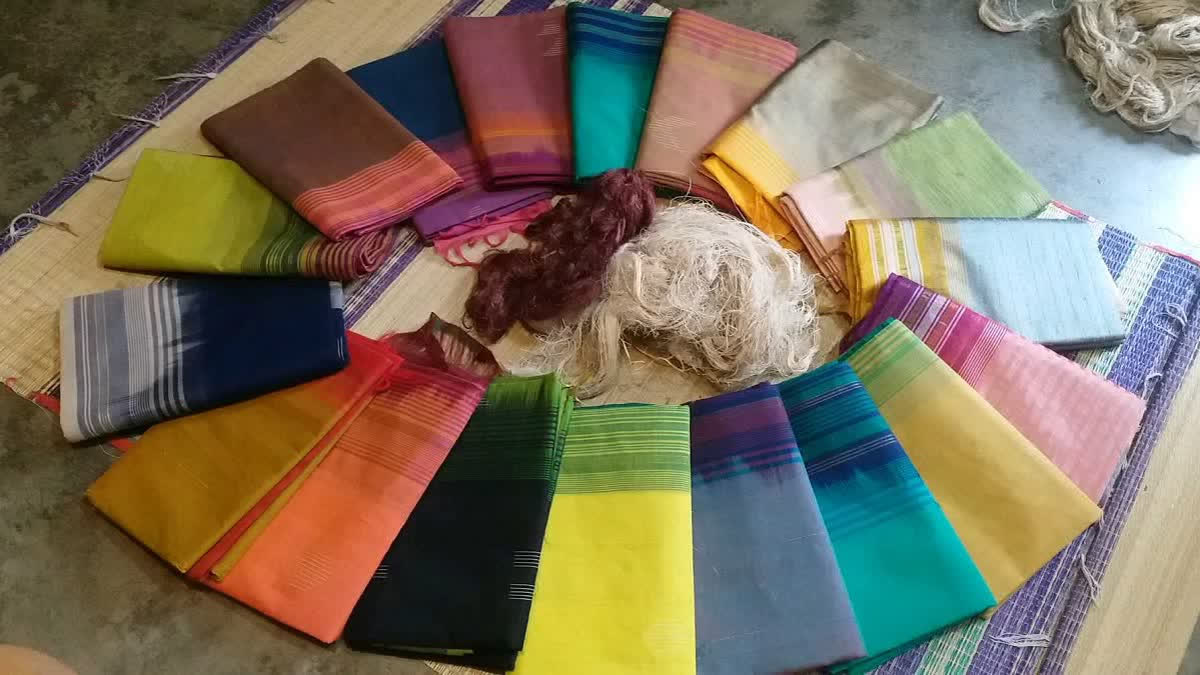
Chennai: In a tiny 10x10 workshop in Anakaputhur, near Pallavaram in Chennai, the air smells faintly of dried plant fibres. The clatter of handlooms mixes with the soft chatter of women bent over their work. On the looms, threads spun from banana peels, aloe vera, bamboo, lotus stems, and other natural sources come together to form sarees unlike any sold in most markets.
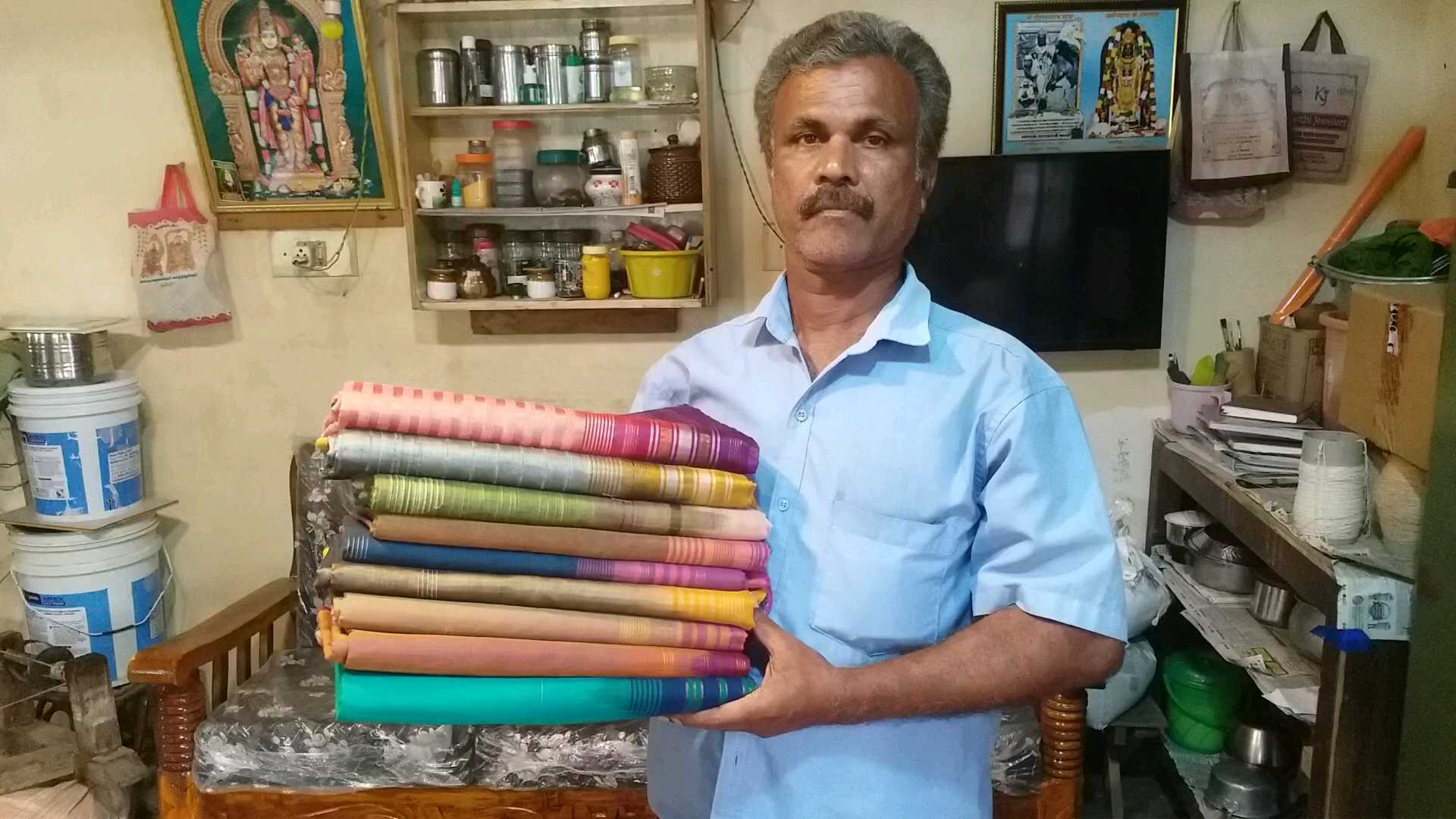
Even the colours tell their own story, no synthetic dyes here. Instead, basil, neem, turmeric, pomegranate peel, sandalwood, and flowers like nagalingam lend their shades. “It’s completely natural. These sarees are gentle on the skin and in harmony with nature,” says Shekhar, founder of the Natural Fibre Weavers Group.
The Journey from Plant to Fabric
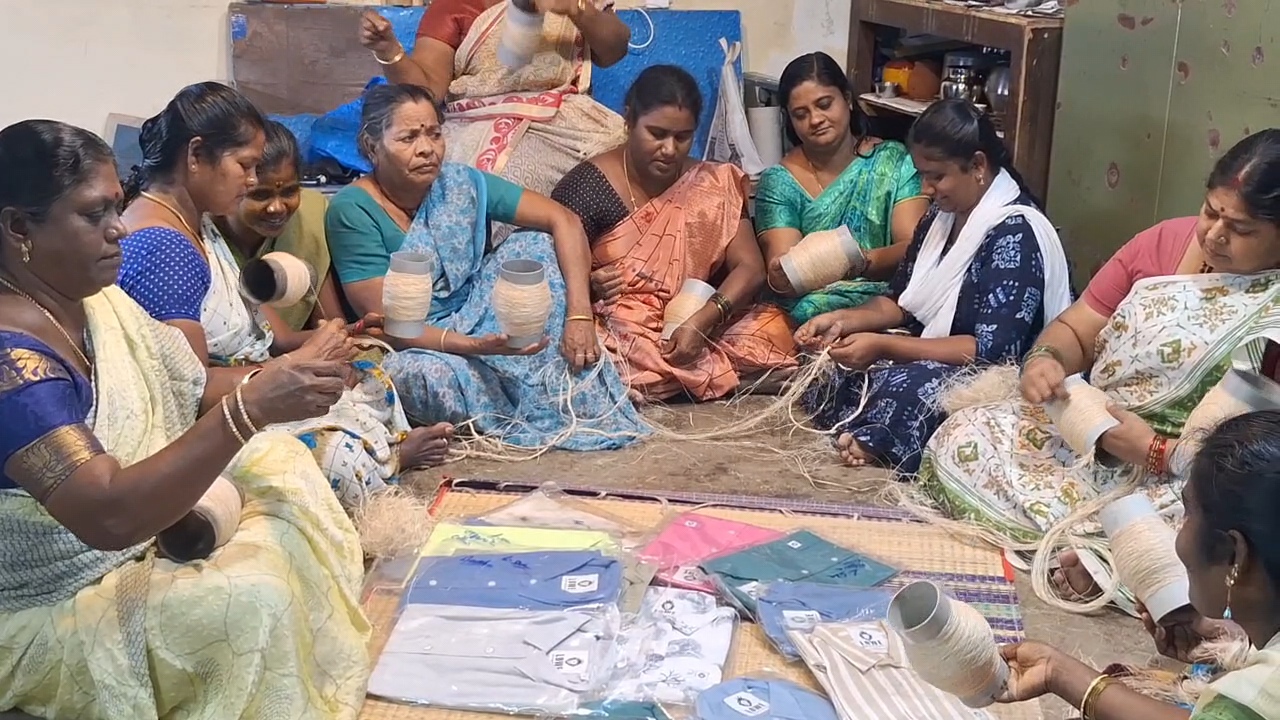
The process is painstaking. Fibres are extracted from 25 different plants, fruits, and tree barks, from banana and bamboo to pineapple, coconut, aloe vera, and lotus stem. They are soaked in cold water, dried under the sun, spun into yarn, and blended with 30% cotton and 20% silk.
Before weaving begins, the threads are dipped into natural dyes made from neem, turmeric, charcoal, lime, Java plum, pineapple peel, and other plant-based sources. “It takes four to five days to complete a saree,” Shekhar explains. “They keep the body cool and even help prevent skin problems.”
Reviving a Fading Legacy
Three decades ago, Anakaputhur was a buzzing weaving hub with nearly 5,000 looms. Today, fewer than 100 remain. “We started with cotton and polyester sarees,” Shekhar recalls. “When the industry declined, we knew we had to innovate. That’s when we experimented with banana leaf fibre, and people loved it.”
The Struggle to Grow
While the sarees have found a market, scaling up production is tough. “Machinery for fibre extraction exists in places like the Philippines and Vietnam, but we don’t have it here,” Shekhar says, adding, "India is the third-largest banana producer in the world, Tamil Nadu is second in the country; we could turn waste leaves into valuable yarn. But we need government support for training, technical equipment, and space.”
Beyond Sarees: Expanding the Craft
The group has branched out from sarees to shirts, sweaters, and even jeans, all made from natural fibres. Half of their products sell in India; the rest are shipped abroad to Singapore, Germany, Malaysia, and the United States. Orders come through social media and online platforms.
Affordable to Luxury
Prices vary from ₹1,800 for a simple banana fibre saree to ₹50,000 for intricate designs. The group’s most expensive creation, a saree from lotus stem fibre, sold for ₹1.25 lakh. Shirts range between ₹1,500 and ₹2,500. Pineapple fibre sarees are especially popular with international buyers. Annual revenue stands at ₹25–30 lakh, with the workshop also serving as a training space for fashion design students and banana farmers.
Recognition and Pride
Their work has earned certificates from the National Banana Research Institute and appreciation from IIT Bangalore for sarees made with aloe vera fibre. They even crafted a custom saree featuring Prime Minister Narendra Modi’s image as a birthday gift.
Women at the Heart of the Looms
Over 50 women work here, most of them the primary earners for their families. “It takes five days to weave one saree by hand, and we can only process 200 grams of banana fibre a day,” says Laila, a weaver. Another worker, Latha, shares, “I joined without knowing anything. Now I can do every step — from picking fibres to weaving. This job feeds my family. With government help, we could employ so many more women.”
Looking Ahead
The group has petitioned the Chengalpattu District Collector, the Union Minister for Handlooms and Textiles, and the Tamil Nadu government for more space and technical facilities. For Shekhar and his team, the vision is clear: to take eco-friendly sarees from Anakaputhur to wardrobes around the globe, all while preserving a craft that weaves together livelihood, tradition, and sustainability.
Also Read
