Durgabari’s Puja In Ranchi Exemplifies Traditions Nurtured By Faith And Discipline
This Puja was started in 1883 and continues to be held with same rituals.

Published : September 29, 2025 at 10:09 PM IST

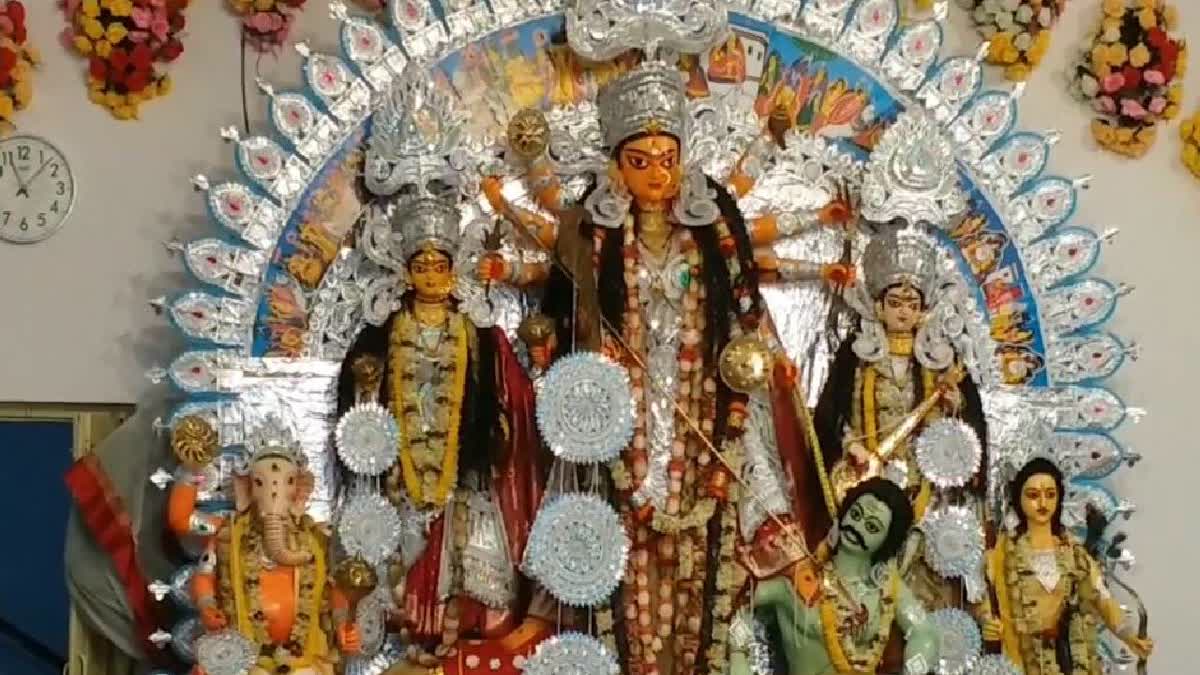
Ranchi: The Durga Puja celebration at Durgabari located at Albert Ekka Chowk in Ranchi exemplifies traditions nurtured by faith and discipline. It is not a religious ritual but a living testimony to traditions passed down the generations.
Started in 1883, this Puja is marked by its cultural originality and disciplined traditions where the idol of Goddess Durga is always made in the ‘Ek-Chala’ style that involves combining all the deities in a single frame. It is decorated by the same family for generations to the sound of Dhak. On Vijayadashami, the Goddess is carried on shoulders for immersion.
The tradition of idol making at Durgabari is also special. In 1883, Jagannath Lahari, a resident of Jhalda in West Bengal started making the Ek Chala idol here. It was taken over by Devendra Nath Sutradar of Berwa village in Birbhum district and his descendants continue to make the idol till date. This hereditary tradition marks devotion and faith that has survived for more than 140 years.
Even the Dhakis playing here come from the same family in Bankura for generations. The tone of the Dhak changes with each stage of the puja. One rhythm is used during Bel Varan, another during Sandhi Puja, a third during Sindoor Khela and a completely different one during Visarjan. This diversity of Dhak makes every aspect of the Puja lively and emotional.
The final day of Durga Puja on Vijayadashami holds special significance. On this day, married women, regarding Goddess Durga as their daughter, play Sindoor Khela. After decorating the Goddess's feet and face with red vermilion, they also apply it to each other. This tradition symbolizes eternal good fortune and prosperity. After Sindoor Khela, the Goddess is bid farewell. According to Bengali tradition, the idol is carried on the shoulders of devotees for immersion.
The hallmark of Durgabari's Puja is its discipline. The timing and method of each ritual are observed with the same meticulousness today as they were 140 years ago. According to the members of the puja committee, “This discipline is the soul of this tradition that has kept it so special.”
Although this puja was initially a Bengali affair but boundaries have expanded and today Biharis, Odias, Marathis, Gujaratis, Punjabis and even tribal communities participate making it even more vibrant and inclusive. Each year, new generations join in to repeat the traditions are repeated making the cultural roots stronger.
Read more