Nag Panchami 2025: Sacred Stories, Snake Temples, and Rituals Explained
From the smallest ant hill in Tamil Nadu to the stone steps of Kukke Subramanya Temple in Karnataka, Nag Panchami is an ode to serpents.

Published : July 28, 2025 at 12:10 PM IST

Nag Panchami is the festival of serpents celebrated in the rain-glazed month of Shravan, when villagers and city-folk alike pour milk not into cups, but into the mouths of coiled gods. This year, it is being celebrated on July 29. The date (as per the lunar rhythm of the Hindu Panchanga) falls on the fifth day (Panchami) of Shukla Paksha (the waxing phase of the moon in the holy month of Shravan). But to call Nag Panchami a festival would be too small. It is a pact between humans and the slithering emissaries of both divine wrath and divine grace.
Why India Worships Snakes
It’s tempting to ask, “Why snakes?” But the answer is as layered as Kaliya’s thousand hoods and as slippery as a river in monsoon. In India, snakes are worshipped as gods, protectors, punishers, fertility bringers, and immortality’s gatekeepers. In the grand Sanskrit epics and Puranic texts, serpents appear not as villains but as necessary cosmic characters. Lord Shiva (the ascetic destroyer) wears them as garlands. Lord Vishnu rests on the thousand-hooded Shesha Naga amid the churning seas of existence. And then there is Vasuki, the noble naga who allowed himself to be stretched across the universe like a rope in the Samudra Manthan (the churning of the ocean to yield the nectar of immortality).

Perhaps the most beloved tale is that of Krishna and Kaliya, the venomous serpent who turned the Yamuna River toxic until the dark-skinned child-god danced upon his heads, subduing him not with violence but with rhythm, transforming poison into peace. It is this tale that winds through the prayers, murals, and milk offerings on Nag Panchami, reaffirming the eternal triumph of good over evil. Behind the myth lies the ecological truth: snakes are vital to maintaining balance in rural and urban ecosystems, controlling rodent populations and acting as indicators of environmental health. Perhaps ancient India knew that in worshipping the naga, it was also safeguarding the soil.
What Happens On Nag Panchami?
From the smallest ant hill in Tamil Nadu to the grand stone steps of Kukke Subramanya Temple in Karnataka, the day is an ode to the sacred serpents. Homes are swept and sanctified. Images of snakes are drawn with turmeric, vermillion, and sandalwood paste, sometimes on wood, sometimes directly on the floor.
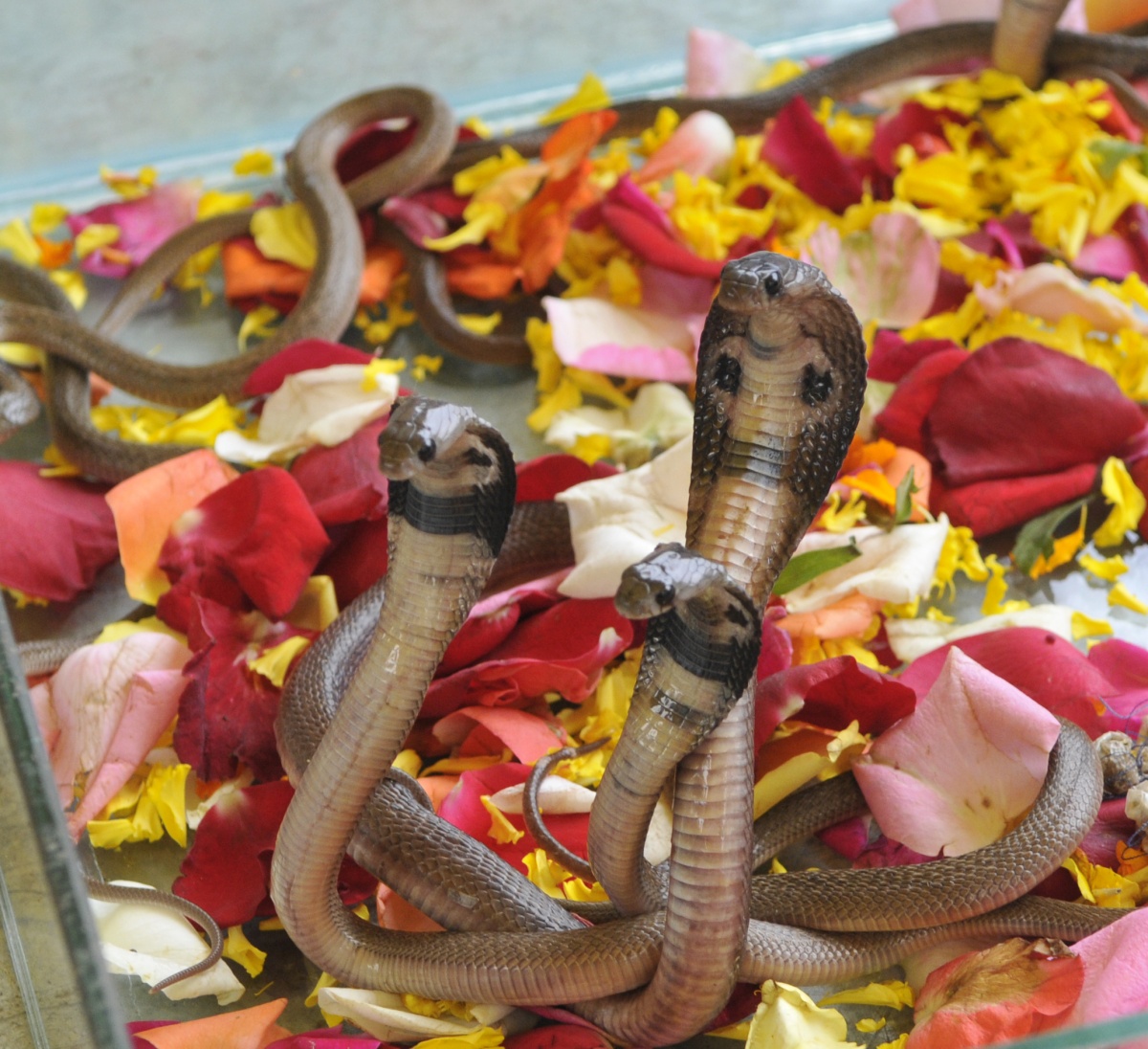
Milk, honey, coconut water, sweets, and flowers are lovingly offered to snake idols—made of silver, clay, or Pancha Loha (five-metal alloy)—or in rural areas, to actual live snakes. The milk bowls near anthills glisten like moon puddles in devotion. In the North Indian plains, clay idols of snakes are worshipped in homes. Families prepare kheer and pua, sweet dishes that melt on the tongue and the spirit. In South India, especially Tamil Nadu, the Ant Hill becomes a temple, its mounds adorned with turmeric and flowers, offerings laid at its base, like gifts at the foot of a sleeping deity. Priests chant mantras, women observe fasts, and children are told stories of Astika, the boy-sage who stopped King Janamejaya’s serpent genocide since Nag Panchami is not only for appeasement but also for intervention against destruction.
How Nag Panchami Is Celebrated In Different States
In Maharashtra, women draw serpents on walls using red sandalwood paste and cook patholi, sweet rice rolls steamed in turmeric leaves. In West Bengal, it’s the day of Manasa Devi, the fierce goddess of snakes and fertility. Her folk tales fill the night with poetry and warning.
In Bihar and Uttar Pradesh, temple steps overflow with offerings of milk, bananas, and incense, while in Punjab, the festival morphs into Guga Naumi, dedicated to a folk hero believed to control snake bites. The Tharu people, forest-dwellers of the Terai, call the day Lakhpance, blending Sanskrit legacy with indigenous spirit. They may not follow the lunar calendar precisely, but the intention (to honour the nagas) is intact.
The Don’ts of Devotion
On this day, one does not plough the land, lest a sleeping naga be disturbed. No trees are cut, no snakes harmed. To harm a snake on Nag Panchami is to risk the ire of the divine. And food rules are strict: no fried or salty foods, no alcohol or meat, for this is not a day of indulgence, but of sattvic reverence.
Temples of Naga Devta
Somewhere in Ujjain, there lies a door that opens but once a year (on Nag Panchami) to reveal the mysterious Nagchandreshwar Temple, where Lord Shiva is shown seated upon a multi-headed serpent, reversing the usual hierarchy. Down south, the Mannarasala Temple in Kerala and the Arulmigu Nagaraja Temple in Nagercoil echo with legends. In the former, thousands of serpent idols nestle beneath groves, tended mostly by priestesses. In the latter, the idol bleeds saffron-hued soil, said to cure skin diseases. High on the Bhujanga Nag Temple in Maharashtra, the festival unfurls with an annual fair, snake charmers, offerings, and drums beating the rhythm of ancient pacts.
Read more:
- All You Need To Know About The Holy Festival Of Shravan, The Meaning, Mythology, Rituals And Rules Of Fasting
- Simple Daily Practices That Can Help Build Inner Peace, Awareness, And Joy
- Interview | 'Spirituality And Science Can Coexist To Make The World A Better Place To Inhabit' Sadguru Sri Madhusudan Sai
