Interview: Roshan Abbas On The Power Of Stories And Voices: 'Your Art Can Be Your Life'
From pioneering radio to curating Kommune and ‘Voices of Tomorrow,’ Abbas reflects on nurturing authentic creators, and why imperfection is the future of voice.
Published : September 5, 2025 at 1:00 PM IST

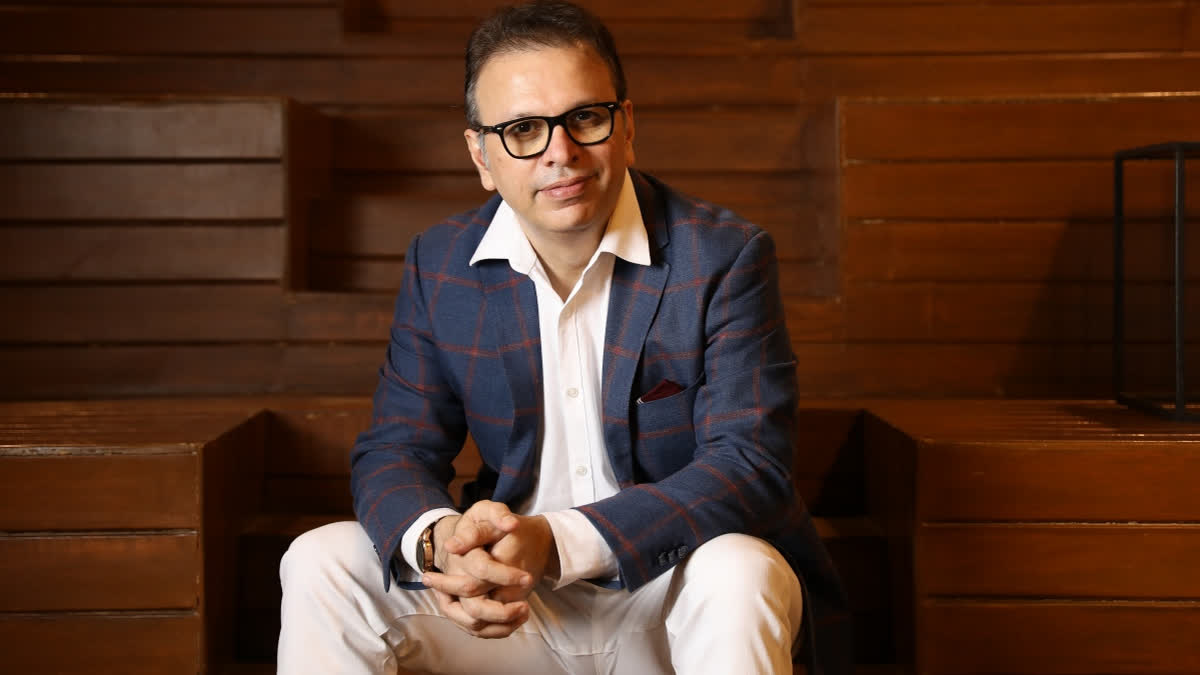
Some voices don't just narrate stories, they shape an era. Roshan Abbas is one of them. A consummate storyteller, media entrepreneur, theatre director and creative visionary, Abbas has built a world of words where they are not only spoken, but lived. He is known not because of his TV and radio shows, or campaigns he has helmed, but because he curated Kommune – India's biggest storytelling collective that features artists like Gulzar, Javed Akhtar, and Ratna Pathak among many others. It shapes the cultural fabric of contemporary India through live experiences. He is a familiar face but what makes him compelling is not just his versatility but his restless curiosity.
Any conversation with Abbas comes with a box of learnings and stories that give you perspectives. And it is no surprise, for his journey has been one of constant reinvention. From ruling the airwaves in the 1990s as a pioneering radio host to creating disruptive platforms like Voice of India, an initiative focused on identifying and developing senior talent over in dubbing and voice acting in collaboration with Kommune and Netflix. The media professional gets candid on his philosophy of nurturing creators and giving them a professional stage, linking creators with industry professionals, and why live events continue to attract audiences. Excerpts from the interview:
What inspired you to be a part of ‘Voices of Tomorrow,’ and how has the initiative evolved since its first edition?
Voices of Tomorrow was created by Netflix in association with us because there was a feeling that the industry is largely populated by the same set of voices, with Kommune having access to creators. It was a good way of making a bridge with the Creative economy.
It focuses on identifying and nurturing senior talent over 45. Why did you feel this demographic needed special attention in dubbing and voice acting?
It's because there are many young voices that are able to adapt to playing both kids roles and characters around the age of 35-40, but authentic voices which are older, rules. Somehow sound a little falls by getting genuine people , whose voice has seen decades and has experienced so many things which you can certainly hear in a voice, we felt we would be creating a farm or authentic lived experience.
What specific skills or qualities do you look for in participants, especially those re-entering or starting later in the industry?
Adaptability and learning are important aspects. Apart from having a good voice because a lot of the training focuses on using this God gifted instrument, we all have, but understanding Studio dynamics, knowing how to be able to sync to a clip requires a certain amount of technical prowess.
With the rise of AI voice technology, how do you see the human element in voice artistry remaining relevant?
Keanu Reeves was recently asked in an interview about digital actors, and he said when they haven’t felt anything, how can they enact it? AI is still way off from being able to feel and to be able to replicate that in a voice is difficult sometime soon, we will be looking out for the imperfections of a human voice, whether it is a stutter throaty voice, even any other thing that separates it from a synthetic voice, we will get more and more trained to looking out for authenticity.
Kommune has become a hub for storytellers and performers. How has its philosophy influenced ‘Voices of Tomorrow’?
Kommune is always trying to create a stage for performers - as we say we like to be the place where creators gather to be their best version with the support of Netflix and our trainers. We are creating an amateur in a professional system, which is what the industry needs. More often than not, creators give up their craft at the stage of a hobby for us. It is a commitment to try and make it into people’s vocation. And that’s why this initiative for the last four years has been one of our favourite projects.
You’ve worked with diverse forms of expression such as spoken word, theatre, digital content. How does Kommune balance nurturing art with commercial viability?
We have been able to train people, with the help of professionals, to reach a certain level of competency. Be Sayan Singh, teaching people, screenplay, writing, or producers telling people what to pitch. Kommune has always tried to link creators with those who have achieved a lot in the field. This interaction and learning creates a cycle of nurturing raw talent. Many of our writers, voices, artists and performers today earn their entire money from their art. Nothing could give us more pleasure.
With the digital shift, do you think live performances and voice work still hold the same magic for audiences?
With the digital shift, people will look more and more for live performances . Already you can notice how many people are going out to concerts and live events. This is because we want to touch smell, taste and feel, rather than become prisoners of a virtual screen. I have always believed that the more we become digitally dependent the more the need to seek physical independence
What is your long-term vision for art and culture in India, and where does ‘Voices of Tomorrow’ fit in that roadmap?
A long-term vision is to be able to create City chapters where people can collaborate, create and find commercial avenues for their art with poets being recruited as lyricists, and storytellers as screenplay writers and voices. Now being used for Dubbing. This is another way that we prove to people that your art can be your life , and your life support.
Read More:
- Interview | 'Not Enough Roles Are Written For Older Women'; Theatre And Film Actor Shernaz Patel On Bias In Industry
- Mukesh Khanna: I Would Never Have Allowed A Film Like Animal To Be Made; That's Not entertainment
- Filmmaker Anand Gandhi And Game Designer Zain Memon's 'Maya' Is Where The Old Gods Meet The Algorithms: 'The Future Needs Its Own Mythology'
