Dutch Artists Hans And Jerrel Goedoen Are Reimagining Ancient Indian Art for a Global Audience; Paying Ode To Lord Shiva With Their Latest Sculpture
Netherland-based artists Hans and Jerrel Goedoen blend their European heritage with Hindu spirituality to create sculptures that transform age-old devotion into contemporary storytelling.

Published : September 8, 2025 at 11:59 AM IST

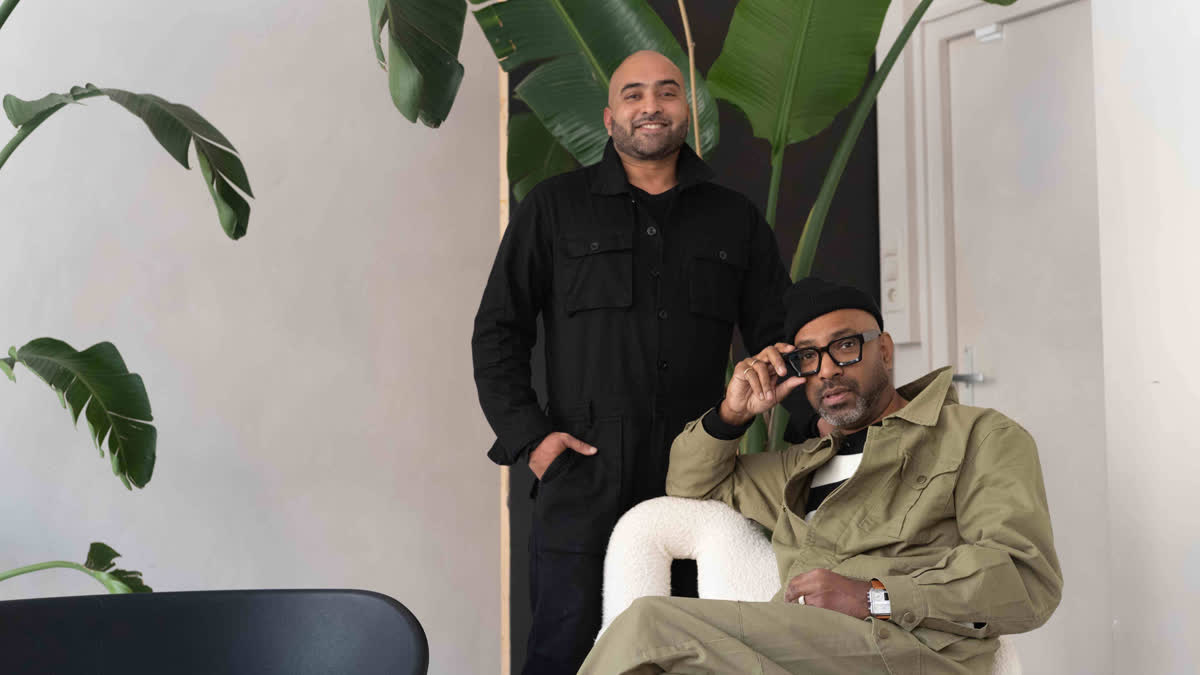
Amsterdam-based brothers Hans and Jerrel Goedoen have carved a niche in the global art world, quite literally. Descendants of Hindu heritage, the two grew up in the Netherlands surrounded by European modernity and Asian tradition. This duality continues to shape their art practice to this day. Rooted in their Dutch-Surinamese heritage but connected to Indian spirituality, the artist duo's journey has been one of bridging continents, cultures, and centuries. Over the years, they have built a reputation for sculptural works that reinterpret traditional Indian iconography through a modern European lens. The founders of Atelier Ajanta, a contemporary art and design studio in Amsterdam, their latest piece of art, Devon Ke Dev Mahadev, is inspired by the timeless murals of the Ajanta Caves.
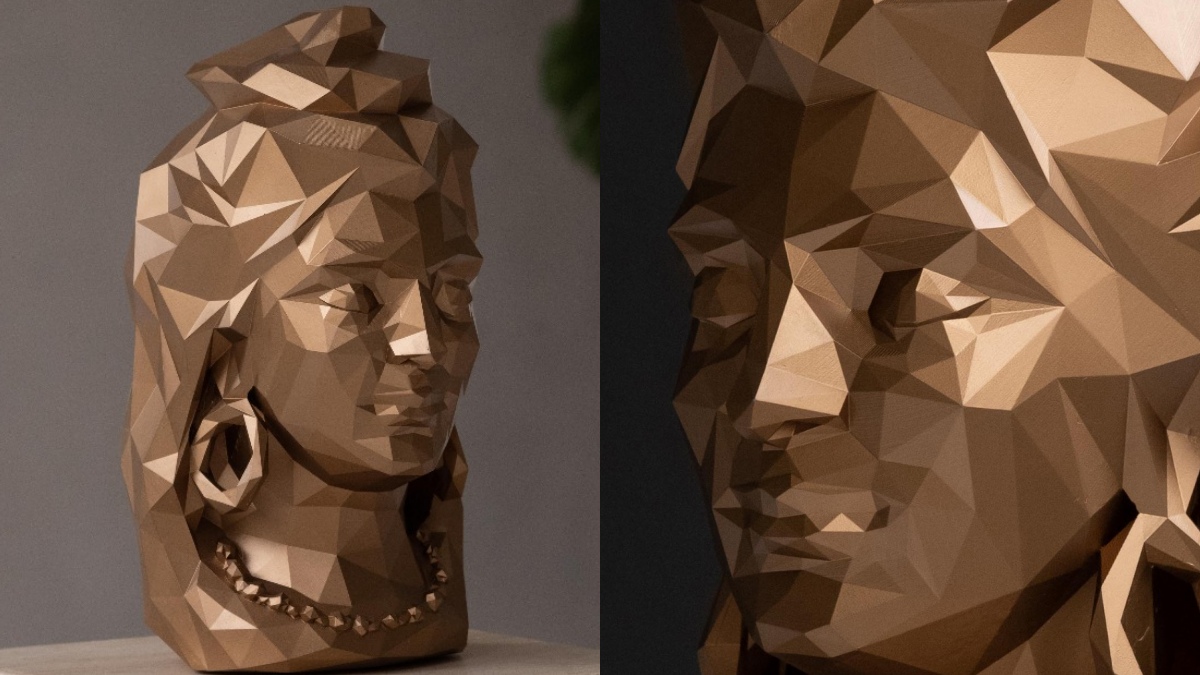
It is both a homage to ancient craftsmanship and a bold move of contemporary storytelling. At once it demands reverence and invites art lovers to see mythology, culture, and devotion in fresh and unexpected ways. A 35 cm, 12 kg sculpture of Lord Shiva, cast in resin and hand-finished with spray-painted detailing, this creation is about identity as well as about their imagination. Hans Goedoen spoke to ETV Bharat about their latest creation, the process of reinterpreting the iconography of Ajanta Caves, and blending European training with Indian inspiration to create timeless pieces of art. Excerpts from the interview:
Your latest creation, Devon Ke Dev Mahadev, is steeped in Hindu mythology. Can you walk us through the artistic and spiritual journey behind this sculpture?
Spirituality and artistic epiphany are of the same essence. They are virtually synonymous. The creation of this artwork was, for both of us, a profound spiritual awakening. Not only does it reflect our deep cultural connection with Hinduism, but it also carries our desire to restore a cultural bond that had once left India in the late 1800. This piece is, in many ways, a homecoming of Hinduism.
What was the most challenging aspect of interpreting Lord Shiva’s essence in a contemporary sculptural form?
You know, our piece is just an artistic take on Lord Shiva; it’s not meant to be the deity himself. Still, it has sparked a lot of reactions. Some people think it’s blasphemous, others say it leaves out too many elements to truly capture Lord Shiva. But to us, that’s what art is about. When it stirs opinions, when it makes people feel something, that’s when art is alive and relevant. And honestly, we love that!
Did you consult Indian scholars, spiritual practitioners, or art historians while creating this piece?
No, we don’t believe creating art, even when related to Hinduism, has anything to do with schooling or formal practice. For us, the act of creating art is a spiritual journey. It’s not something that can be taught, memorised, or handed down; it comes from within. To consult scholars or pundits would only dilute the spiritual connection. Yes, our art draws from Hinduism, but we refuse to let it be chained by rules, regulations, or cultural influences. True art and true spirituality can never be confined. Art is spiritual in itself.
You have named your studio Atelier Ajanta. Is there any connection to your admiration for the Ajanta caves?
The Ajanta caves have always inspired me; they are such an important part of Indian art, and they are the roots of the Indian art design style we know today. The way the devtas (deities) are traditionally pictured actually goes back to the Ajanta and Ellora caves. That’s why we named our atelier ‘Ajanta’ to honor that history and keep the fact relevant. And a fun fact, Ajanta is also my second name, coincidence? (laughs).
The Ajanta murals are celebrated for their storytelling, spiritual symbolism, and intricate detailing. Which of these aspects most resonates with you in your work?
If you look closely, you will see that our interpretation of Lord Shiva carries eyes set in deep meditation, a quiet, timeless gaze. This is not by chance, but a gentle homage to the signature style of the Ajanta murals, where serenity flows through every painted glance.
How do you balance respecting centuries-old Indian heritage while also making it accessible and relevant to today’s audience?
Our art lives at the crossroads of old and new. Traditional murtis (idols), with their classic forms, often don’t find a place in today’s modern interiors, and slowly, the cultural essence of Hinduism feels like it’s fading. We wanted to change that. Our piece of art carries that timeless spirit but speaks the visual language of today, creating a bridge that brings Hindu culture back into contemporary spaces and makes it resonate with a whole new generation and the audience of today.
As a European artist engaging with Indian religious and cultural themes, how do you navigate authenticity and cultural sensitivity?
Although we are born in Europe, our parents come from Surinam, the West Indies in South America. We are Hindus, not directly from India, but through our ancestors, the culture and spirituality have always been a part of us. Growing up with these traditions, we feel a deep connection to their original essence, sometimes even more so than in places where the culture has evolved differently. It’s as if, through our roots, we carry the true essence of Hinduism. We are as authentic as it gets; therefore, we don’t worry about any sensitivity.
What does “modern reinterpretation” mean to you when it comes to sacred and historical iconography?
Sacred and historical themes don’t mean they can’t be reimagined in modern art. Take the trinity of Brahma, Vishnu, and Mahesh; they remind us that there is no beginning without an end. Similarly, something new and contemporary can only emerge when the historical and sacred roots are honored and respected. Hence, the resemblance of Lord Shiva in our piece of art.
Have your European art training and Indian inspirations ever clashed in style or philosophy? And if so, how do you resolve those differences in your work?
Yes, at times our European art training and Indian inspirations have approached things very differently. Europe’s emphasis on technique, perspective, and structure sometimes contrasts with the symbolic, spiritual, and narrative-rich traditions of Indian art. But rather than seeing this as a clash, we see it as a dialogue. We allow both influences to coexist: the discipline and skill from our European training provide a framework, while the depth and symbolism from Indian culture give our work soul. Resolving these differences isn’t about compromise but about finding harmony, letting each approach inform and elevate the other. For instance, the Trishul was an element we had to let go of. It would have been an odd element that technically could not be integrated. As such, we have replaced the trinity with triangular shapes, representing the Trishul element in our piece of art.
You often work with high-quality materials and intricate craftsmanship. How do you personally define “luxury” in the context of art?
For us, luxury in art isn’t just about using expensive materials or intricate craftsmanship; it’s about the experience and the connection it creates. True luxury is when a piece resonates deeply, evokes emotion, and carries a story or spiritual essence. It’s the care, intention, and meaning behind every detail that transforms an artwork from beautiful to truly luxurious.
Do you believe that spiritual or cultural significance can enhance the “luxury” value of a piece as much as material rarity does?
Absolutely. Luxury isn’t just about rare materials—spiritual and cultural significance adds a depth and richness that money can’t buy. A piece becomes truly luxurious when it carries meaning and connects with tradition or spirit.
Read More:
