World Obesity Day 2025: Does Childhood Obesity Threaten India’s Greatest Demographic Advantage?
Asks Prof Monika Arora, Vice-President (Research and Health Promotion), Public Health Foundation of India, on the eve of World Obesity Day.

Published : March 3, 2025 at 7:11 PM IST
|Updated : March 3, 2025 at 9:51 PM IST

For years, India's public health narrative has primarily focused on undernutrition. However, an equally pressing and escalating crisis is childhood obesity, which threatens not only individual health but also the country’s economic future. With a demographic dividend comprising 27.3% young and dynamic individuals ready to drive its growth, India cannot afford to let the double burden of malnutrition (both undernutrition and obesity) undermine our human capital as we aspire to become a Viksit Bharat by 2047.
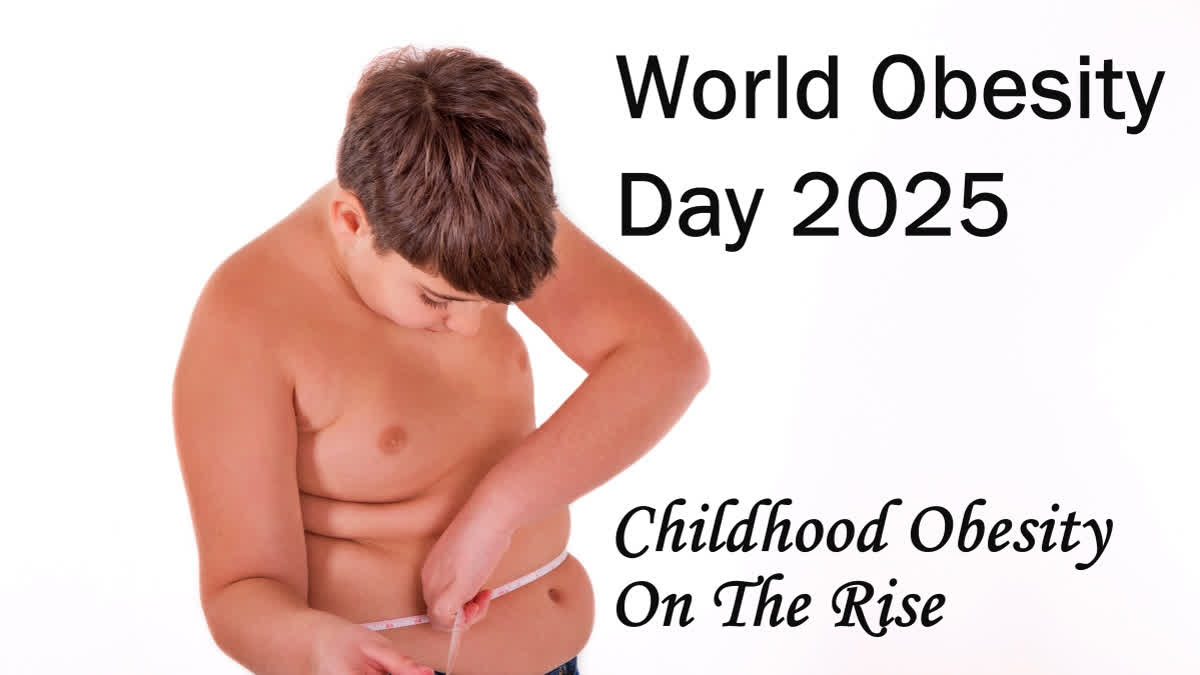
As we observe World Obesity Day on March 4, consider how India’s childhood obesity crisis is unfolding at an alarming rate, demanding urgent attention and intervention. The Comprehensive National Nutrition Survey (2016-18) reveals that 2.1% of children (5-9 years) and 2.4% of adolescents (10-19 years) are already obese, while many more (8.5% of children and 6.2% of adolescents) are overweight. This worrying rise in obesity is no longer just an urban issue; rural India is witnessing a similar surge, challenging the long-held belief that obesity is an urban affliction.
The widespread availability of ultra-processed foods (UPFs) and increasingly sedentary lifestyles drive this trend across rural and urban settings.
India’s dietary landscape has undergone a dramatic transformation, marked by a surge in the consumption of UPFs. The Economic Survey of 2025 highlights how the growing dominance of these foods is fuelling obesity and non-communicable diseases (NCDs) like diabetes and hypertension. According to the survey, India's consumption of UPFs shows an annual compounded growth rate of over 33% for the period 2006 to 2019. These calorie-dense, nutrient-poor UPFs [often high in added sugars, fats, and salts (HFSS)] are aggressively marketed to children and have become increasingly affordable and accessible, even in rural areas. Content analysis of food advertisements on children and youth television channels revealed that 88.6% of food advertisements were HFSS advertisements. Another study from India underscored high exposure to HFSS advertisements and the rampant availability of HFSS food in and around schools and colleges.
The government's focus, through programmes and campaigns like POSHAN Abhiyaan, launched in 2018, has been on addressing undernutrition. It is gratifying to note that, in line with existing evidence, POSHAN Abhiyaan 2.0 now rightly includes childhood obesity prevention alongside undernutrition. Research also indicates that early-life nutritional deprivation, followed by rapid weight gain, predisposes individuals to metabolic disorders. The Developmental Origins of Health and Disease (DOHaD) hypothesis elucidates this connection, making it even more crucial for India to address both undernutrition and overnutrition simultaneously.
Our Prime Minister’s campaign to address obesity underscores political will at the highest level. Leveraging celebrities, luminaries, eminent personalities, and influencers to amplify obesity prevention messages will ensure broader public uptake, reinforcing this critical government initiative.
Recognising the urgency of addressing the obesity epidemic, the next step is to meaningfully engage children, adolescents, and families through evidence-based lifestyle modification interventions.
Youth engagement is a crucial but often overlooked strategy in tackling childhood obesity. In collaboration with consortium members, initiatives like 'Let’s Fix Our Food,' led by the Public Health Foundation of India, UNICEF, and ICMR-NIN foster youth-led actions for healthier food environments. Empowering youth champions across all states of India through capacity-building workshops helped amplify awareness, co-create solutions, and drive youth-led actions, including youth-led podcasts. Key focus areas included the need to implement stricter regulations to curb the sale of HFSS foods within and around schools, reforming school meal programs with input from students to ensure healthier options, leveraging social media and partnering with youth influencers to promote nutritious food choices, and expanding digital health interventions and grassroots programs to increase awareness among children and parents.
A multi-sectoral response is the need of the hour to comprehensively address childhood obesity, mandating stringent regulations on the marketing and availability of HFSS foods.
Schools must be protected from becoming hubs for junk food by prohibiting the sale of HFSS products in and around school premises. Front-of-pack labelling should be effectively enforced to help consumers make informed choices. Higher taxation on sugary beverages and UPFs could discourage excessive consumption. The private sector, including food and tech companies, must be held accountable: food manufacturers should reformulate products to reduce harmful ingredients, and technology firms can develop digital tools to promote healthy eating habits.
India is at a tipping point in its fight against obesity, driving efforts to promote healthier eating. However, sustaining this behavioural change will require an enabling environment that supports long-term wellness. Establishing health-promoting schools, colleges, and workplaces will necessitate institutional policies to encourage healthy eating. Additionally, the healthcare system must be strengthened by equipping frontline health workers with the knowledge and skills to advocate for obesity prevention and training medical professionals to treat and manage obesity effectively.
The rising tide of obesity will continue to fuel a host of non-communicable diseases without systemic interventions. If we fail to act now, this crisis will erode India’s greatest asset: its youth.
