Eyes Don't Lie, May Offer An Early glimpse into the onset of dementia: Study
Dementia is rapidly emerging as a major public health concern in India, driven largely by the country’s growing elderly population.

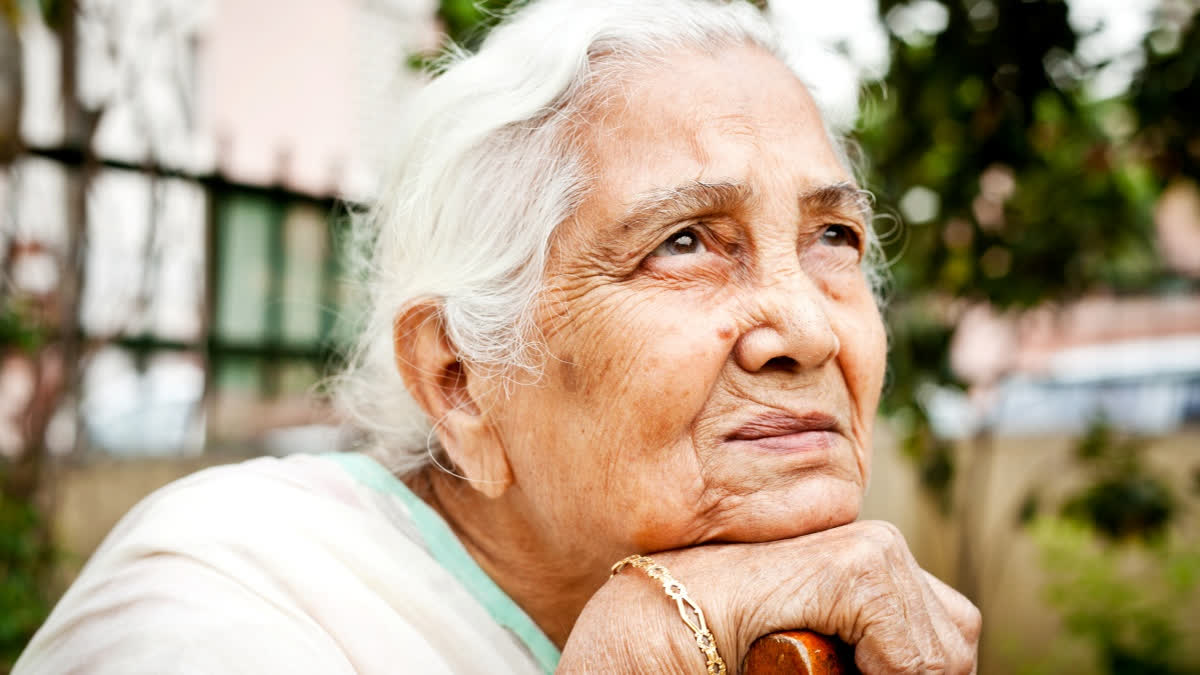
Published : July 2, 2025 at 5:54 PM IST
By Gautam Debroy
Experts from India’s healthcare domain on Wednesday expressed serious concern over the findings of a latest study conducted by scientists from UK’s Loughborough University suggesting that eyes may offer an early glimpse into the onset of dementia, up to 12 years before symptoms appear.
According to the Longitudinal Aging Study in India (LASI, 2018–20), approximately 7.4 percent of adults aged 60 years and above have dementia—about 8.8 million individuals in 2019. Dementia is rapidly emerging as a major public health concern in India, driven largely by the country’s growing elderly population. Data from the Longitudinal Aging Study in India (LASI-DAD, 2018–2020) indicate that around 7.4 percent of individuals aged 60 years and above are living with dementia, which equates to approximately 8.8 million people in 2019.
"With life expectancy rising and demographic transitions underway, the burden of dementia is expected to increase significantly in the coming decades,” said Dr Tamorish Kole, renowned health expert and director-emergency medicine, DPU Super Specialty Hospital to ETV Bharat.
Researchers observed more than 8,600 healthy individuals over several years. By the end of the study, 537 of them had developed dementia. Participants were initially asked to complete a “visual sensitivity" task and they had to quickly spot a triangle formed by three moving dots on a screen and press a button in response, following which researchers found that those who would later develop dementia consistently responded more slowly than others.
According to the experts, in Alzheimer’s disease, toxic amyloid plaques first target regions associated with visual processing, long before they attack the memory centres. Subsequently, the eyes may register subtle neurological changes years before the mind starts forgetting. The findings assume much more significance for India as the distribution of dementia in the country shows notable disparities. Women are more affected than men, with prevalence rates of 9.6 percent and 6.3 percent, respectively.
“Rural populations also bear a greater burden, showing a prevalence of about 8.4 percent, compared to 5.3 percent in urban areas. Geographic variation is significant—states like Jammu & Kashmir report prevalence rates exceeding 11 percent, while Delhi shows a much lower rate of about 4.5 percent,” said Dr Kole.
With India’s elderly population projected to grow steadily, estimates suggest that the number of people with dementia could nearly double by 2036, reaching around 17 million, and may surpass 11.4 million by 2050 as per Global Burden of Disease projections. The economic impact of dementia care in India is considerable. In 2010, the societal cost for managing 3.7 million cases was estimated at Rs 23,300 crore (approximately $3 billion). This figure surged to around Rs 118,902 crore (approximately $14 billion) in 2016 for 8.8 million people. By 2036, the projected cost of caring for 17 million individuals is expected to reach Rs 308,395 crore (roughly $36 billion), indicating a growing financial strain on families, health systems, and the national economy.
According to Dr Kole, a range of preventable and modifiable risk factors contributes to the increasing incidence of dementia in India. “These include uncontrolled hypertension, diabetes, obesity, physical inactivity, tobacco use, social isolation, and limited educational attainment. Strikingly, illiteracy is associated with a dementia prevalence of nearly 10 percent, while those with at least an eighth-grade education show much lower rates of about 1.5 percent. These patterns highlight the critical role of education, mental stimulation, and healthy lifestyle choices in dementia prevention,” he said.
Despite the growing numbers, dementia remains widely underdiagnosed and poorly understood. “An estimated 90 percent of cases in India go undetected, primarily due to a lack of awareness, stigma surrounding mental health, and limited access to specialized care. Many families struggle without adequate support, often unaware of the signs or proper approaches to care,” he said.
Addressing the dementia challenge in India requires a comprehensive and coordinated national response. Priority actions should include integrating early screening into primary healthcare services, strengthening mental health infrastructure, and launching large-scale public awareness campaigns.
“There is also a pressing need to invest in caregiver training, develop geriatric-friendly health systems, and implement state-specific dementia action plans. With timely intervention and a proactive strategy, India can mitigate the long-term impact of dementia and support millions of families facing this silent epidemic,” added Dr Kole.
Read more: